A roof issue on a park home rarely announces itself with a dramatic collapse. More often, the first signs of park home roof damage are small: a new stain near a ceiling edge, an unexplained draught, a patch of moss, or water that seems to linger where it should drain away. Acting at this stage can mean a straightforward repair rather than extensive damage to the roof structure, insulation and interior finishes.
Park homes and static homes have construction details that differ from a conventional brick property. Their lightweight structure, roof coverings, seals and joints need to be assessed with that in mind. A general roofer may spot an obvious leak, but a park home specialist can look at the complete picture and identify what has caused it.
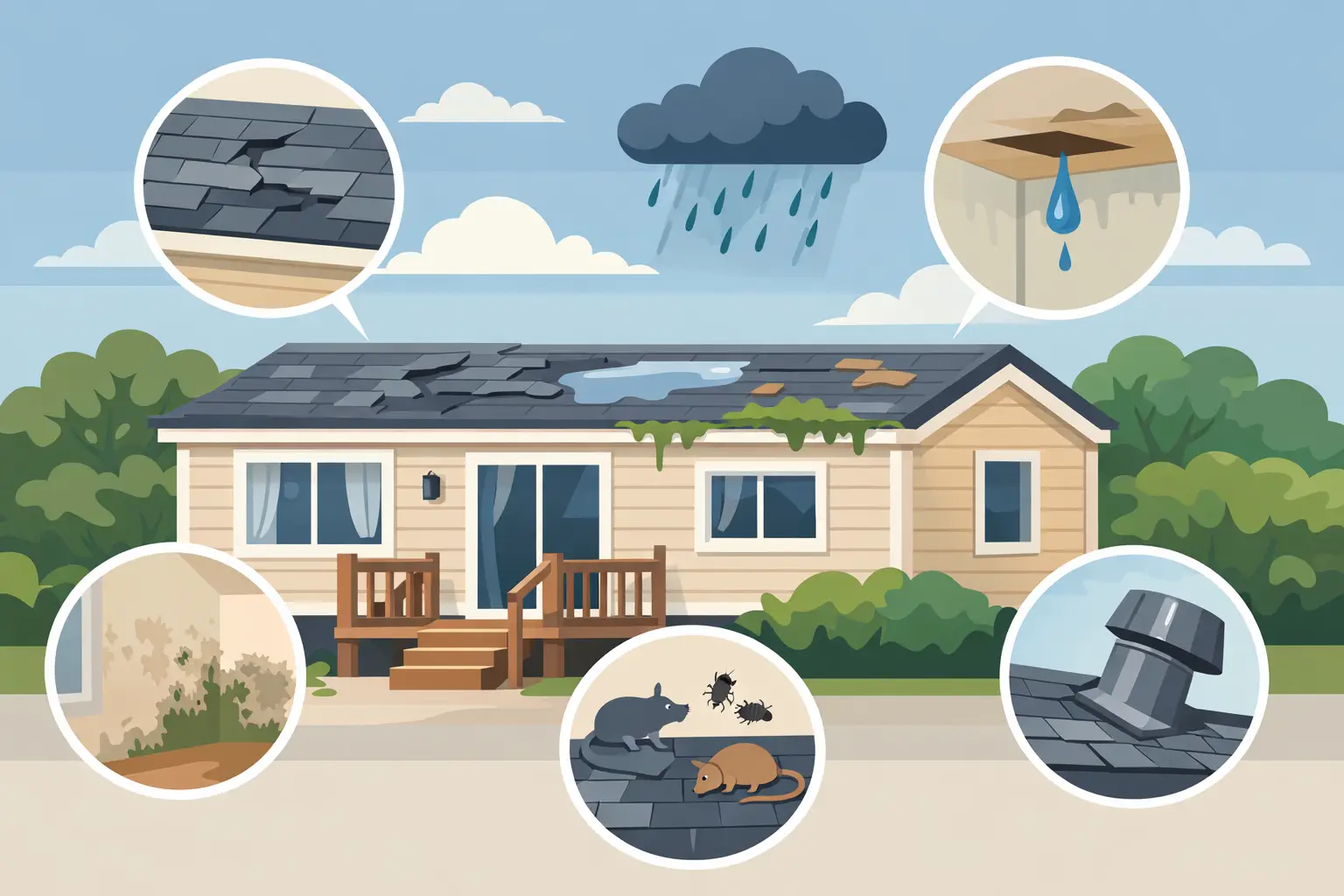
A brown or yellow mark on the ceiling is one of the clearest warnings that moisture has entered the roof space. It may appear after heavy rain, then seem to dry out. That does not mean the problem has gone away. Water can travel along timbers, insulation or internal linings before becoming visible, so the stain is not always directly below the point of entry.
Also pay attention to a musty smell, peeling wallpaper, bubbling paint or a cold, damp-feeling area near an external wall. These can indicate a smaller, ongoing leak that has not yet produced a visible ceiling mark.
Condensation can sometimes be mistaken for a roof leak, particularly in a poorly ventilated home during winter. The difference matters. Condensation tends to affect wider cold surfaces, while a roof leak is often localised and becomes worse after rainfall. A proper inspection can establish which is responsible before work is recommended.
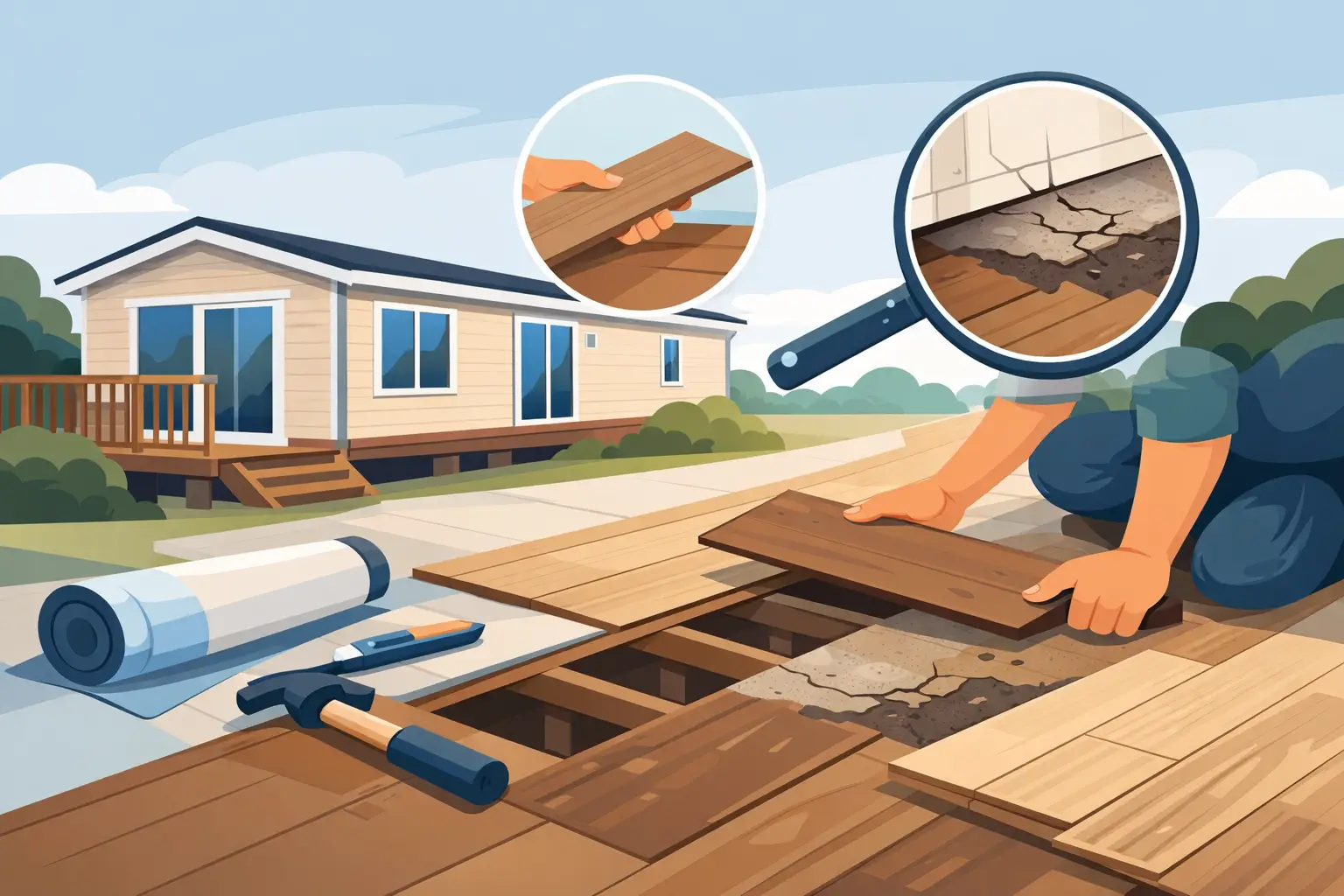
From ground level, look for panels that appear lifted, uneven or out of line with the rest of the roof. Cracks, broken edges and missing fixings can allow wind-driven rain underneath the covering. Strong winds can turn a small weak point into a much larger one surprisingly quickly.
Avoid climbing onto the roof yourself. Park home roofs are not designed to be walked on in the same way as many traditional tiled roofs, and putting weight in the wrong place can cause further damage. Binoculars, photographs taken safely from ground level, or a professional assessment are better options.
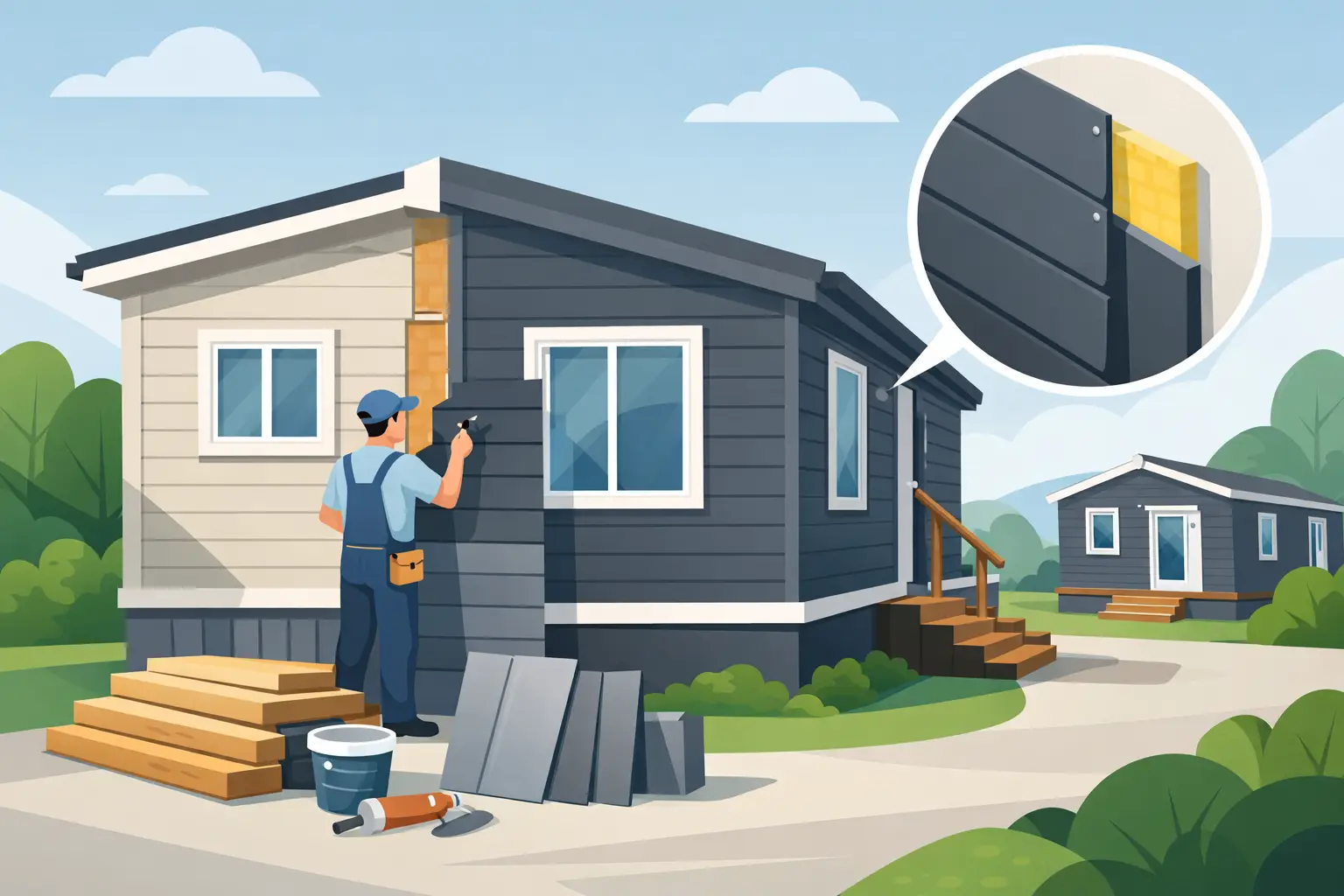
Where a repair is limited to a small area, early attention may preserve the surrounding covering. If panels have become brittle or several areas are failing, replacement can be the more dependable long-term option. The right approach depends on the age of the roof, the condition beneath it and whether repairs would simply postpone a larger job.
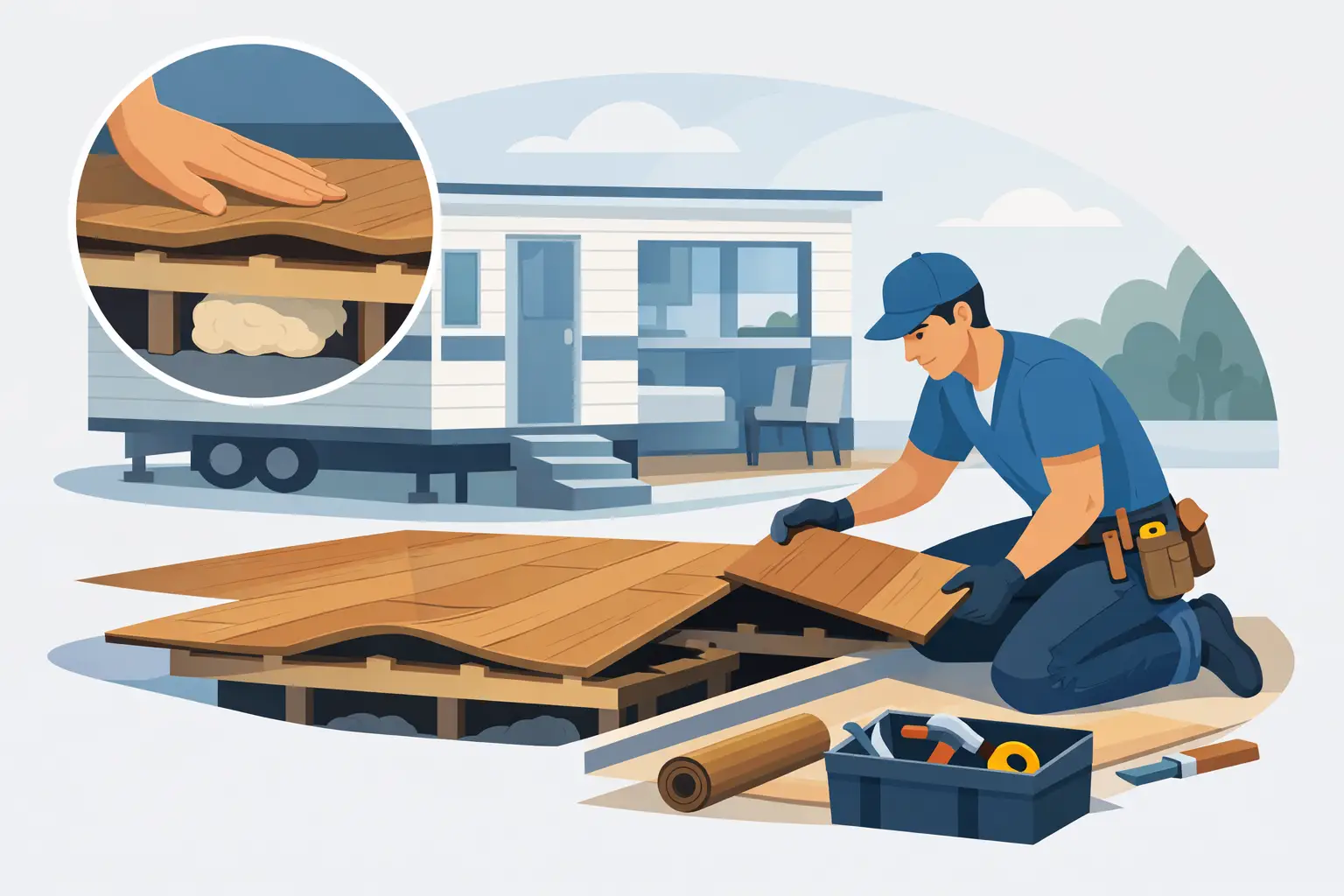
A roof line should look straight and properly supported. Any noticeable dip, bow or sag deserves prompt investigation, even if there is no visible water inside. It can be caused by long-term water ingress weakening roof timbers, inadequate support, ageing materials or previous movement.
This is not a cosmetic issue. A sagging section can hold standing water, increasing the load on the roof and allowing moisture more time to find its way through joints and seals. In severe cases, it may point to structural deterioration that needs specialist repair rather than a surface patch.
Look at the roof from more than one position, ideally in good daylight. Compare it with older photographs of your home if you have them. A gradual change is easy to overlook when you see the property every day.
Some of the most vulnerable parts of a park home roof are not the main panels but the details around them. Flashings, ridge pieces, edge trims, pipe seals, vents and joins around roof-mounted features all have a job to do: they direct water away from openings and protect the roof beneath.
Signs of trouble include cracked sealant, lifted trims, gaps at joins, rusting fixings and sections that have pulled away. Sealants also have a limited life. They can dry, shrink and crack after years of exposure to sun, frost and rain.
It can be tempting to apply more sealant over the top. In a few cases, that may be an appropriate short-term repair. However, covering a failed joint without finding out why it has moved can trap water or hide deterioration underneath. The lasting repair is one that deals with both the failed detail and its cause.
A little surface moss does not automatically mean your roof is leaking, but heavy growth is worth taking seriously. Moss holds moisture against the roof covering and can obstruct the natural path of rainwater. Over time, this increases the chance of deterioration around overlaps, edges and drainage points.
Puddling or slow drainage after rain is another warning sign. Water should not sit on the roof for long periods. Standing water may indicate a low spot, a blocked outlet, failing roof material or a change in the roof’s support. It is especially concerning where the roof has begun to dip.
Do not use aggressive pressure washing or harsh tools to remove moss from a park home roof. They can damage the surface, lift edges and force water into places it does not belong. A roof should be cleaned and maintained using methods suitable for its particular covering.
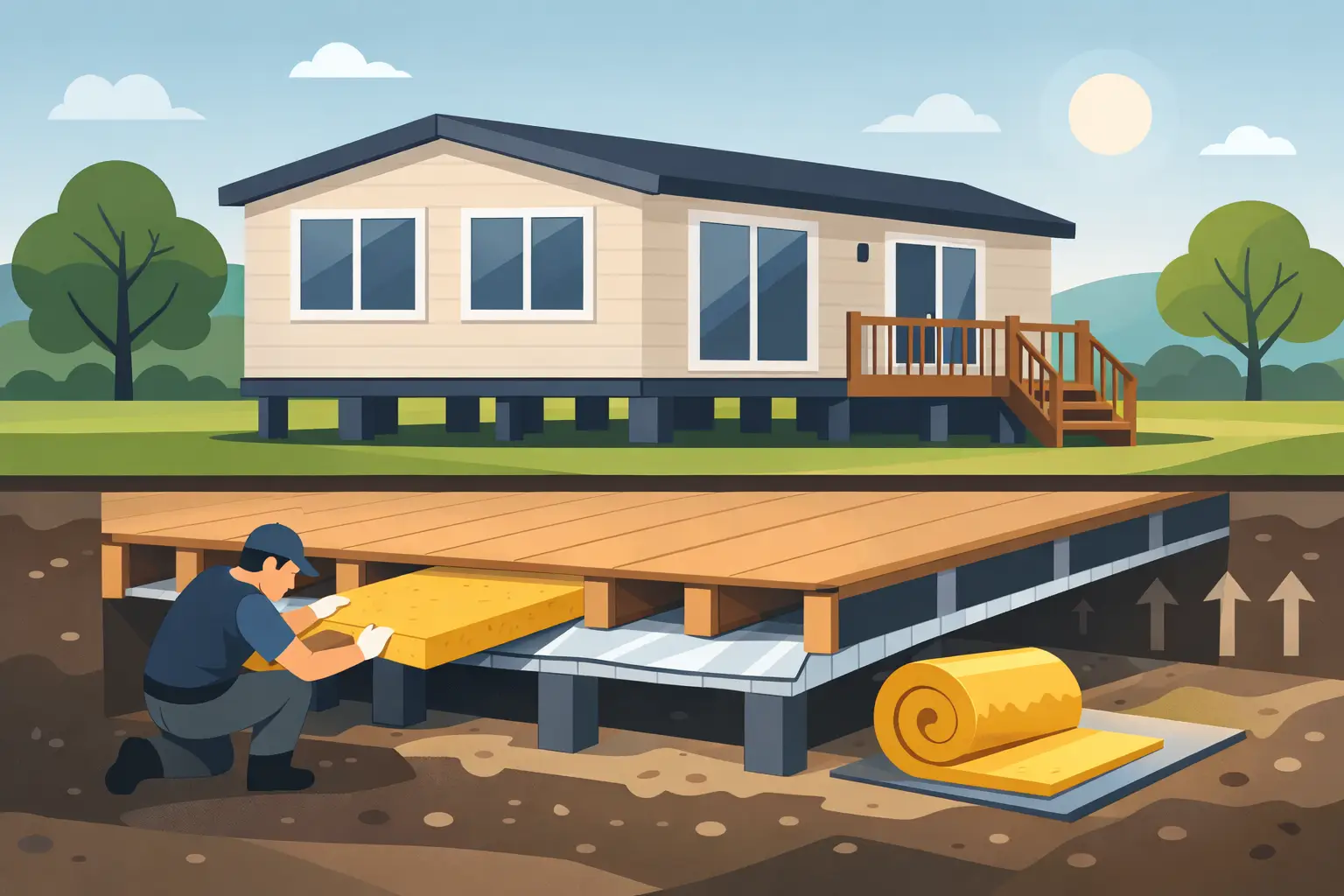
Not all roof damage is visible from outside. If a room below the roof feels noticeably colder, develops persistent draughts or takes longer to warm up, it may be worth checking the roof and insulation together. Water ingress can compress or damage insulation, reducing its ability to retain heat.
A roof defect can also allow air movement through gaps around joints and trims. In a park home, where comfort and thermal efficiency are closely linked to the condition of the building envelope, small gaps can have a greater day-to-day effect than owners expect.
Higher heating costs alone do not prove a roofing issue. Underfloor insulation, wall insulation, windows and doors may also contribute to heat loss. However, when cold spots appear alongside damp, staining or external roof defects, the roof should be high on the list of possible causes.
A roof that has been patched several times is telling you something. A small repair is often sensible when damage is isolated and the rest of the covering is sound. But repeated leaks in different places, recurring failed sealant or repairs that last only through one season can mean the roof has reached the point where a more thorough solution is better value.
Ask for an assessment of the full roof condition, not just the latest wet patch. This should consider the roof covering, timber structure, insulation, joins, trims and drainage. It gives you a clearer basis for deciding between a targeted repair and replacement, rather than spending money reactively every time rain finds another weak point.
Arrange an inspection promptly if you see staining, active dripping, loose roof materials, sagging or water pooling. These are issues that can worsen quickly in bad weather. It is also sensible to have the roof checked after severe storms, particularly if your park has been exposed to strong winds or falling branches.
For older homes, a planned inspection can be more reassuring than waiting for a leak. It allows minor defects to be dealt with before moisture reaches the internal structure. This is particularly valuable before winter, when prolonged rain, frost and colder temperatures put every part of the roof under greater pressure.
New Look Park Homes Ltd assesses roofs with the specific construction of park and static homes in mind, helping owners understand the condition of their roof and the practical options available. Clear advice matters: sometimes a local repair is enough, and sometimes investing in a replacement prevents far more costly work later.
A dry, sound roof protects more than the ceiling beneath it. It helps keep your home warmer, preserves its structure and gives you confidence when the weather turns. If something looks different, feels damp or has needed patching more than once, it is usually better to investigate while the problem is still small.