A small stain on the ceiling, a lifted edge of felt or a damp smell after heavy rain can quickly raise a bigger question: how long does park home roofing last? There is no single answer, because park homes use different roof systems and each home faces different weather, maintenance and structural conditions. However, a well-fitted and properly maintained roof should give many years of dependable protection.
For park home owners, the key is not waiting for a leak to become obvious. Water can travel beneath roof coverings and affect insulation, ceiling boards and timber long before it appears inside. Early inspection and the right repair can often extend the life of the existing roof and prevent a far more costly refurbishment later.
As a broad guide, a traditional mineral felt roof may last around 10 to 20 years, depending on the quality of the original installation and how well it has been maintained. Modern high-performance felt systems can last 15 to 25 years or more when installed correctly.
EPDM rubber and GRP fibreglass roofing systems commonly offer a lifespan of 20 to 30 years. They can be particularly effective on suitable flat or low-pitched park home roofs because they create a continuous, weather-resistant surface with fewer vulnerable seams. Metal roofing can last longer again, sometimes 30 years or more, but it is not automatically suitable for every park home. Weight, fixing methods, roof shape and the condition of the supporting structure must all be considered first.
These figures are useful starting points rather than guarantees. A roof that has endured standing water, storm damage or years of neglected maintenance may need attention well before its expected lifespan. Equally, a roof approaching 20 years old may still be serviceable if it remains sound, dry and well maintained.
Park homes are constructed differently from conventional brick-built houses. Their roofs are generally lighter, and their wall and roof junctions need careful detailing to keep water out while allowing the building to perform as intended. That is why a general roofing approach is not always enough.
The quality of the roof covering matters, but so does the work beneath it. A premium membrane will not perform as it should if the roof deck is damaged, edges are poorly sealed or flashings are not correctly formed around vents, chimneys and joins.
Weak points tend to develop at seams, perimeter trims and penetrations through the roof. On an older park home, previous patch repairs may also conceal a wider issue. A proper assessment looks beyond the visible surface to establish whether the roof is still structurally dry and stable.
Water should move freely towards the appropriate edges, gutters and outlets. If it remains in puddles after rain, it can speed up deterioration in felt, coatings and joints. Flat and low-pitched roofs are especially reliant on good drainage.
Blocked gutters, moss build-up and leaves around outlets may sound minor, but they allow water to sit where it should not. Clearing gutters regularly is one of the simplest ways to protect a park home roof, fascia boards and external cladding.
Wind-driven rain, frost, strong sunlight and repeated changes between warm and cold weather all place pressure on roof materials. Homes in exposed coastal areas or open park locations may experience more wind uplift and weathering than those in sheltered positions.
Branches rubbing on the roof, falling debris and storm damage can also shorten a roof’s useful life. After severe weather, it is sensible to check for loose trims, torn felt, displaced coverings and overflowing gutters rather than waiting for the next rainfall to reveal a problem.
Not all dampness begins with a hole in the roof. Poor ventilation and insufficient insulation can lead to condensation within the roof space, particularly during colder months. This can affect timbers and insulation while leaving the outer roof covering looking sound.
A specialist inspection should distinguish between rainwater ingress and condensation. The remedy may involve roof repairs, but it could also include improving ventilation or upgrading insulation so the home is warmer and less prone to moisture build-up.
A roof does not have to be leaking heavily before it needs work. Catching smaller faults early gives more options and may avoid the need for full replacement.
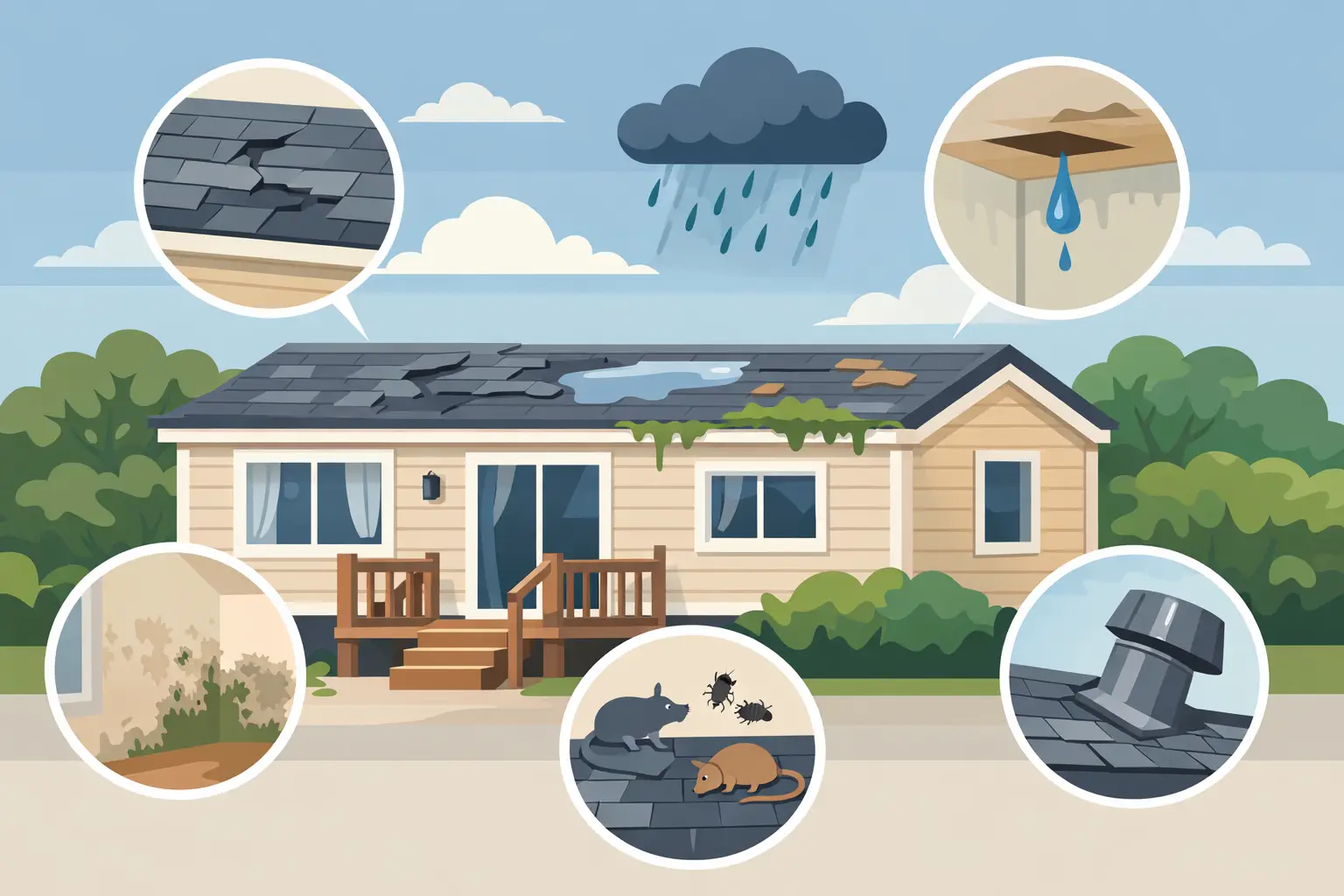
Look out for cracked, blistered or split felt, lifted edges, loose flashing, open seams, sagging areas or patches where water repeatedly gathers. Inside the home, ceiling staining, peeling wallpaper near the ceiling line, mould, a musty smell or unexplained cold spots should be investigated.
It is also worth paying attention to changes in your heating bills. A deteriorating roof or wet insulation can make a park home harder to heat, even if there is no visible drip. Damp insulation loses much of its thermal performance, leaving rooms colder and increasing the demand on your heating system.
Do not walk on a park home roof unless it has been confirmed safe to do so. The roof structure may not be designed to carry foot traffic in the same way as a conventional house roof, and walking on damaged coverings can make a small defect worse.
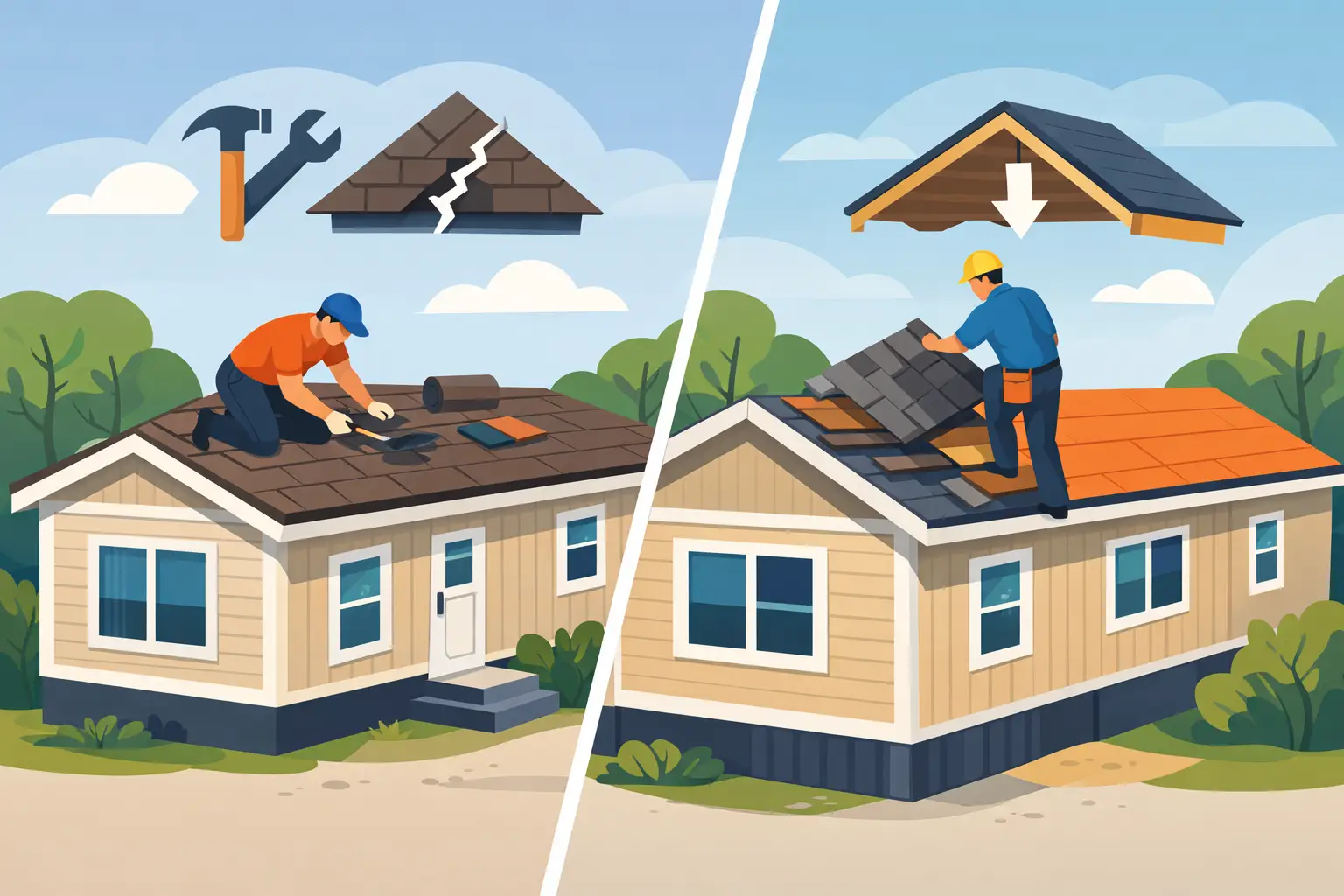
A local repair can be the sensible option where the roof covering is generally in good condition and the issue is limited to a damaged seam, flashing, trim or small area of weathering. Timely repairs can stop water ingress and help you get more value from the roof already in place.
Replacement becomes the stronger option when there are repeated leaks, widespread cracking, soft or damaged roof decking, extensive ponding water or several old patches across the surface. Continually repairing a roof that has reached the end of its working life can become poor value, particularly if water is affecting insulation or the structure below.
A full roof refurbishment also provides an opportunity to address related issues properly. This may include renewing roof boards where needed, improving drainage details, replacing trims and checking insulation and ventilation. The aim should be a complete, durable solution rather than simply covering over an underlying problem.
At New Look Park Homes Ltd, roof work is assessed with the wider condition of the park home in mind. That matters because the right outcome depends on the roof, the supporting structure and how the home performs day to day.
A visual check from ground level twice a year is a good habit, ideally in spring and autumn. Check the roof line for uneven areas, inspect gutters for blockages and look around the ceiling line indoors for staining or mould. Also arrange a closer professional inspection after a major storm or if you notice any change inside the home.
For older roofs, an annual inspection offers reassurance and helps identify small maintenance needs before they become disruptive. A specialist can check seams, edge details, drainage, flashings and signs of moisture beneath the roof covering without relying solely on what can be seen from outside.
Roofing decisions are not only about keeping rain out. A dry, insulated and well-maintained roof supports a warmer home, protects internal finishes and helps preserve the value and appearance of your property. It can also reduce the worry that comes with every spell of heavy rain.
If your roof is ageing or showing early warning signs, a clear assessment is the best next step. It gives you an honest view of whether careful repairs are enough or whether replacement will provide the better long-term result.