A floor that feels springy underfoot, dips near a doorway or gives slightly in the bathroom is more than an annoyance. It can be an early warning that moisture, damaged timber or inadequate support is affecting your home. Knowing how to fix soft park home floors starts with finding the real cause, rather than simply covering the problem with new flooring.
Park homes are built differently from conventional brick properties. Their floors sit above the ground on a steel chassis, with insulation and services beneath, so a proper repair needs to consider the entire floor structure. The right work can make the home feel firmer, warmer and more secure for years to come.
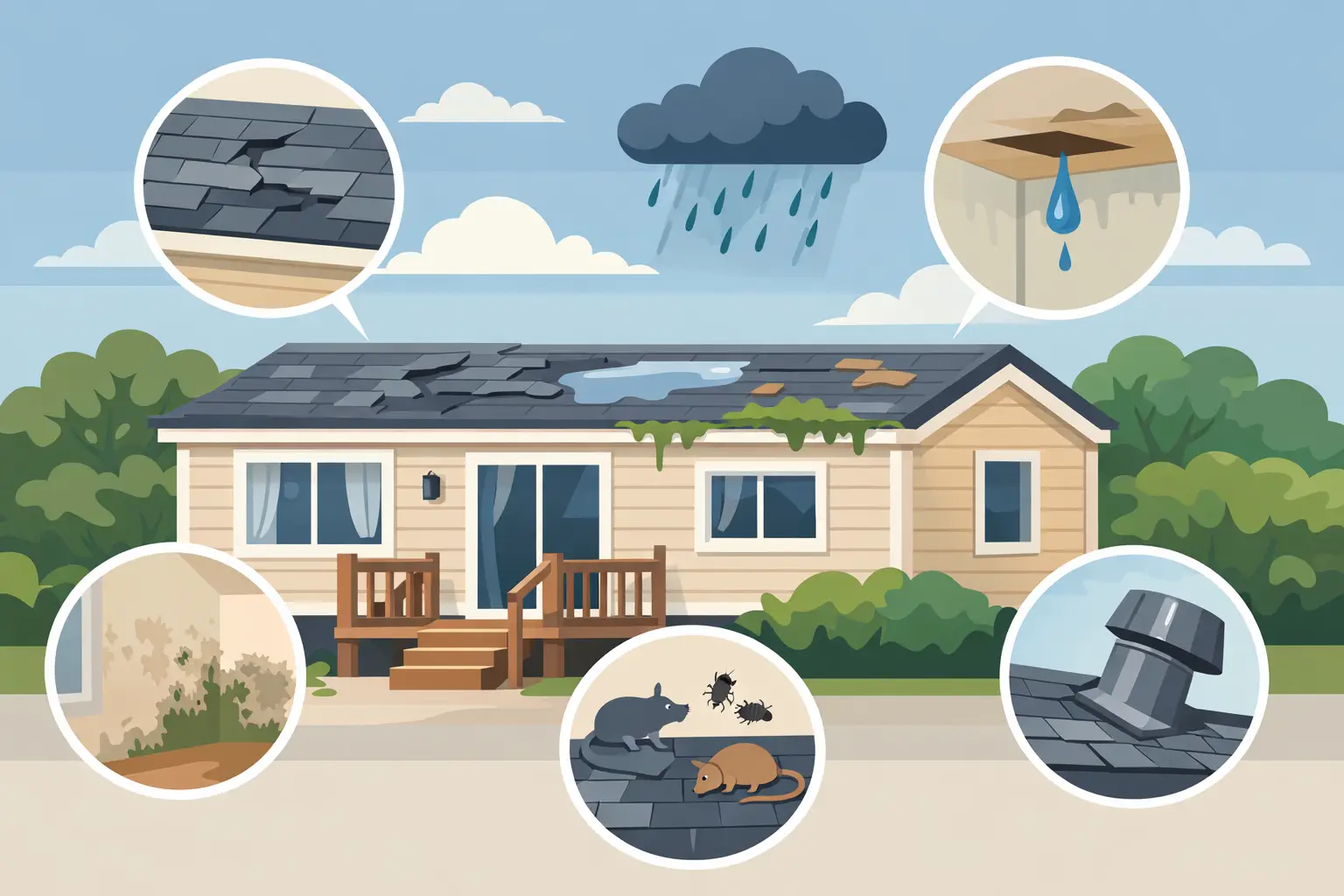
Soft flooring usually develops when the timber deck or joists have been affected by damp. Water may enter through a leaking pipe, failed shower seal, damaged external cladding, poor skirting ventilation or a gap around a door or window. Once moisture is trapped beneath vinyl, laminate or carpet, it can gradually weaken chipboard or plywood flooring.
Bathrooms, kitchens and utility areas are common trouble spots because of plumbing and regular water use. However, a soft patch in a lounge, hallway or bedroom can point to a different issue, such as condensation below the home, worn underfloor insulation or a problem with the supports and chassis.
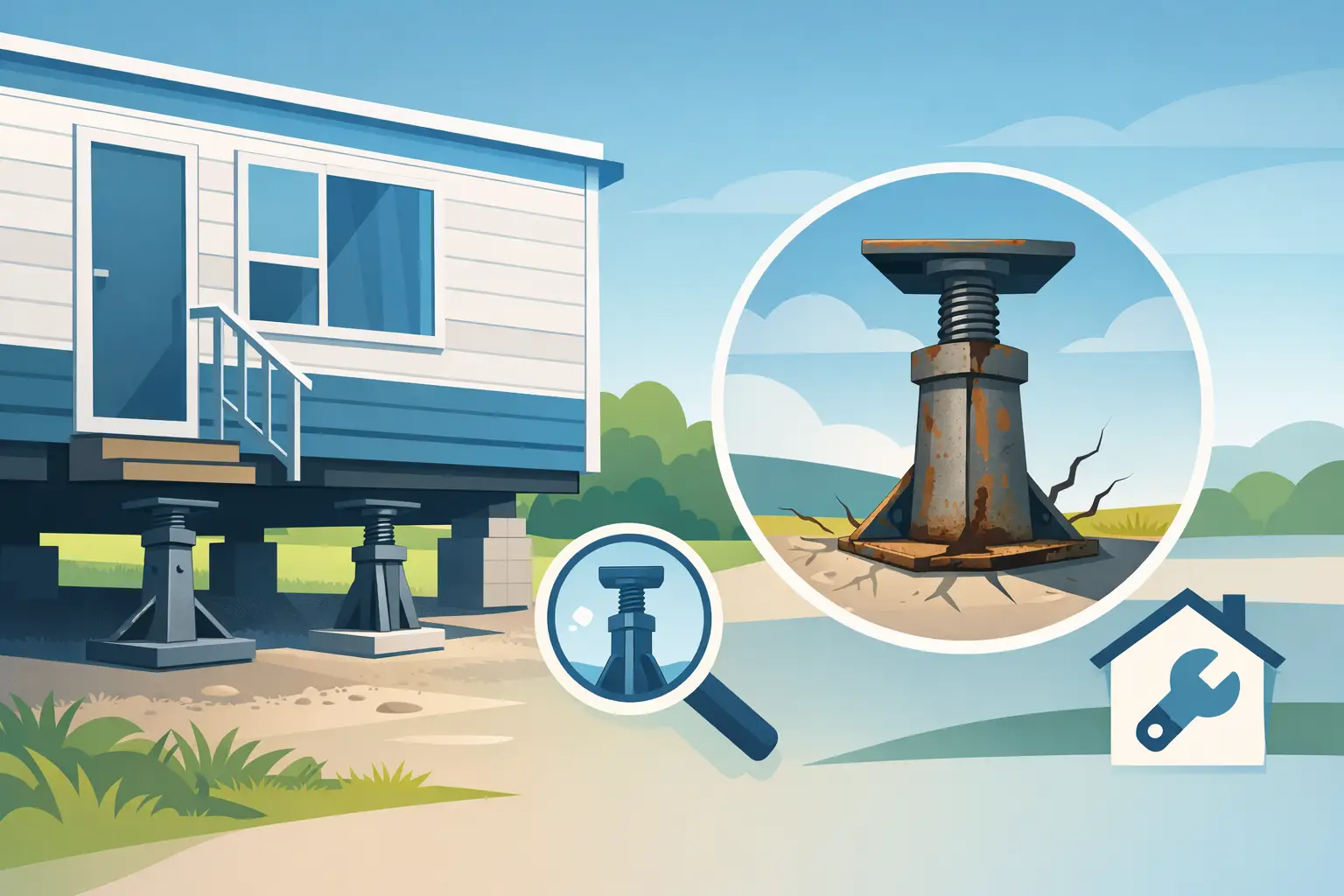
A floor can also feel uneven where the home has settled and its support jacks require assessment or adjustment. This does not always mean the floor itself has failed. The distinction matters because replacing sound floorboards will not correct an underlying support issue.
A small soft area is easier and less costly to deal with than widespread decay. Arrange an inspection if you notice several of the following signs:
Do not assume a new carpet or thicker underlay will solve the issue. It may make the area less noticeable temporarily, but it can also conceal damage while moisture continues to spread.
The first job is to establish where the weakness begins and how far it extends. A specialist will normally inspect the room from above and, where access allows, examine the underside of the park home. This helps identify whether the issue is confined to the finished floor, the timber deck, joists, insulation, pipework or structural supports.
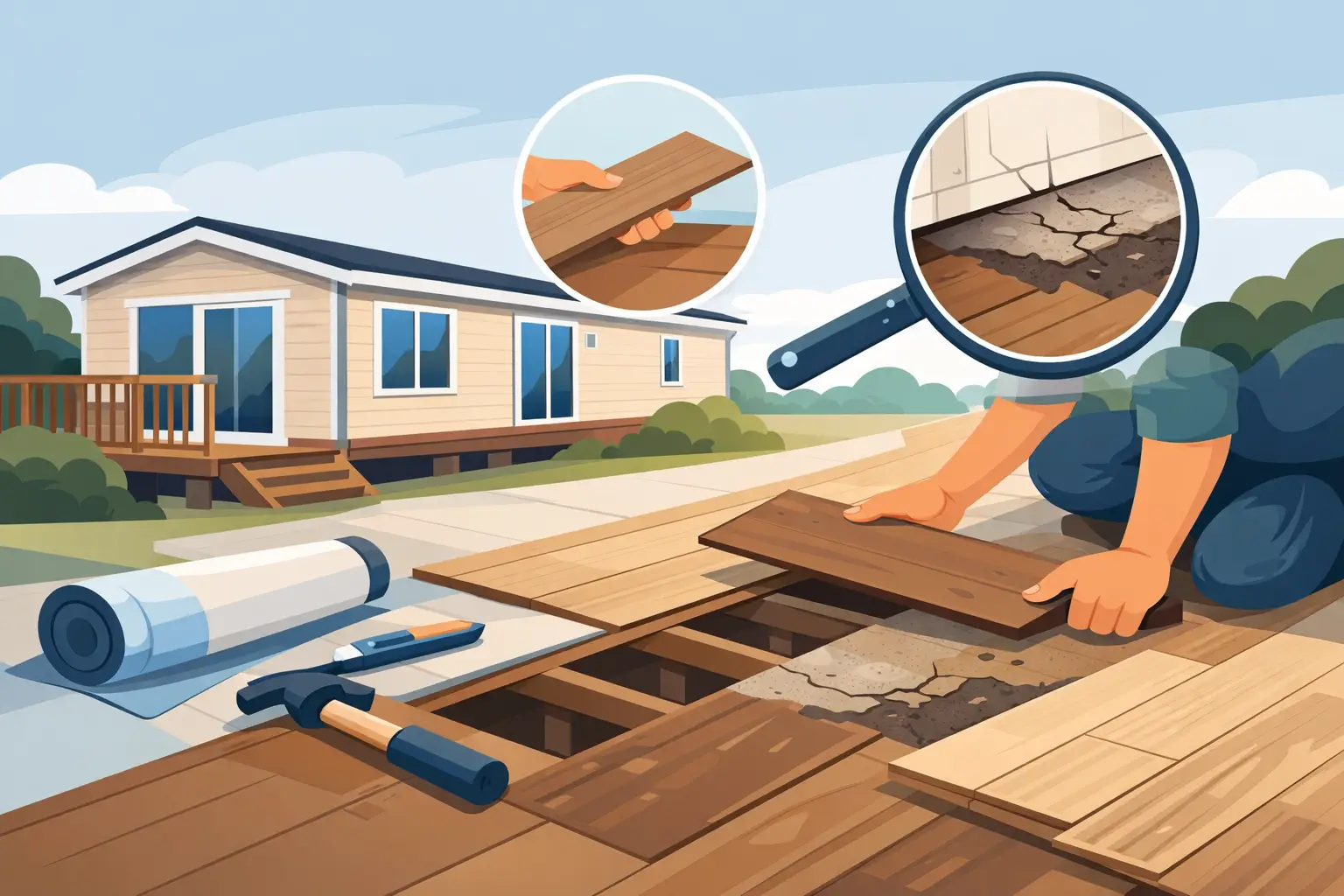
Floor coverings may need to be carefully lifted to expose the affected section. In a bathroom, this can involve removing sanitaryware, wall panels or a shower tray if the damaged flooring runs underneath them. It is more disruptive than a surface repair, but it is the only dependable way to replace decayed material and stop the repair failing prematurely.
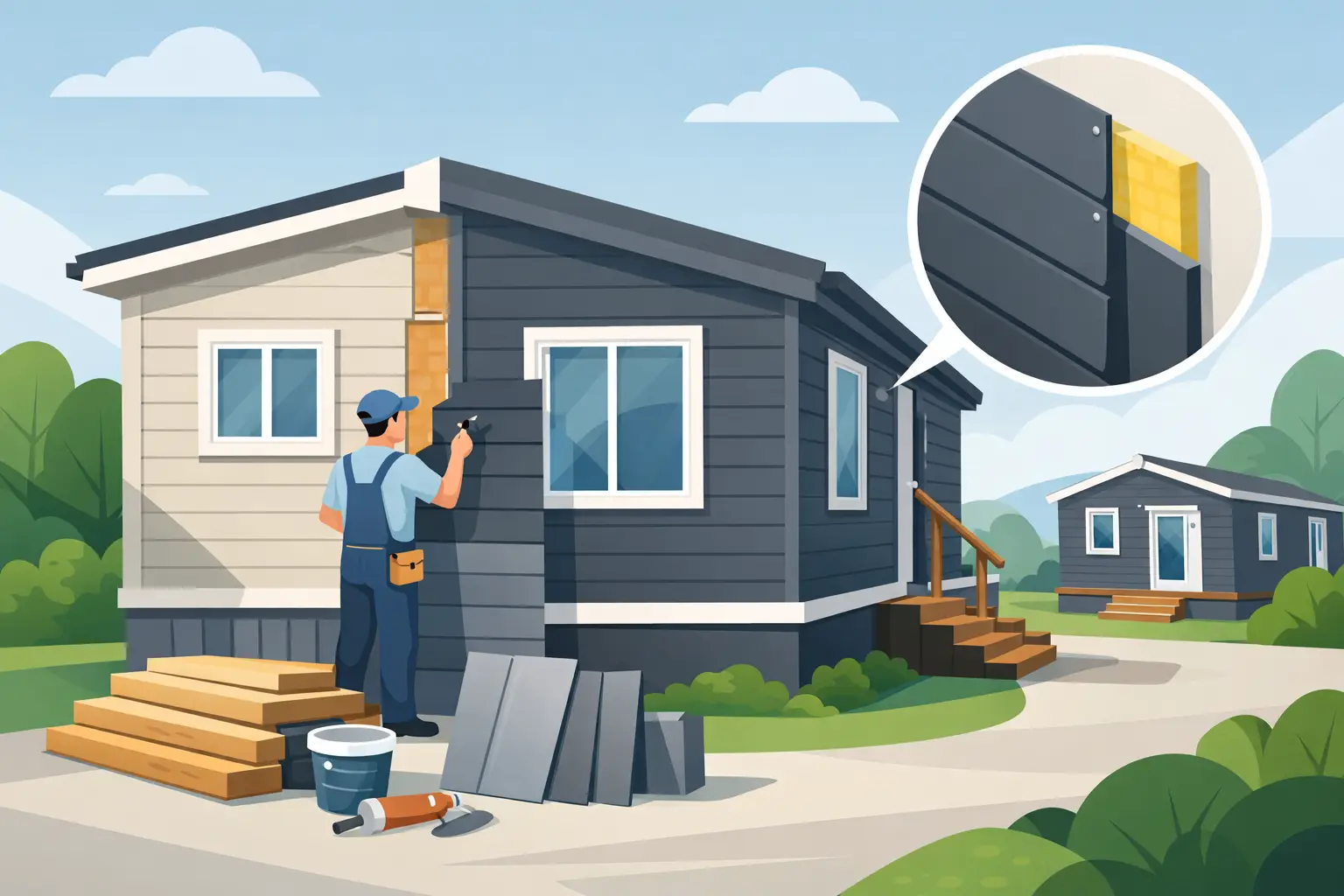
At this stage, the source of moisture must be dealt with. That could mean repairing a plumbing leak, renewing seals, improving drainage around the home, repairing external wall finishes or addressing failed roof details. If the water source is not resolved first, even high-quality replacement boards can deteriorate again.
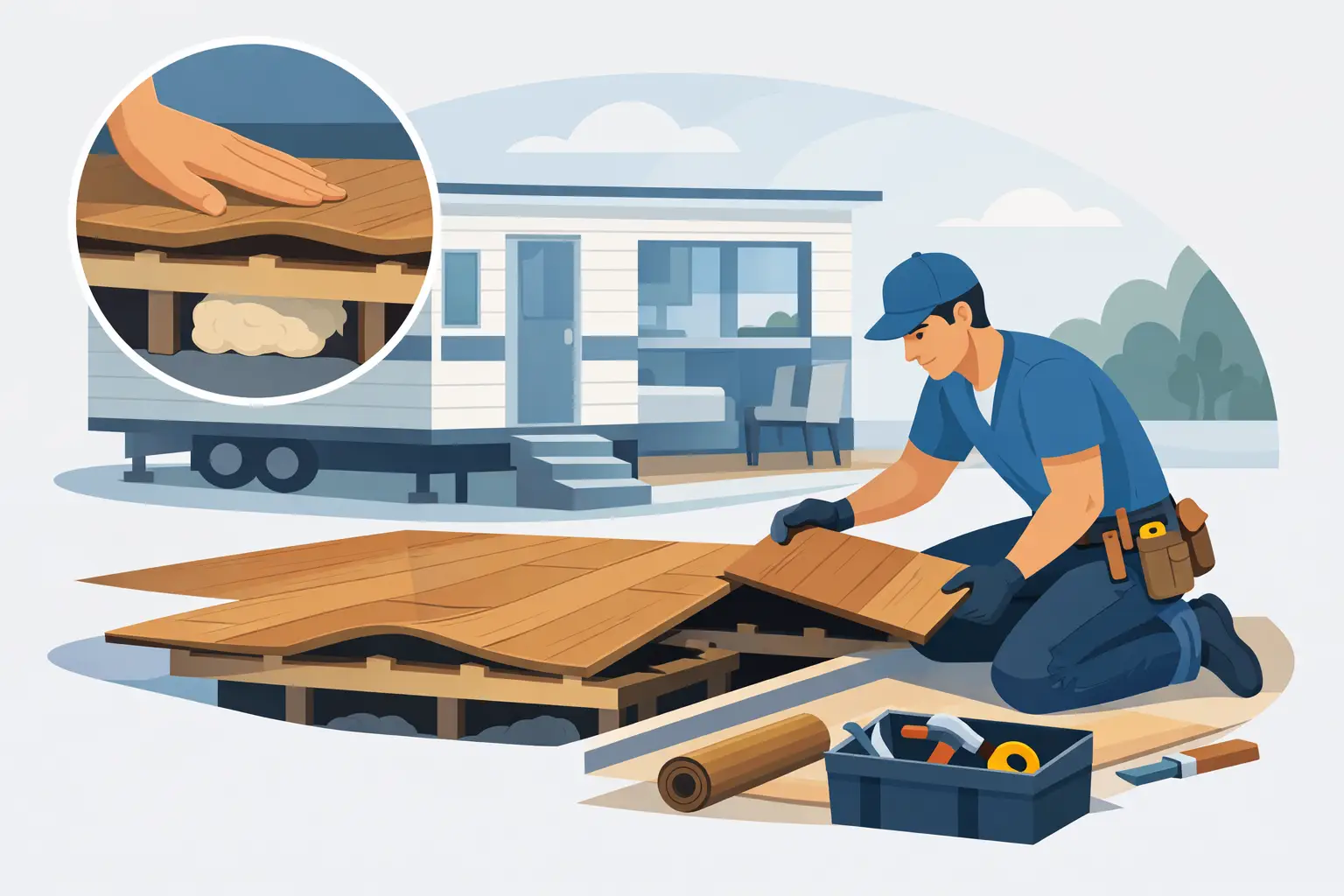
Once the affected area has been exposed and dried, damaged boards are cut out back to sound material. The condition of the joists below is then checked carefully. Any weakened timber should be repaired or replaced, with new timber properly treated and securely fixed to provide a stable base.
The replacement floor deck should match the required thickness and be suitable for the room. In areas prone to moisture, such as bathrooms and kitchens, moisture-resistant flooring materials are often the sensible choice. Joints need to be supported, fixed correctly and levelled so that the new surface does not flex under normal use.
The final finish is then reinstated. This may be vinyl, laminate, carpet or a new bathroom floor, depending on the room and the homeowner’s plans. A good repair should leave the floor level, firm and ready for everyday use, not simply improve its appearance.
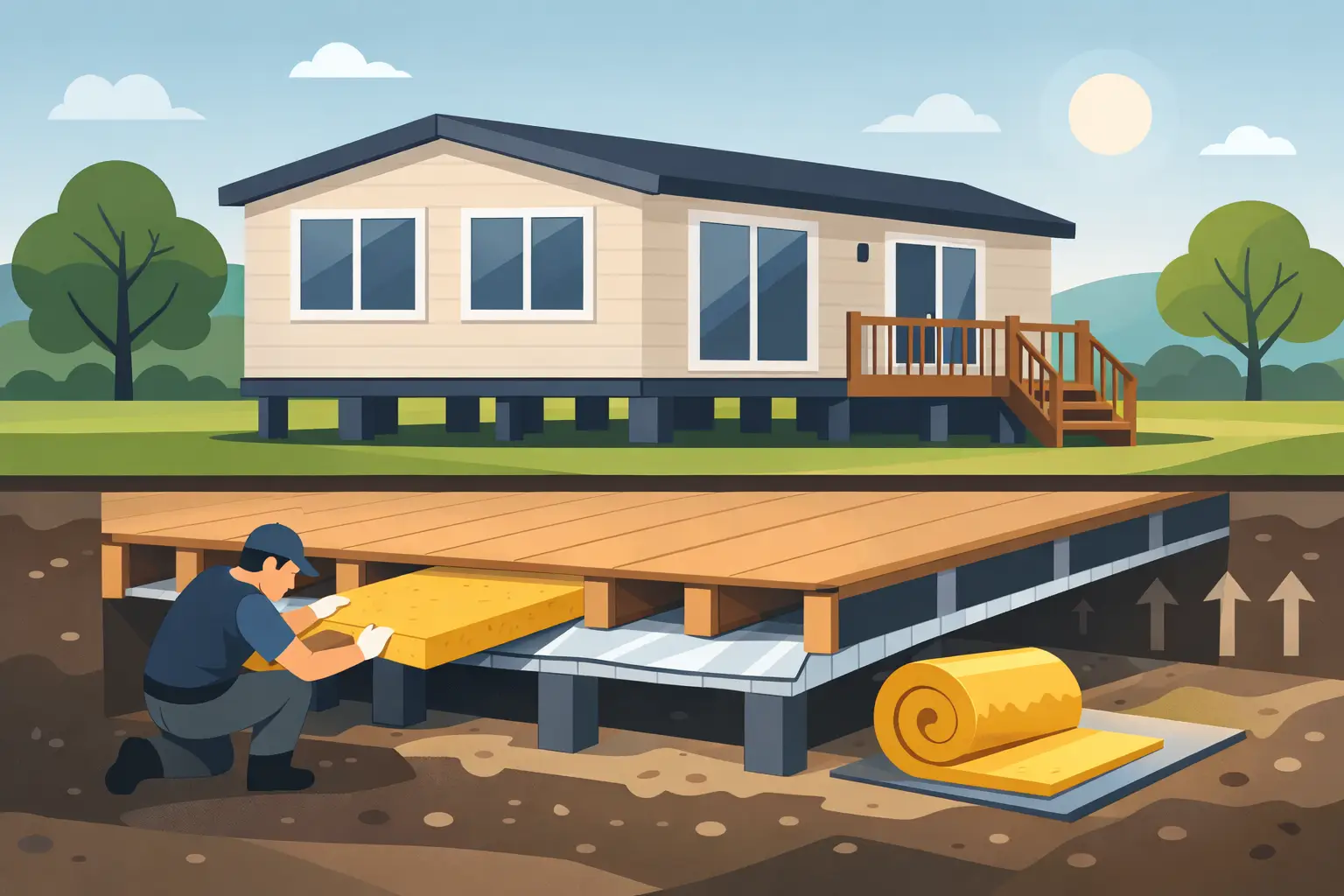
A soft floor and a cold floor can be connected, although they are not the same problem. Older park homes often lose heat through their underside, particularly where original insulation has sagged, become damp or is no longer performing well. Cold voids beneath the home can also encourage condensation, which puts timber floor components at greater risk over time.
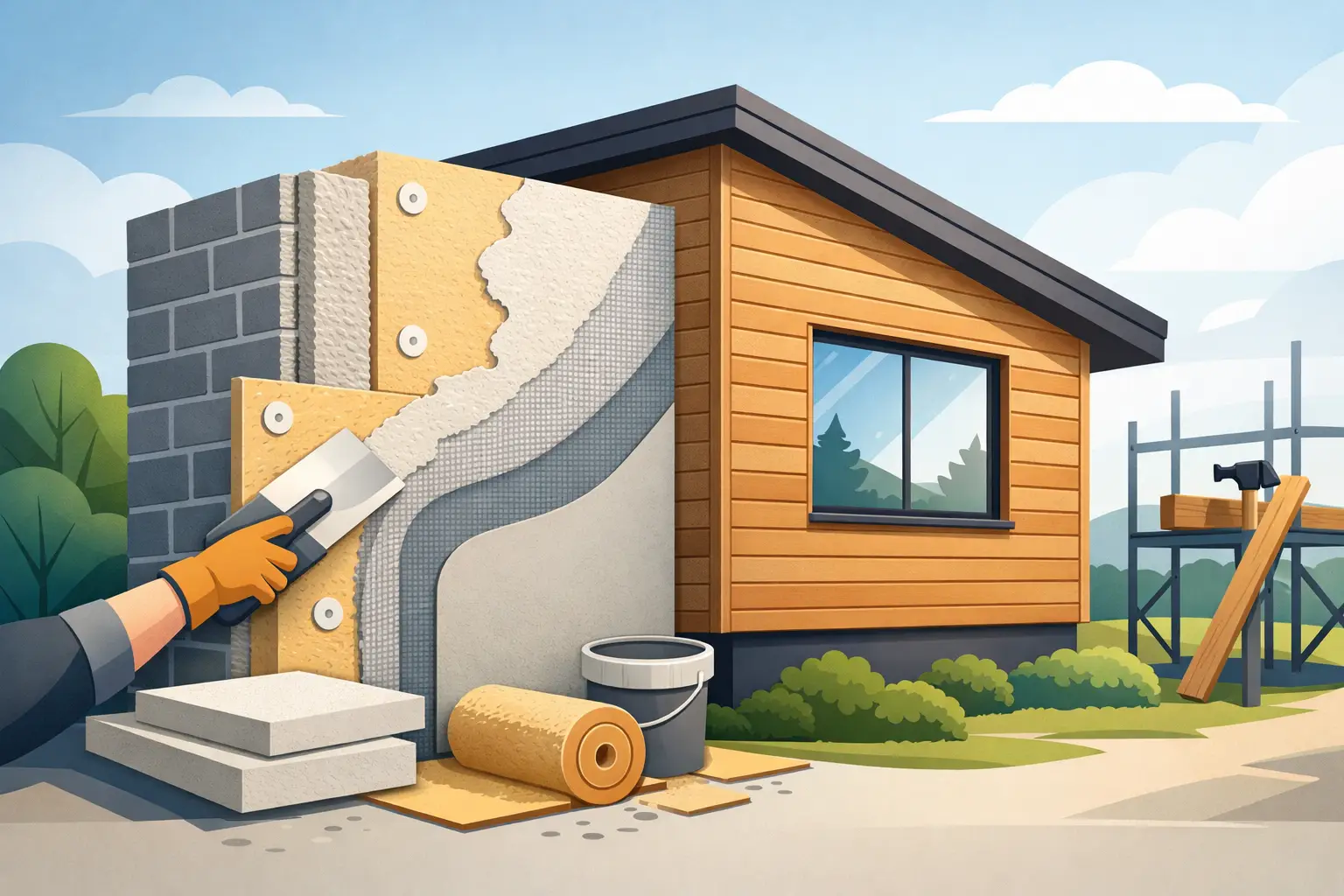
Renewing underfloor insulation as part of a floor repair can improve comfort considerably. It helps reduce draughts, keeps rooms warmer underfoot and supports better thermal efficiency. The materials and fitting method need to allow the underside of the home to remain protected while avoiding trapped moisture.
This is why park home work should not be approached like a standard domestic flooring job. Access beneath the property, the condition of the chassis, ventilation and insulation all influence the right solution.
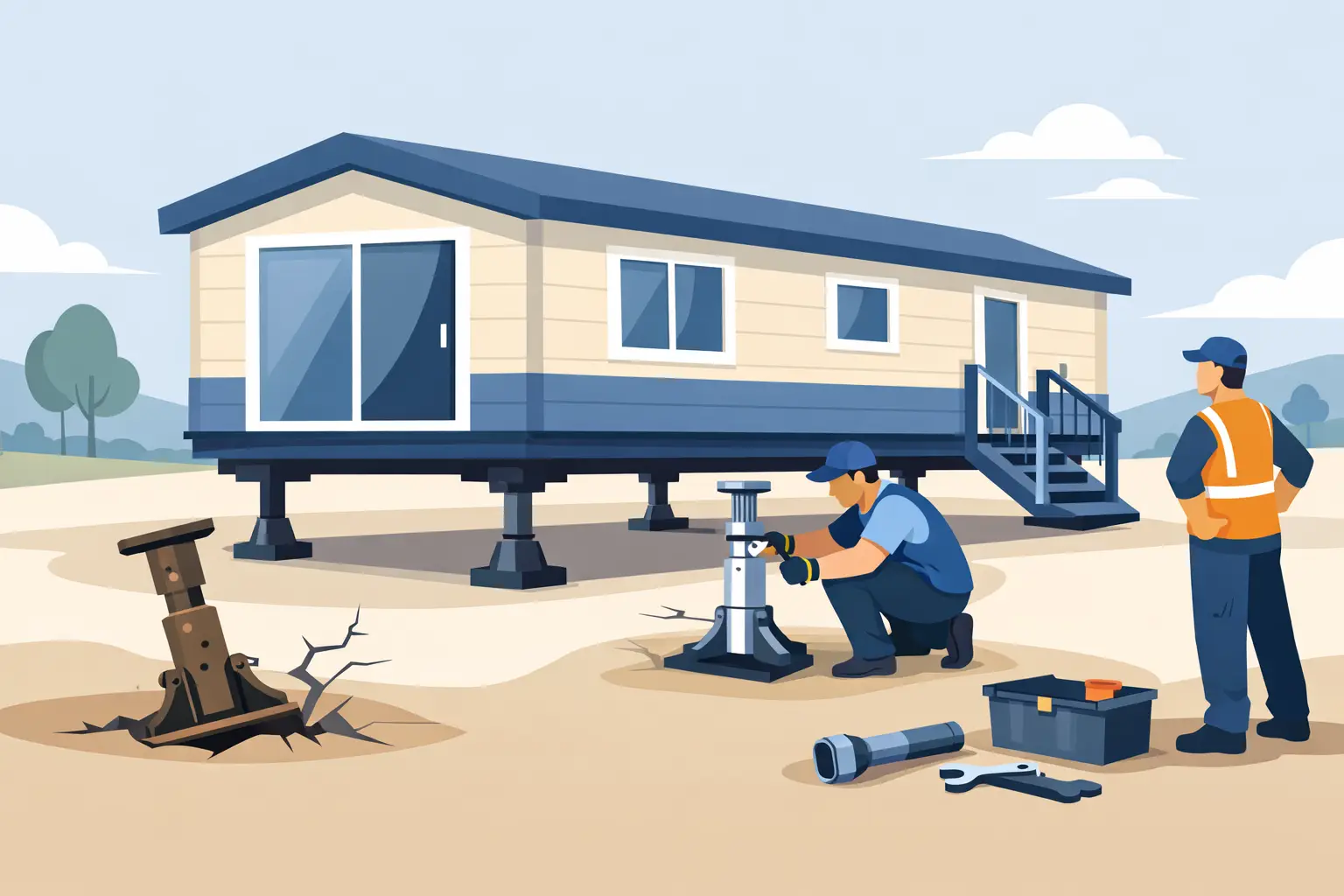
If the floor feels uneven across more than one room, or doors and walls appear out of line, the home’s supporting system should be assessed. Park homes rely on a sound steel chassis and correctly positioned support jacks to keep the structure level and stable.
Over time, ground conditions, ageing supports and previous movement can affect levels. A specialist assessment can determine whether the home needs re-levelling, replacement support jacks or chassis refurbishment. These works should be planned carefully, as lifting or adjusting a park home without the correct knowledge can cause damage to internal finishes, services and the structure itself.
Where floorboard damage and support problems occur together, both issues should be addressed in the right order. Restoring the home to a stable level first gives new floor repairs the best chance of lasting.
It is understandable to want a quick solution, particularly if the soft patch is in a busy part of the home. However, screwing a new board over a weak area, injecting expanding foam beneath it or laying new flooring on top are rarely lasting repairs. These methods can hide decay, prevent proper inspection and make later work more difficult.
Be cautious about relying on a general builder who has limited experience of park homes. The construction is lighter and more specialised than a conventional house, and access beneath the home can be restricted. A repair that overlooks ventilation, insulation, pipework or the chassis may create further problems later.
New Look Park Homes Ltd carries out inspections and repair work specifically for park and static homes, allowing the floor, insulation, supports and surrounding structure to be considered together. That specialist approach is particularly valuable where the cause is unclear or the damage has spread beyond one small area.
After repairs, a few sensible checks can help protect your investment. Keep an eye on shower seals, pipe connections and flooring around appliances. Deal with small leaks straight away, rather than waiting for staining or softness to appear.
It is also worth checking that the area beneath the home remains dry, clear and suitably ventilated. Damaged skirting, blocked vents and poor drainage can all contribute to underfloor damp. If your home is older, periodic checks of insulation, chassis condition and support jacks can identify concerns before they affect the inside of the property.
A firm, warm floor makes a noticeable difference to everyday living, especially through the colder months. If a section of your park home no longer feels solid, have it assessed early. A proper diagnosis and well-planned repair can protect the structure beneath your feet and restore confidence in your home.