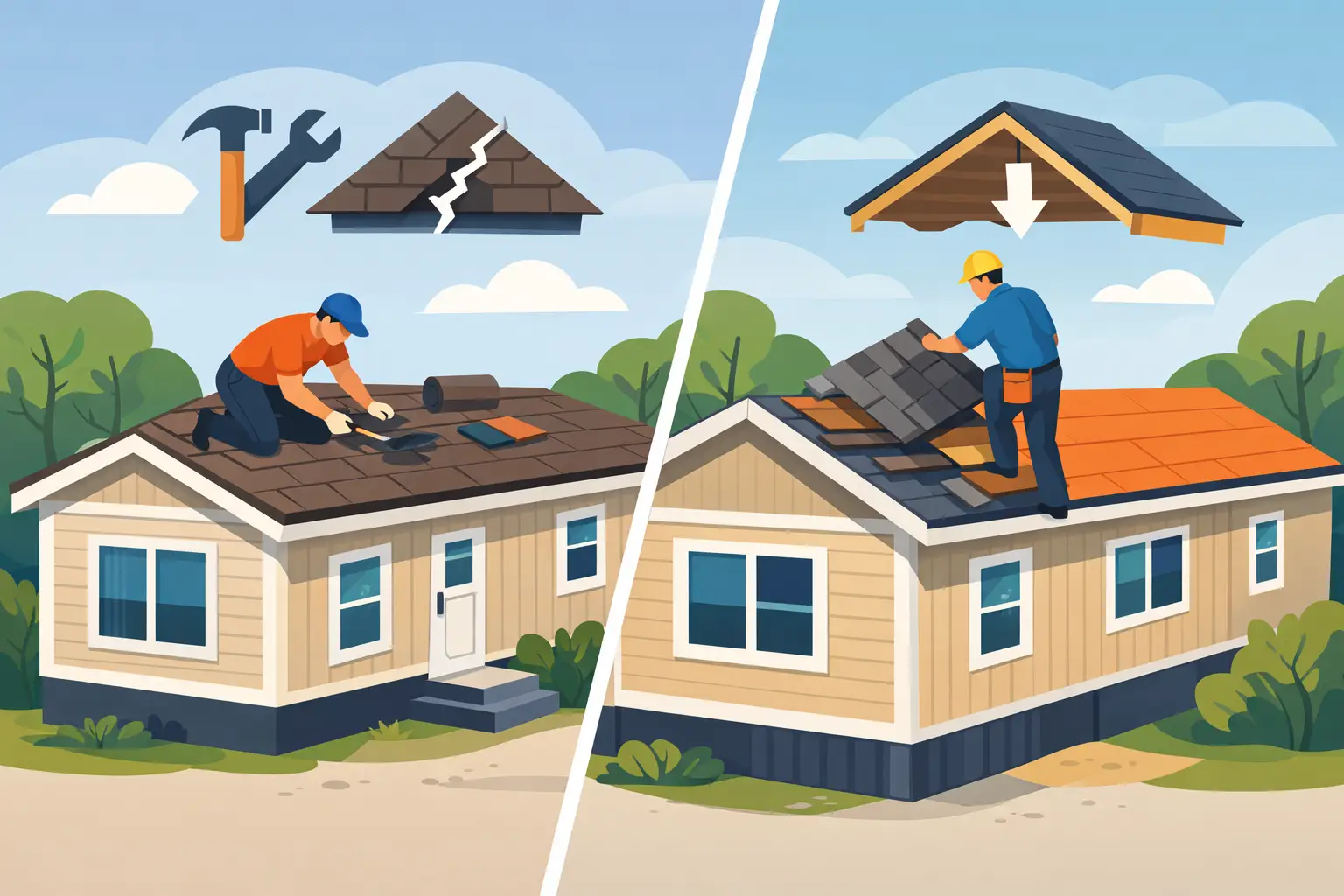
A small roof leak can feel easy to put off, particularly when it only appears after driving rain. But with park homes, water can travel behind trims, insulation and ceiling panels before it becomes visible indoors. That is why the decision around park home roof repair vs replacement should be made from a clear inspection of the roof’s condition, not simply the size of the stain on the ceiling.
A well-timed repair can protect your home for years at a sensible cost. Equally, repeatedly patching an ageing roof can become poor value if the underlying covering, flashings or structure are reaching the end of their useful life. The right answer depends on the cause of the problem, the roof type, its overall condition and your plans for the home.
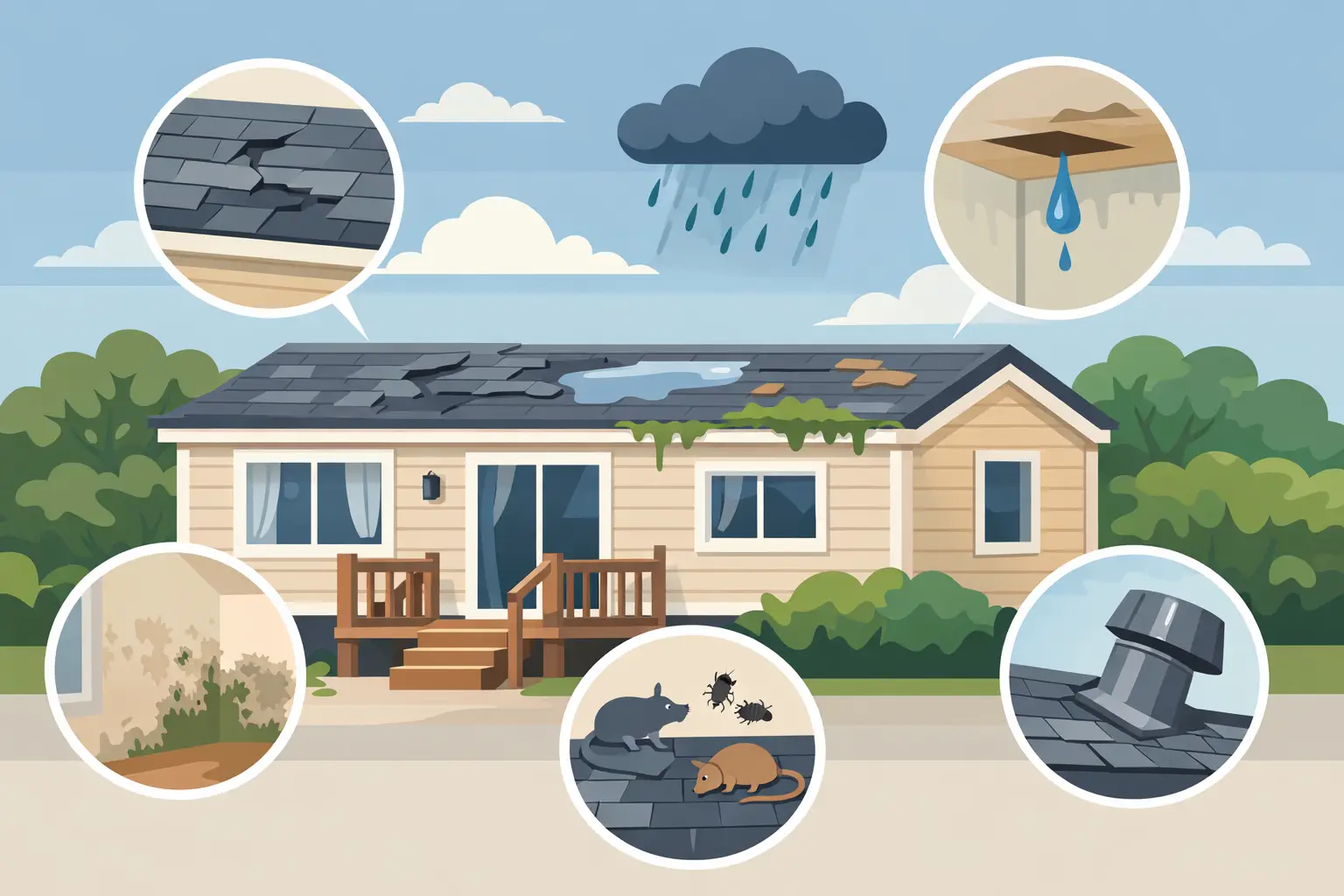
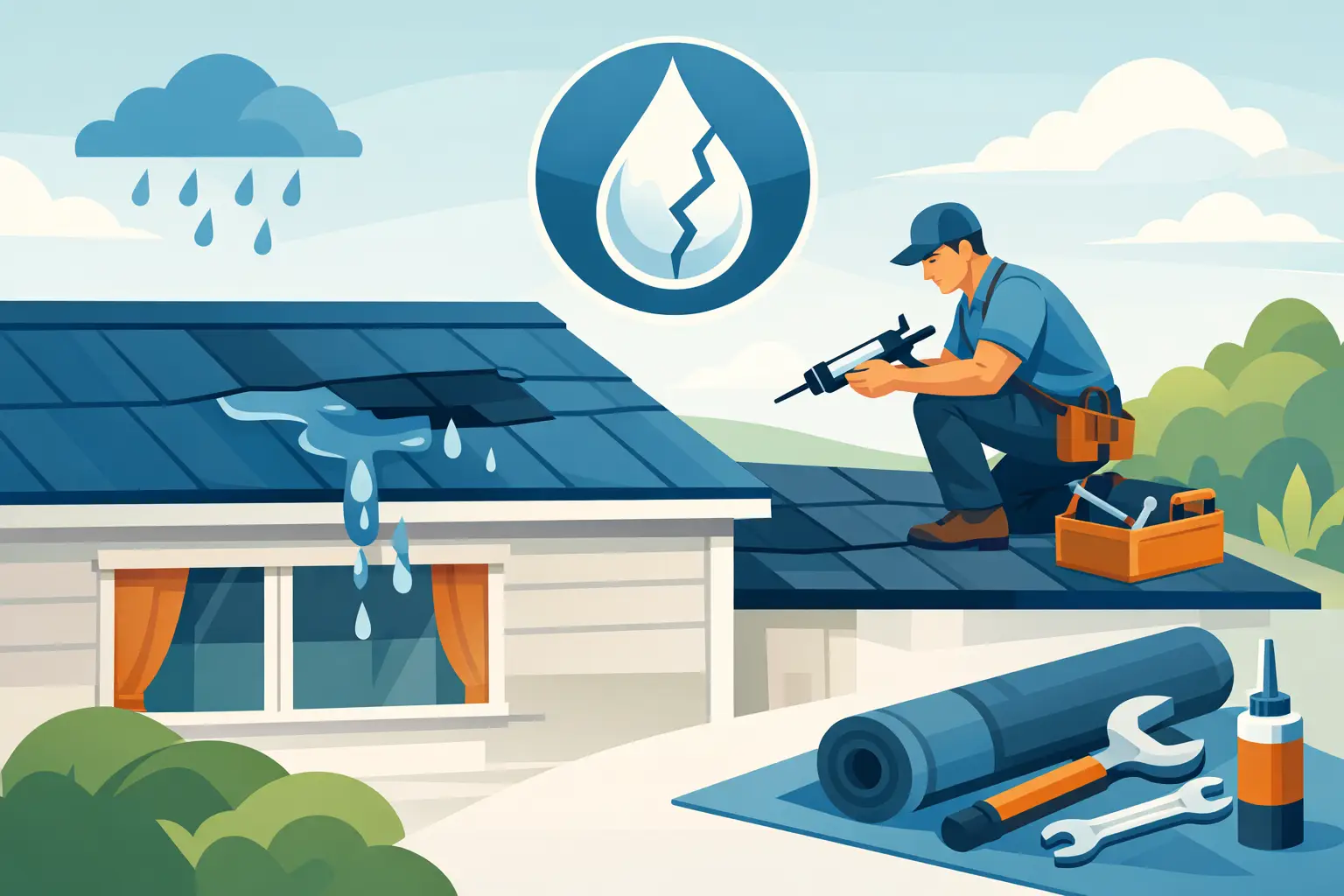
Roof repairs are often the right route when the problem is localised and the wider roof remains sound. A split in a small section of felt, a loose edge trim, failed sealant around a vent or damaged flashing can allow water in without meaning the whole roof needs replacing.
The first priority is finding where water is entering. This is not always directly above the visible damp mark. Rain can run along roof timbers, insulation or internal surfaces, especially on a shallow-pitched park home roof. An experienced inspection should look at the roof covering, joints, edges, ridge details, vents, gutters and any areas where previous repairs have been carried out.
A repair is generally worth considering where the roof covering is still flexible and secure, there are no widespread cracks or lifting sections, and the roof deck beneath has not been affected by prolonged moisture. If a single detail has failed due to storm damage or natural wear, targeted work can restore the weatherproof finish without unnecessary disruption.
Repair work may include renewing damaged sections of covering, resealing joints, replacing trims or flashings, securing loose materials, and dealing with minor water damage before it worsens. It is a practical option for homeowners who want to deal with an issue early and keep their home protected.
The key is not to confuse a temporary patch with a proper repair. Applying sealant over brittle material or repeatedly coating the same weak point may stop a leak for a short period, but it does not necessarily address movement, failed joints or deterioration beneath the surface.
There comes a point when individual repairs no longer provide reliable protection. This is usually when problems appear in several parts of the roof, rather than in one isolated area.
Warning signs include recurring leaks, damp patches in more than one room, sagging or stained ceiling boards, widespread cracking or blistering in the roof surface, loose or deteriorated edge trims, and moss or debris holding moisture around roof details. You may also notice increased draughts, a colder feel in rooms beneath the roof, or a musty smell that suggests moisture has been present for some time.
Age alone does not automatically mean replacement is necessary. Some roofs are well maintained and remain in good condition beyond expectations, while others deteriorate sooner because of poor installation, storm exposure, standing water or neglected gutters. However, an older roof with a growing list of minor defects deserves an honest assessment.
Water damage can also affect more than the roof covering. If moisture reaches the deck or timber structure, it may lead to softened boards, decay and damage to insulation. In these circumstances, repairing the visible surface without investigating below it can leave the real problem in place.
The cheapest quote is not always the lowest-cost decision over time. A focused repair will normally cost less upfront than a full replacement, particularly where access is straightforward and the damage is confined to one area. It can be excellent value when it gives the roof many more years of dependable service.
Replacement costs more because it involves removing or preparing the existing roof finish, dealing with any damaged deck or structural details, installing a new weatherproof system and completing the edges, flashings and drainage details properly. However, it may prevent the continuing expense of call-outs, interior repairs and repeated patching.
When weighing the options, consider the likely lifespan of the proposed repair. If a repair is likely to be followed by further work next winter, it may be wiser to put that money towards a replacement that gives the whole home a renewed layer of protection. This is particularly relevant if you are also planning external cladding, insulation improvements or other refurbishment work. Completing related work in the right order can avoid unnecessary disturbance later.
It is also worth considering the cost of doing nothing. A small leak can damage ceilings, wall finishes, electrical fittings and insulation. Moisture trapped in a park home can reduce comfort and create a much larger repair job than the original roof defect.
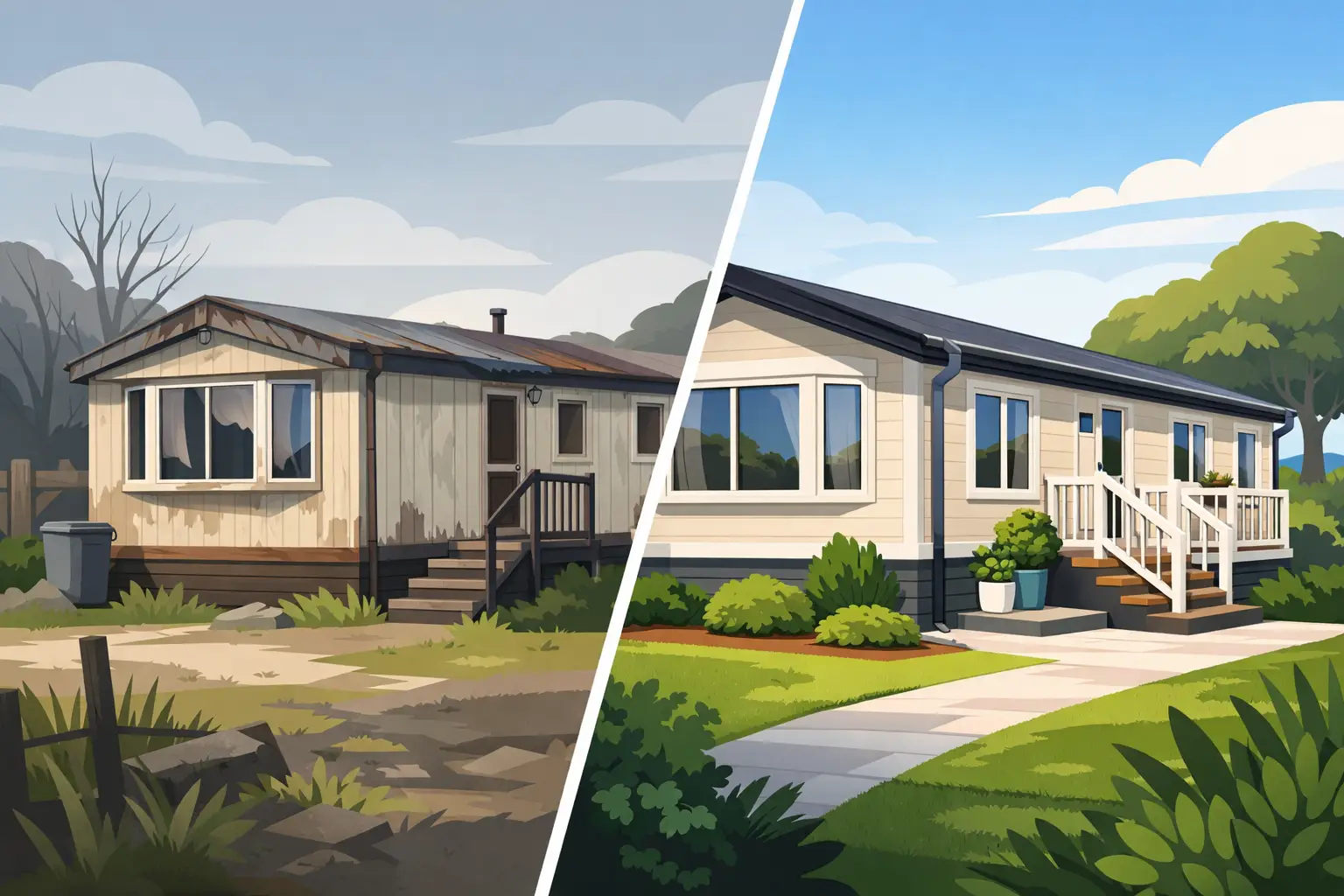
A full replacement is not just about stopping leaks. It gives the opportunity to create a consistent, durable roof finish across the whole home, with properly finished edges, joints and penetrations. This can improve appearance as well as weather protection.
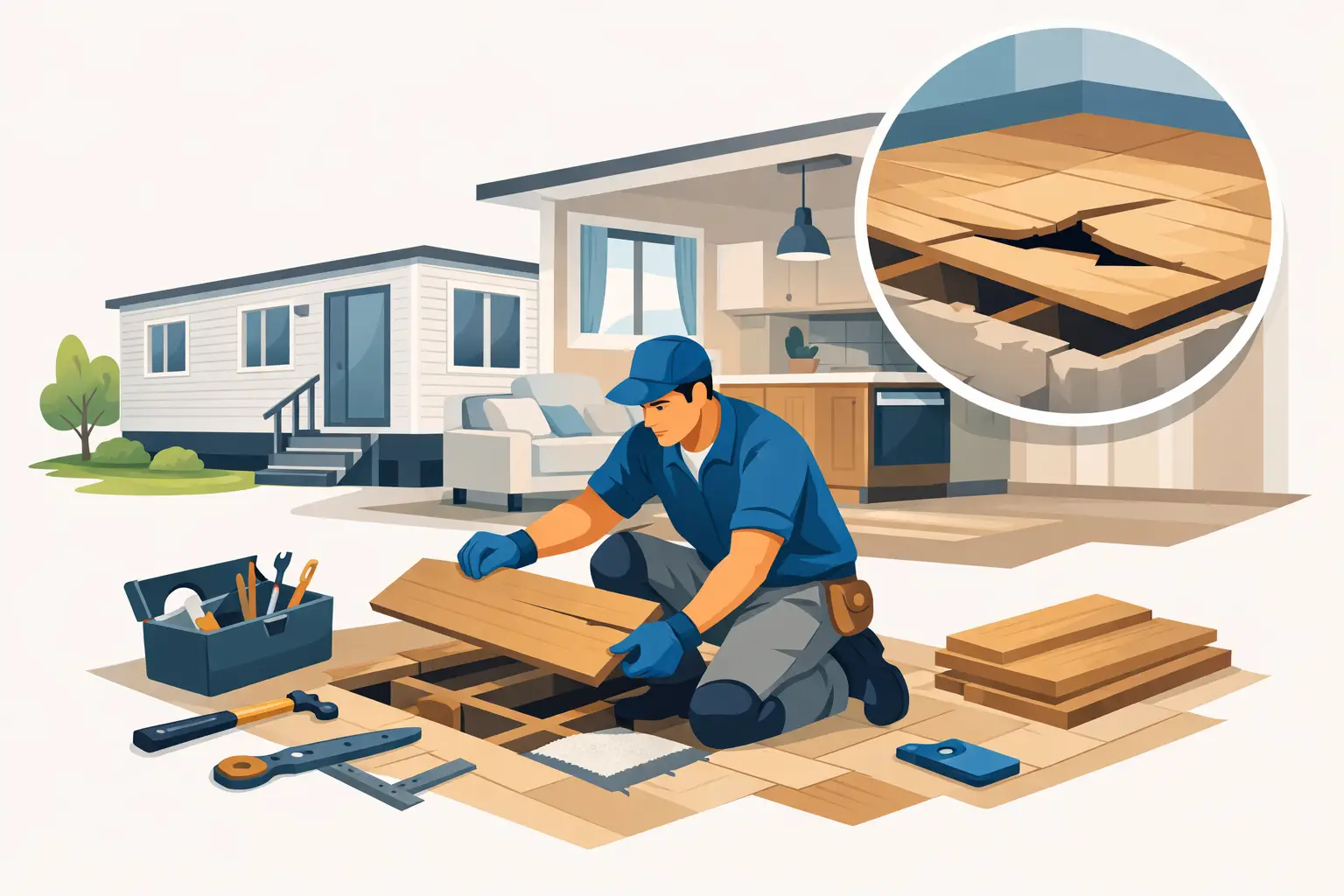
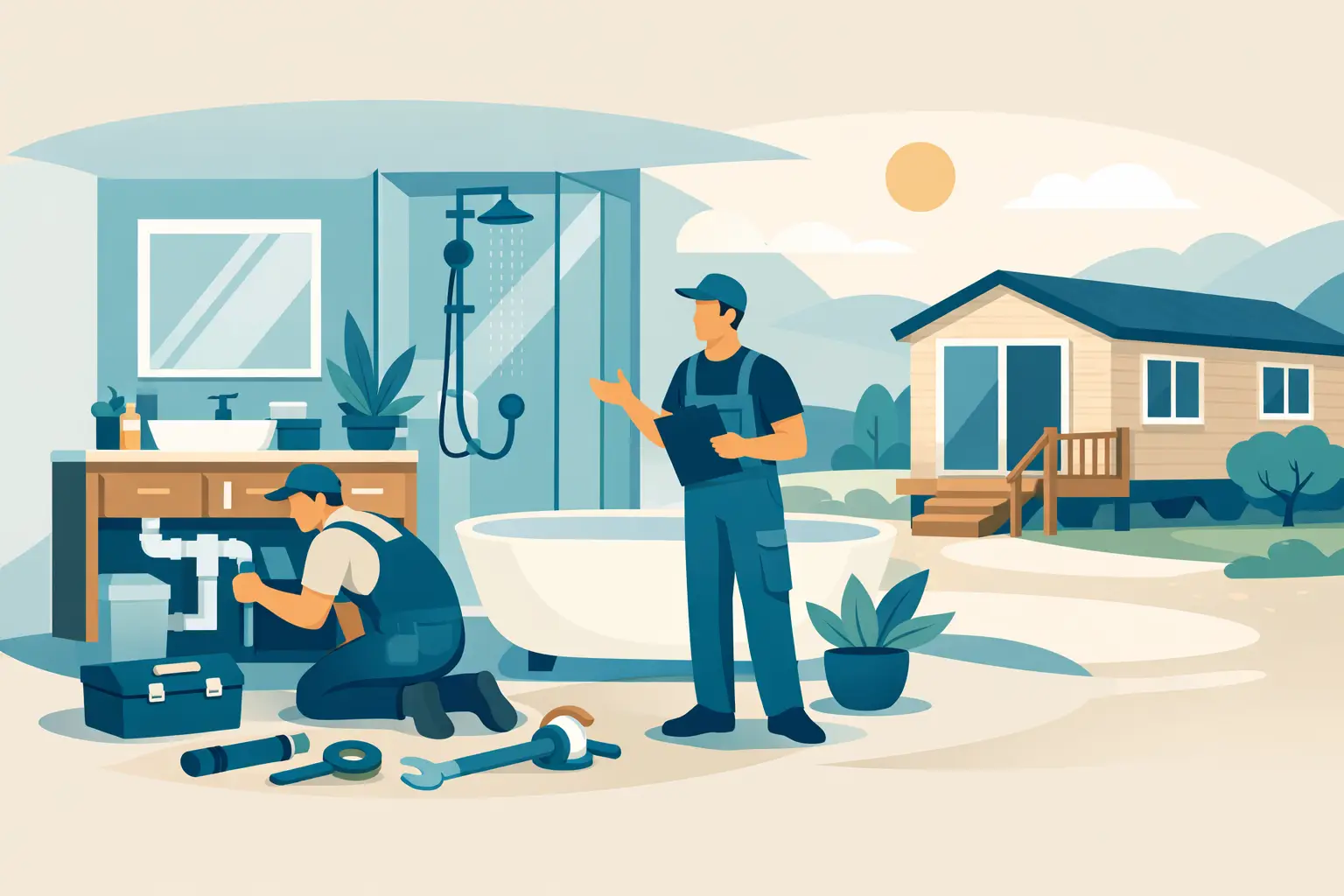
For many owners, the main benefit is peace of mind. A sound roof helps protect the investment you have made in the rest of the home, whether that includes a new bathroom, improved wall insulation, upgraded external cladding or refurbishment beneath the floor. It also reduces the worry that comes with every spell of heavy rain.
The right roofing system should suit the shape, construction and condition of the individual park home. Park homes are not built in the same way as conventional brick properties, so generic roofing solutions can be unsuitable. Weight, movement, roof pitch, ventilation and the condition of the supporting structure all need consideration before work begins.
Replacement may be the better choice if the existing roof has several leaks, extensive deterioration, repeated failed repairs or signs of moisture damage below the surface. It is also worth discussing if you want a long-term improvement rather than a short-term fix before selling, letting family use the home, or settling in for the years ahead.
A roof should never be judged from ground level alone. Some issues can be seen from outside, but the full picture often requires checking internal ceilings, roof edges, drainage, sealant lines and any signs of movement or water ingress.
A good assessment explains what has failed, why it has failed and what work is genuinely needed. It should separate urgent weatherproofing from optional improvements, so you can make an informed decision without pressure. Photographs and plain explanations are particularly helpful when damage is in an area you cannot easily see yourself.
At New Look Park Homes Ltd, this specialist approach matters because park and static homes have their own construction details and maintenance needs. The aim is to recommend work that protects the home properly, whether that means a careful repair or a full replacement designed for lasting performance.
Before choosing between repair and replacement, ask how widespread the damage is, whether the roof deck has been checked, and how long the proposed solution is expected to last. You should also ask what preparation is included, how edges and flashings will be finished, and whether the workmanship is guaranteed.
Do not be afraid to ask whether a repair is simply buying time. There is nothing wrong with a holding repair when budgets or circumstances require it, provided you understand its limitations and have a plan for the future. Honest advice should give you that clarity.
Simple maintenance can make a real difference. Keep gutters clear, remove heavy debris where it is safe to do so, and watch for changes after high winds or prolonged rain. Inside the home, investigate new stains, peeling ceiling finishes or unexplained musty smells promptly rather than waiting for a larger leak to appear.
Your roof does not need replacing because it is old, and a leak does not always mean the whole roof has failed. What matters is understanding the condition beneath the surface and choosing work that gives your home dependable protection. A careful inspection now can spare you a cold, damp and costly problem later.