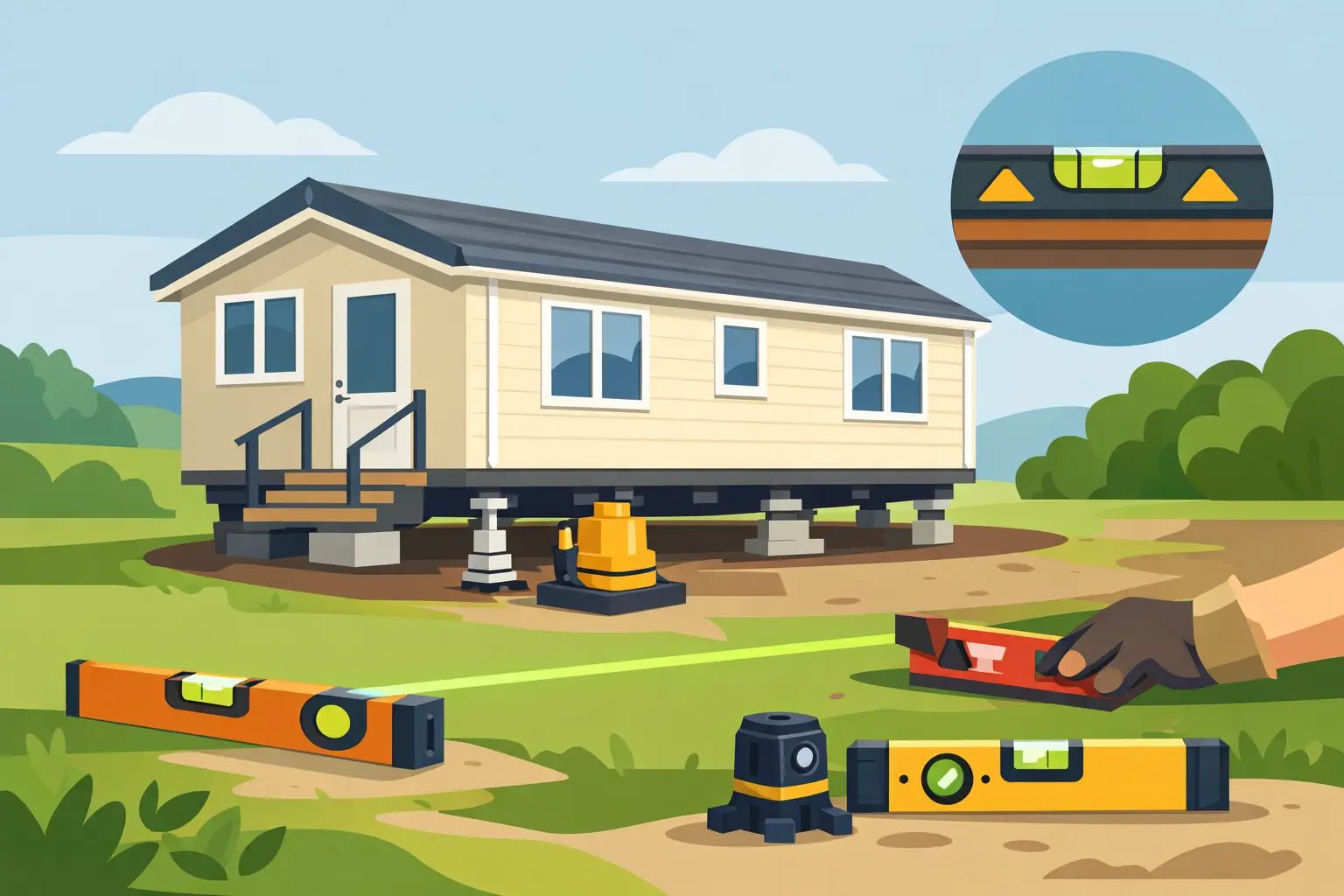
A park home that feels uneven is more than an everyday annoyance. Doors may start catching, cupboards may not sit square, floors can slope, and cracks can appear around internal finishes. Knowing how to level a park home starts with understanding why it has moved and whether the issue lies with the support system, the chassis, the base or the ground beneath it.
Park homes are built differently from conventional brick properties. They sit on a steel chassis, supported at set points by jacks, stands or other support arrangements. That means levelling work needs a careful, measured approach. Raising the home in the wrong place, or trying to correct one corner too quickly, can put unnecessary strain on the chassis, walls, services and roofline.
Some movement can be gradual, particularly on older homes or plots where the ground has changed over time. You may first notice it when a door opens by itself, a shower tray no longer drains properly, or furniture that was once stable begins to rock.
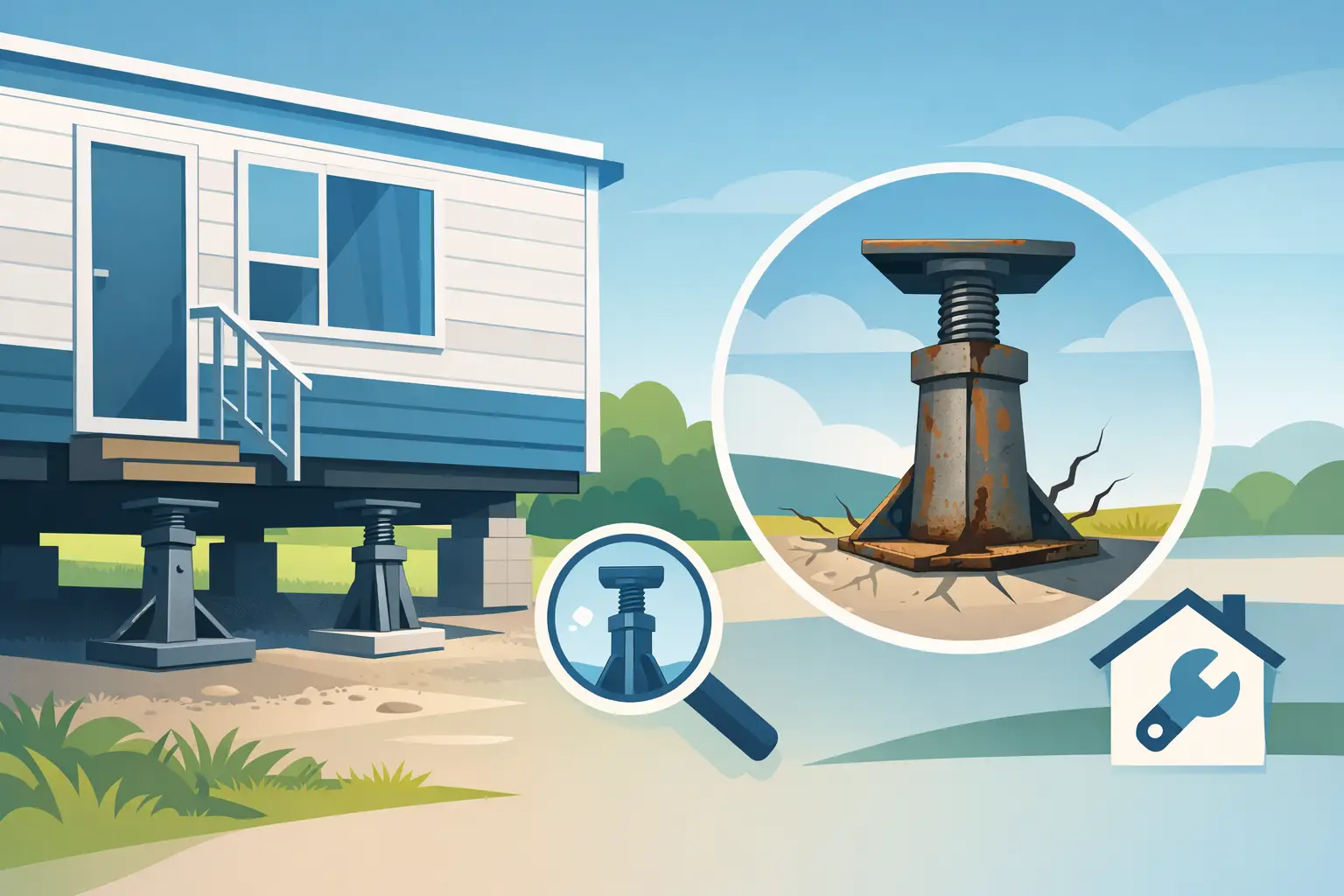
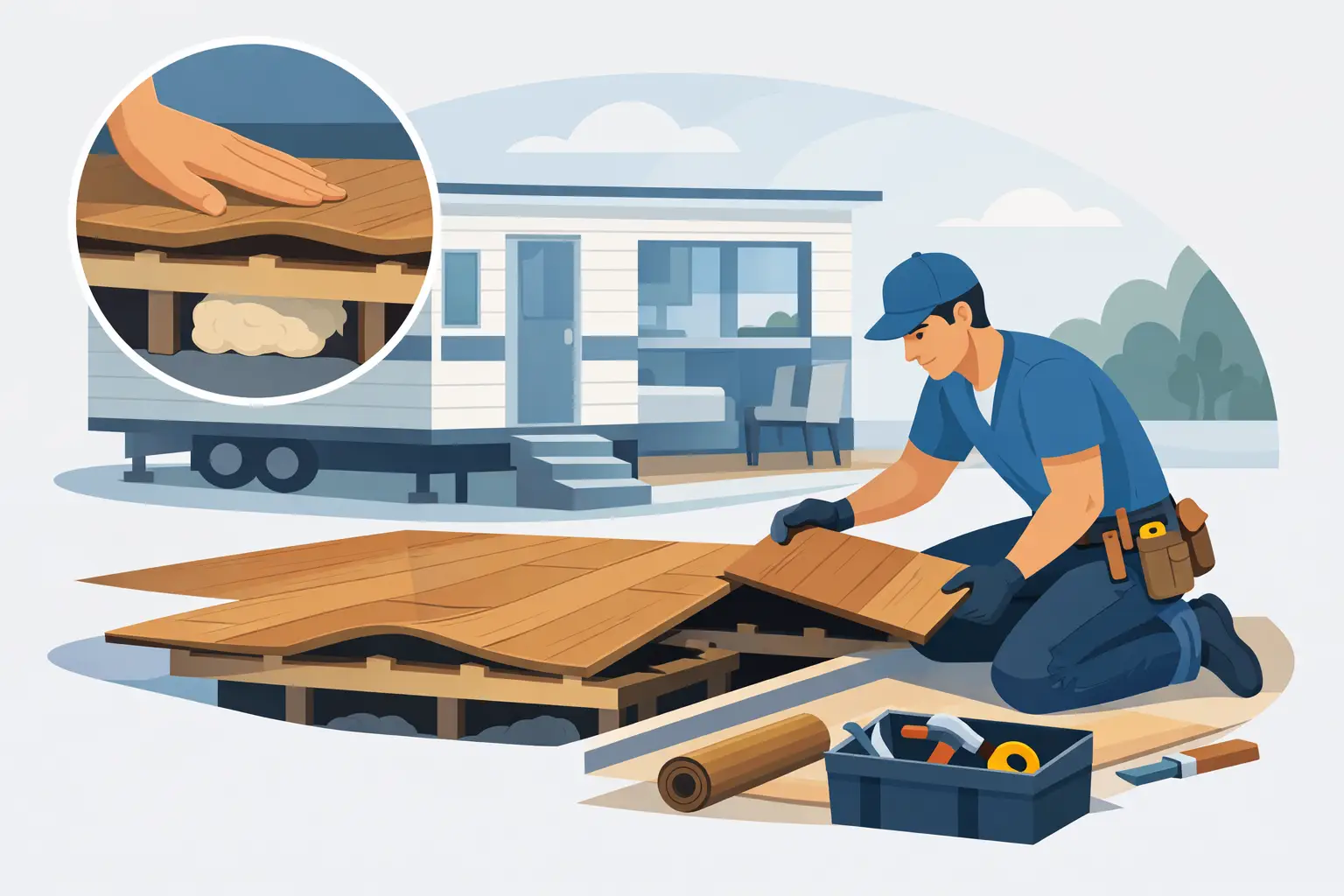
Other warning signs include uneven floors, gaps around skirting boards, cracks at wall and ceiling joints, windows that stick, and external cladding panels that no longer align neatly. A visible lean in the home, a sagging area beneath the floor or rusted, damaged support jacks should be treated more seriously.
These signs do not always mean the whole home needs lifting. One failed support, a deteriorated base plate or localised settlement can be responsible. The key is to inspect the full support arrangement before deciding on a repair.
The most common cause is settlement. Ground conditions can alter over the years, especially where drainage is poor, water runs beneath the home, or the original base has weakened. Soil can wash away, paving can sink and concrete pads can crack, leaving a support point without a firm footing.
Ageing support equipment is another concern. Steel support jacks and stands can corrode in damp underfloor conditions, while timber packing or unsuitable blocks may deteriorate, shift or compress. A home that has been supported with mismatched materials is unlikely to remain stable in the long term.
Water is often part of the story. Leaking gutters, damaged downpipes and poor drainage can direct rainwater towards the base. Over time, this affects the ground and increases dampness below the home, accelerating corrosion to the chassis and support system.
It can also be tempting to blame the chassis straight away. In some cases, corrosion or damage to the steelwork does need attention, but a proper assessment should distinguish between a chassis issue and a support or foundation problem. The right repair depends on the cause, not just the visible symptoms.
Levelling is specialist work rather than a job for a car jack and a spirit level. A park home is a complete structure with fixed connections, including plumbing, drainage, electrical supplies and gas services. The aim is not simply to make the floor appear level. It is to support the chassis evenly and securely without causing damage elsewhere.
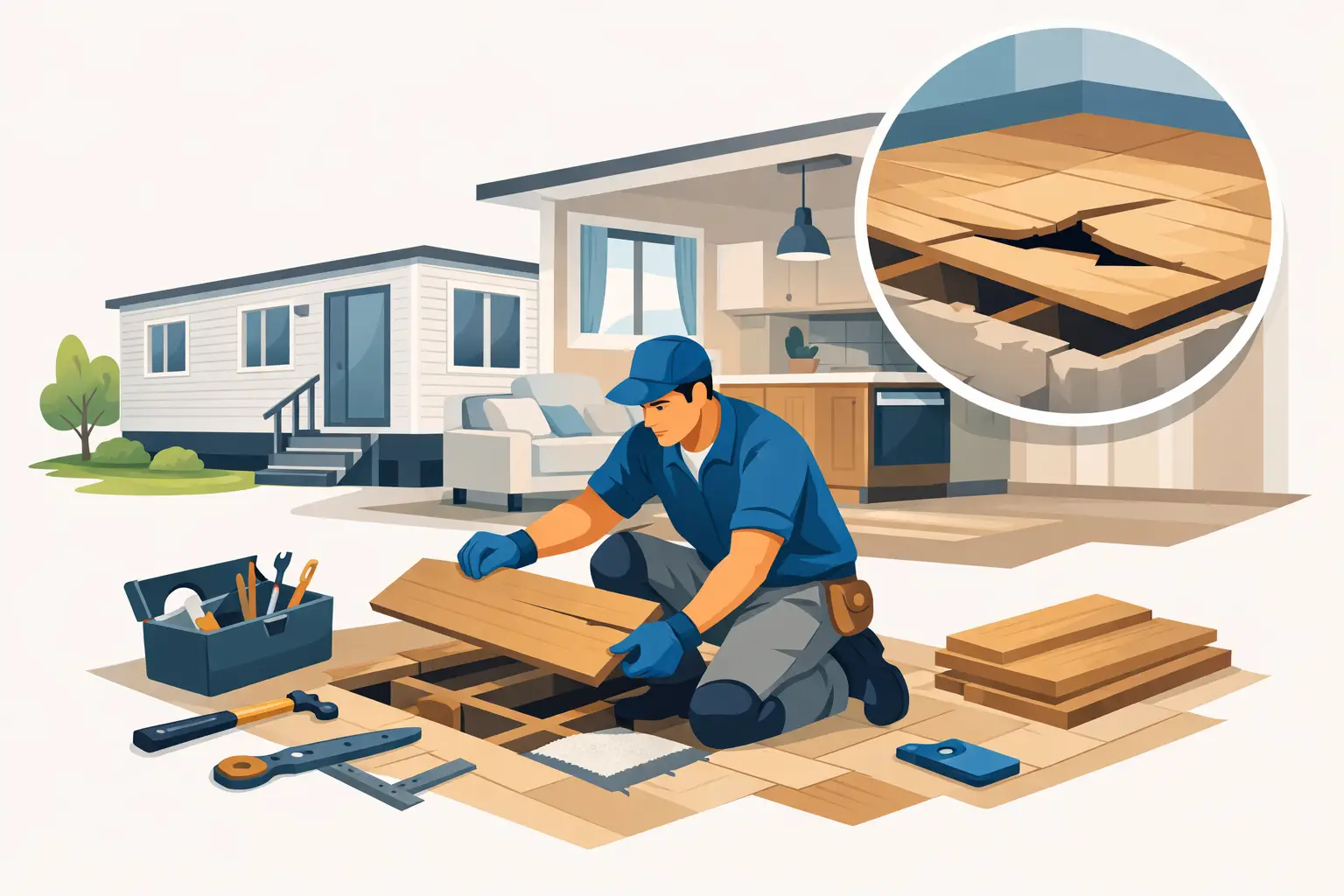
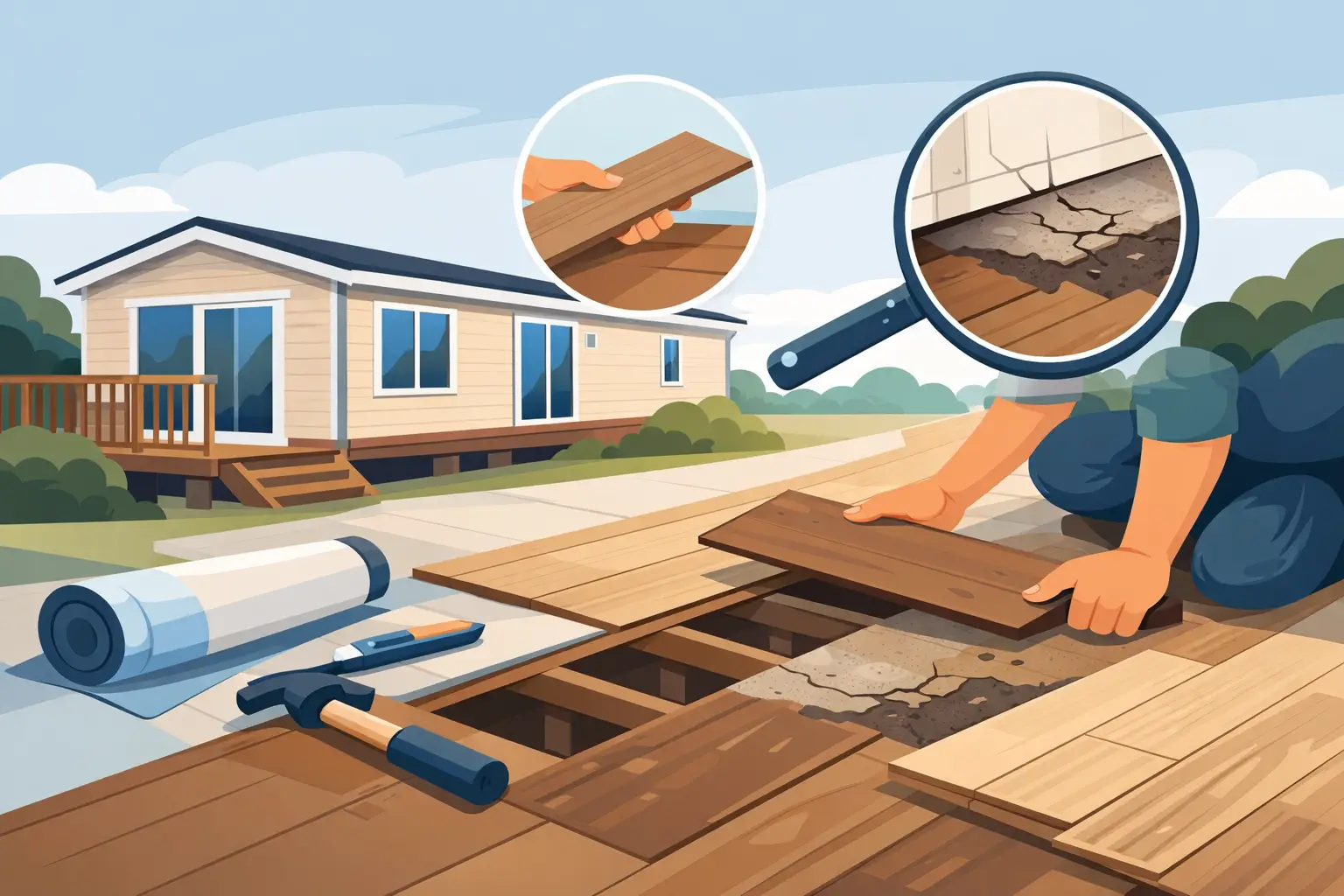
A specialist should first inspect the underside of the home, the chassis rails, every accessible support point and the condition of the ground beneath. They will also check for rust, distorted steelwork, broken pads, inadequate packing, standing water and signs of movement around the perimeter.
Inside the home, they will look at floor levels, doors, windows and obvious cracking. This helps show whether movement is local to one area or affects the entire home. A laser level is generally more reliable than judging by eye, particularly where the home has settled gradually and the slope is subtle.
The inspection should also consider the age and construction of the park home. Older models, static homes and newer residential park homes can have different chassis layouts and support requirements. There is no safe one-size-fits-all method.
Before a home is lifted or adjusted, check the park’s rules and any requirements for access, contractor working hours or notification. The park owner may need to know about significant structural work, particularly if vehicles, equipment or access beneath the home are involved.
Services must be considered before any movement takes place. Plumbing pipes, waste connections, gas lines and electrical cabling may have little spare movement. Where required, qualified tradespeople should isolate, disconnect, inspect or test services before and after the work. This is particularly important if the home has moved enough to strain a pipe or waste connection.
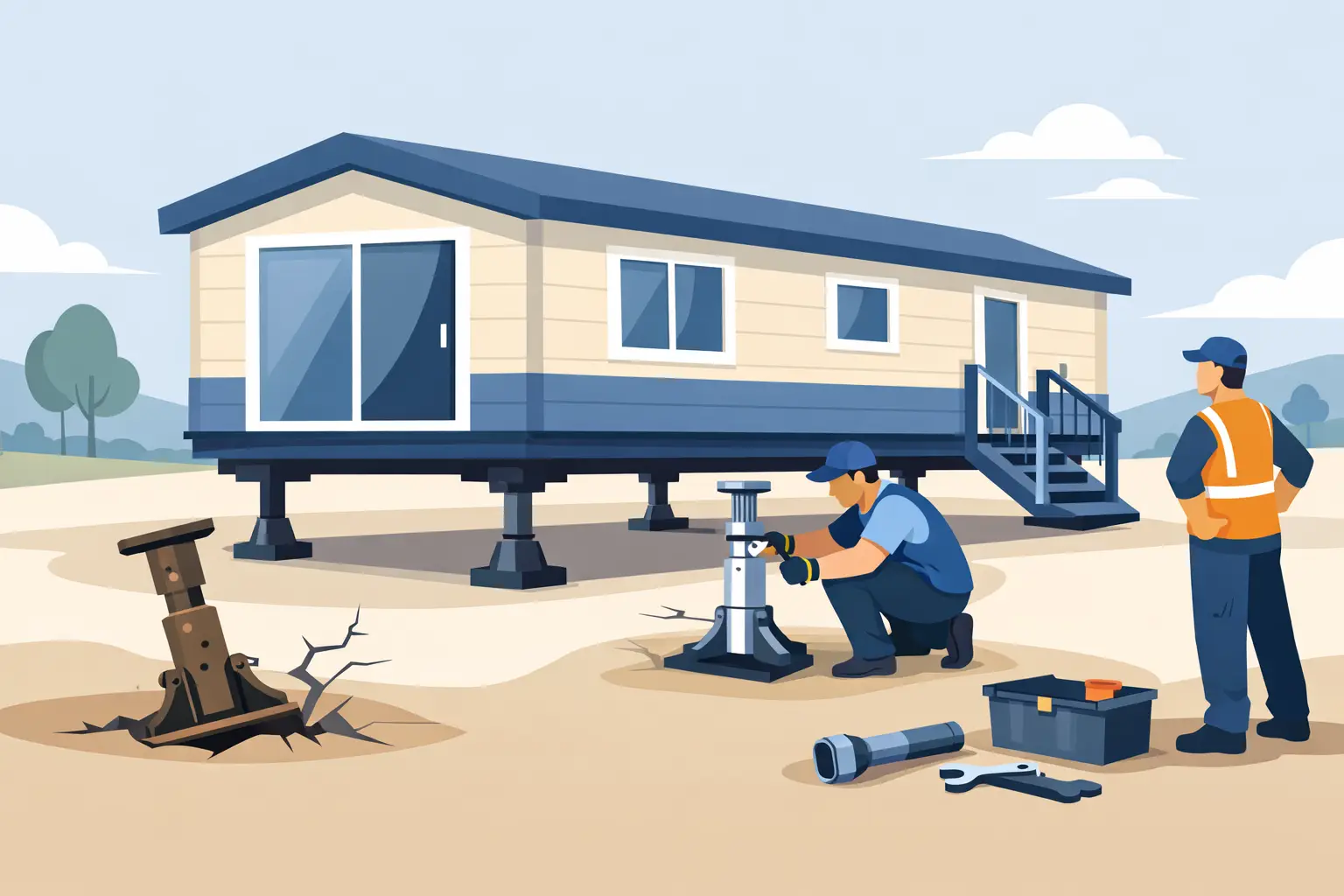
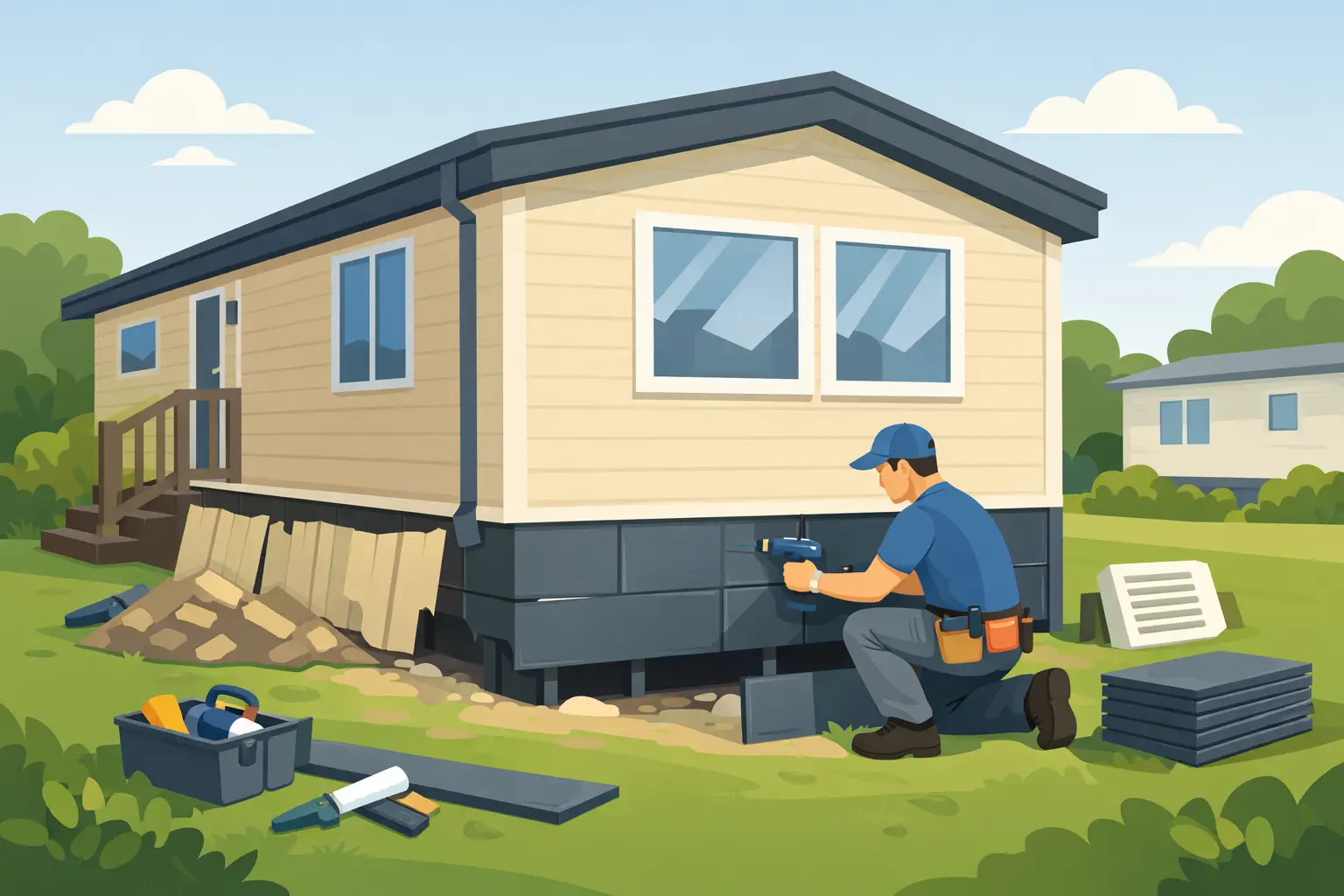
When levelling is needed, specialists use suitable lifting equipment at approved chassis locations. The home is raised slowly and only as much as necessary. Adjustments are made in stages so that the chassis is not twisted and the structure is not forced suddenly into position.
The work is usually carried out from beneath the home, with stable lifting points and clear access. The home should not be occupied while it is being lifted or while support components are being replaced. Pets should be kept away from the work area too.
A good contractor will continually check levels as the work progresses. They will not rely on correcting a single obvious low corner, because changing one support point can affect the rest of the chassis. The final objective is stable, even support across the home, rather than a quick visual fix.
If a support jack is rusted, bent, seized or no longer bearing correctly, it should be replaced rather than adjusted and left in service. New supports must be appropriate for the load and positioned on sound, durable footings.
Where concrete pads have failed, the ground may need preparation before replacement footings are installed. Simply placing another block on soft or wet ground is unlikely to solve the issue. It may appear stable for a short time, then settle again when the ground becomes saturated.
This is also a sensible opportunity to assess the steel chassis. Surface corrosion can often be treated and protected, while more advanced corrosion may need a more substantial repair. Addressing this at the same time can prevent a levelling project from becoming a repeat visit a few years later.
Once the home is level and securely supported, doors and windows should be checked, along with internal finishes and drainage. Waste pipes should flow freely, and all relevant services should be tested by the appropriate qualified person.
It is sensible to keep an eye on the home over the following weeks, particularly after heavy rain. If doors begin sticking again or cracks reopen quickly, there may be an unresolved drainage or ground issue that needs further attention.
There are plenty of jobs around a park home that a capable owner can manage. Levelling is not usually one of them. The risks are not limited to getting the floor level wrong. Improvised lifting can damage the chassis, crack internal linings, distort doors and windows, or affect gas, water and drainage connections.
There is also a personal safety risk. Working beneath a heavy structure that is not correctly supported is dangerous. Never rely on a hydraulic jack alone, and do not crawl beneath a home while it is being lifted or adjusted.
A low quote that involves a few blocks, timber wedges or temporary supports may cost more in the long run. Proper supports, sound footings, controlled lifting and a full underfloor inspection offer a more dependable result.
After levelling, prevention matters. Keep gutters clear and make sure downpipes discharge water away from the home. Check that air bricks and underfloor ventilation are not blocked, as trapped moisture encourages corrosion and can affect the condition of the floor structure.
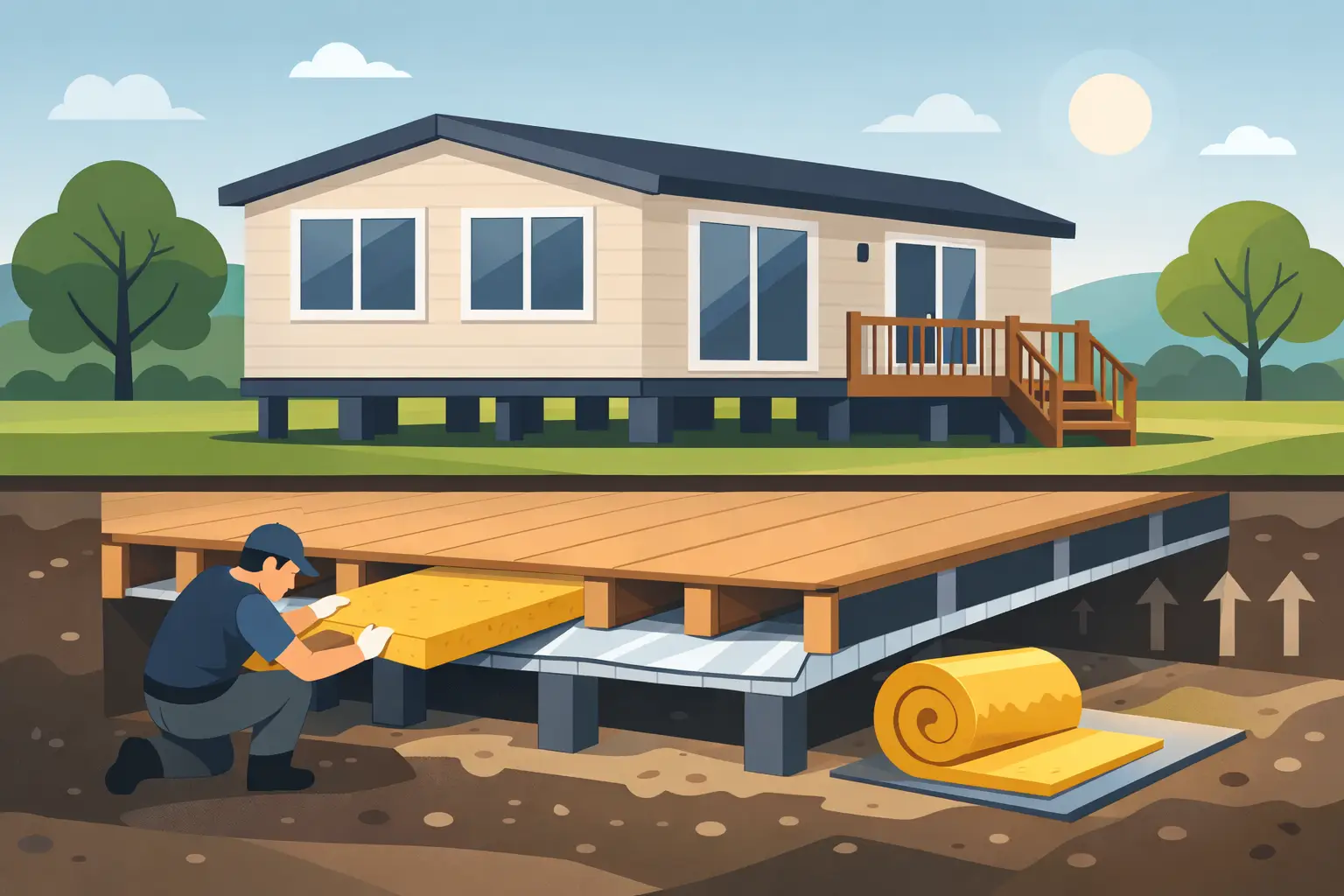
Regular underfloor inspections are worthwhile, especially for older homes. Look for signs of standing water, damaged insulation, loose supports, corrosion and pest activity. If access is difficult or you are unsure what you are looking at, a specialist inspection provides a clear picture without guesswork.
At New Look Park Homes Ltd, levelling concerns can be assessed alongside chassis refurbishment, support jack replacement, underfloor insulation and repairs that protect the home for years to come. This joined-up approach is often more cost-effective than treating each symptom separately.
If your park home has started to feel uneven, act before a small shift turns into damaged services, worsening damp or avoidable structural repairs. A careful inspection is the practical first step towards a safer, steadier and more comfortable home.