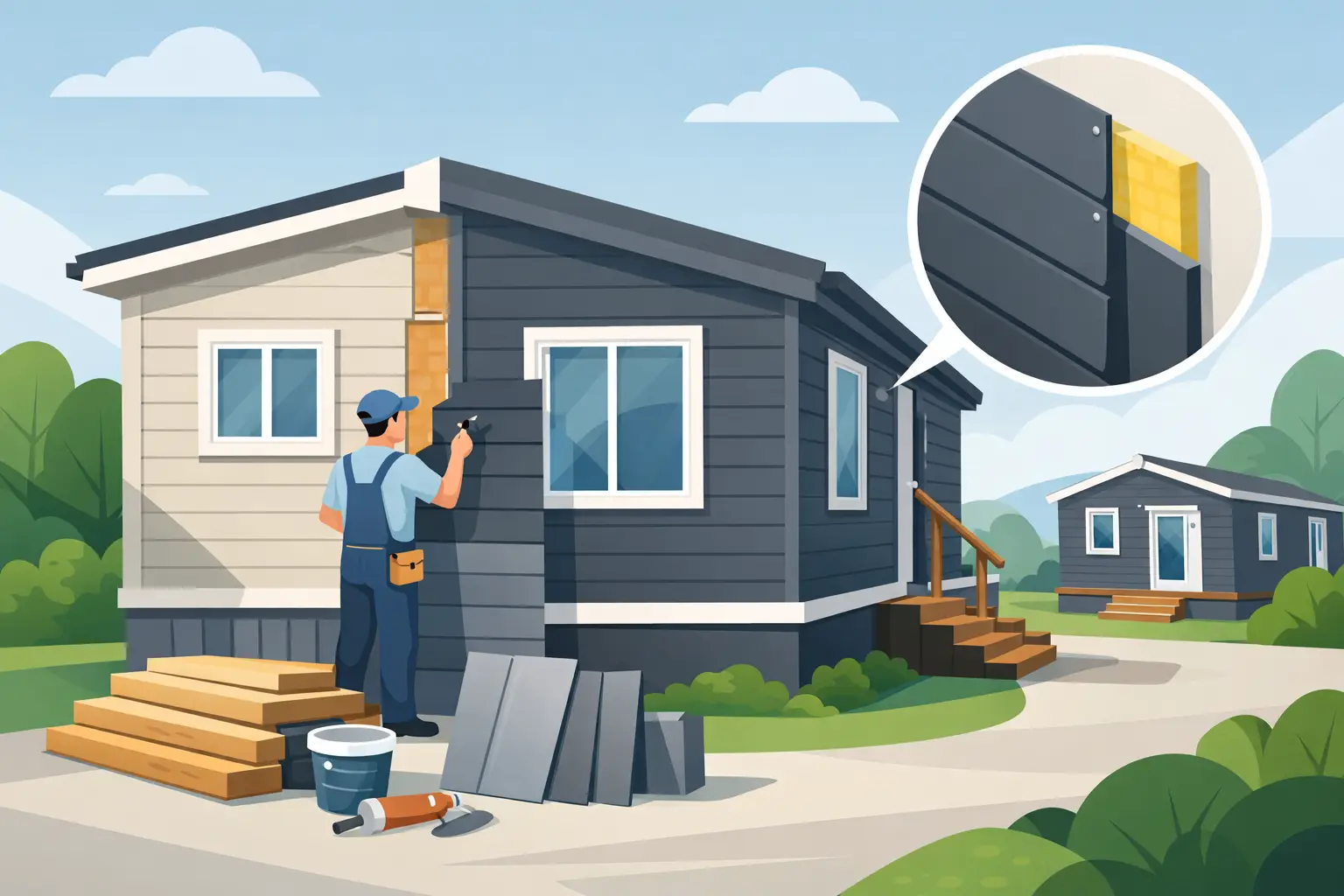
A cold patch beneath the sofa, a springy area by the kitchen sink or a musty smell after wet weather can all point to more than an ageing carpet. This park home floor repair guide explains what may be happening below your feet, when a local repair is sensible and when the floor needs a more thorough refurbishment.
Park homes and static homes are built differently from conventional brick properties. Their floors sit above the ground on a chassis and supporting jacks, with insulation, boarding and protective materials working together beneath the home. When one part of that system fails, heat can escape, moisture can take hold and the floor can gradually lose strength.
A floor problem rarely starts with a hole or a dramatic collapse. More often, owners notice small changes in comfort and feel. A room may be noticeably colder than the rest of the home, floorboards may creak or flex, or vinyl and laminate may begin to lift at the edges.
Pay particular attention to kitchens, bathrooms, utility areas and entranceways. These are the places most likely to suffer from leaks, condensation or repeated wet footwear. A soft floor around a toilet, shower tray, washing machine or sink should never be ignored. Water can travel beneath finished flooring and damage the timber subfloor before there is much visible evidence above it.
Other warning signs include persistent draughts around the skirting, a damp odour, staining on internal walls close to floor level and higher heating bills without an obvious explanation. In some cases, the problem is insulation rather than structural timber. In others, weak boarding is only the surface symptom of damp, poor ventilation or a plumbing leak below.
Most park home floors are timber-based and raised above the ground. This construction has real benefits, but it also means the underside of the home needs to stay dry, insulated and properly protected from the weather. General building methods do not always account for these details.
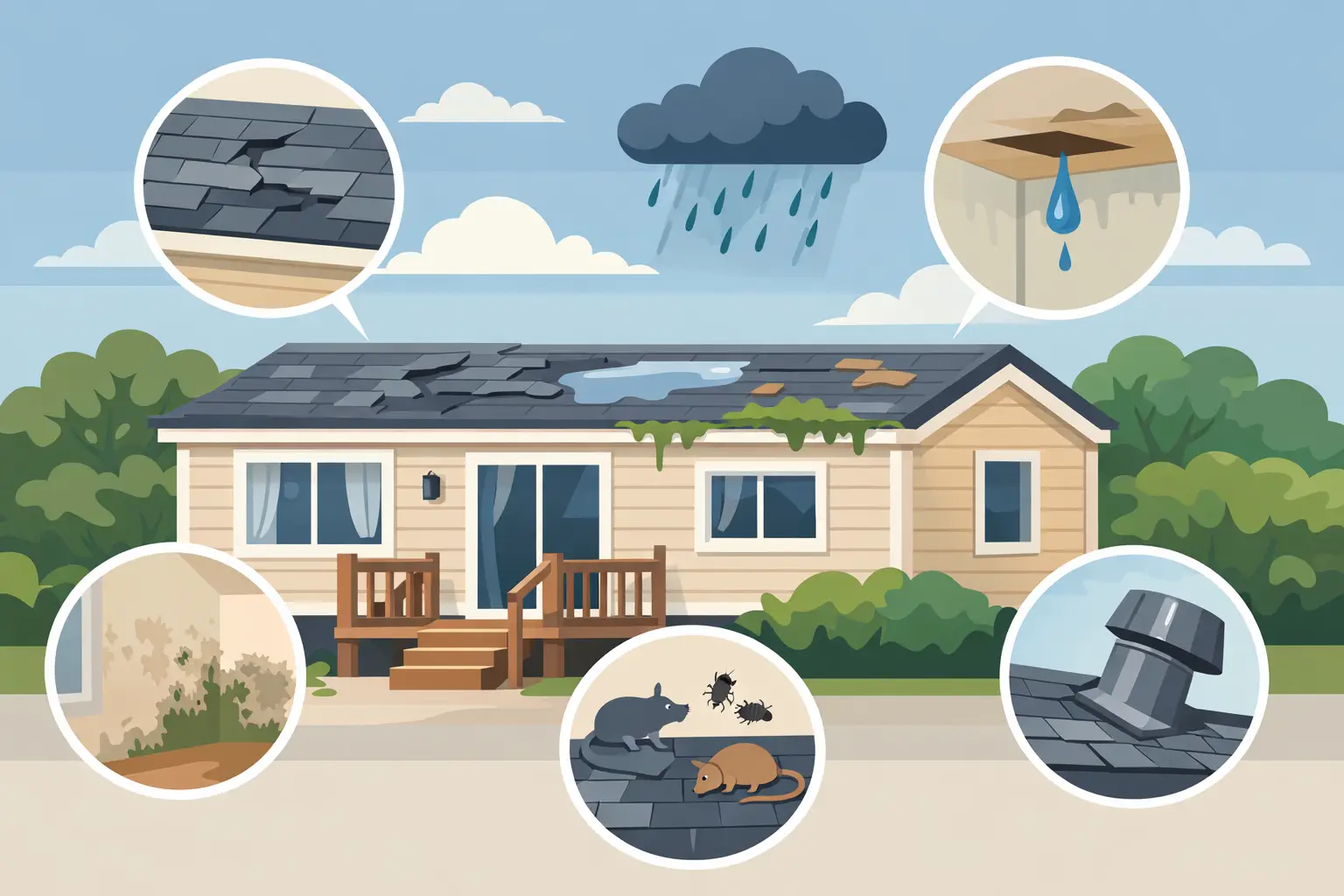
Water is the most common cause of floor damage. A slow leak from a pipe, failed shower seal, damaged external cladding or defective guttering can allow moisture into the structure. Once timber remains damp for a prolonged period, it can swell, soften and eventually decay.
The source is not always directly above the damaged area. Water can follow pipes, joists and membranes before collecting elsewhere. That is why replacing a soft section of board without finding the cause can lead to the same problem returning.
Older homes may have thin, displaced or damp insulation beneath the floor. Even where the boards remain sound, this can create cold rooms and uncomfortable draughts. Condensation may then form where warm indoor air meets cold surfaces, adding further moisture to the structure.
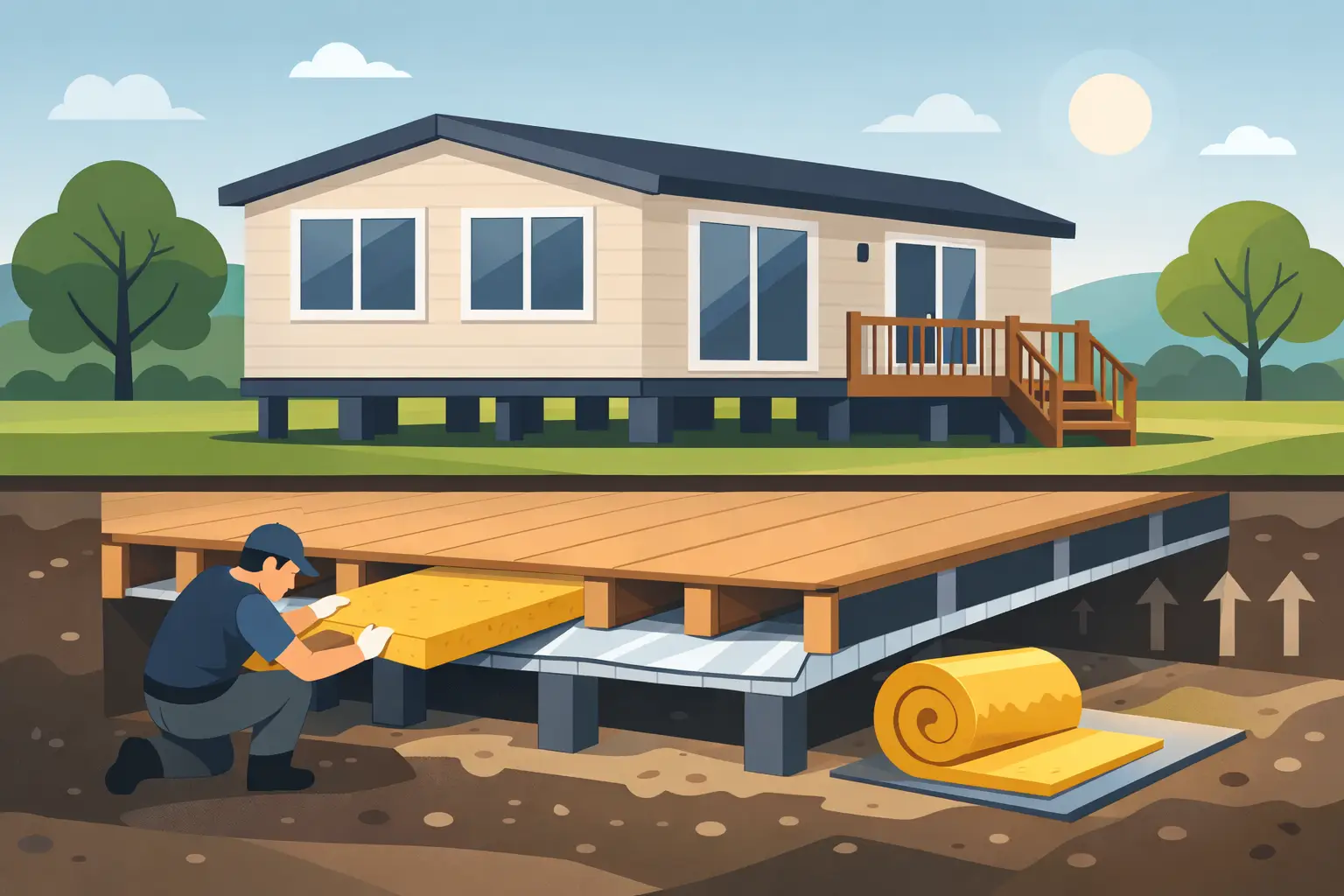
Improving underfloor insulation can make a significant difference to day-to-day comfort and heating costs. However, insulation should not simply be packed into every gap. The right materials and installation method must allow the floor system to manage moisture while maintaining appropriate ventilation.
Floors have a hard working life. Movement underfoot, heavy furniture, changes in temperature and normal wear can affect boards and joints over time. Thin or damaged coverings can also allow spills to reach the subfloor.
If the home has been standing for many years without a major refurbishment, it is sensible to consider the condition of the floor alongside the chassis, supports and exterior. Several small maintenance issues can combine to create a much larger repair later.
Before any board is lifted, the first job is to establish the extent of the damage and its cause. A good inspection looks from inside and underneath the property where access allows. It should consider the finished floor, subfloor, joists, insulation, protective membrane, plumbing and the condition of the chassis supports nearby.
This matters because similar symptoms can have very different causes. A bouncy floor may be caused by a localised rotten board, but it may also relate to weakened joists or an issue with the home’s support and level. A draught may come from missing insulation, gaps around service pipes or damaged skirting. Treating the visible symptom alone is rarely good value.
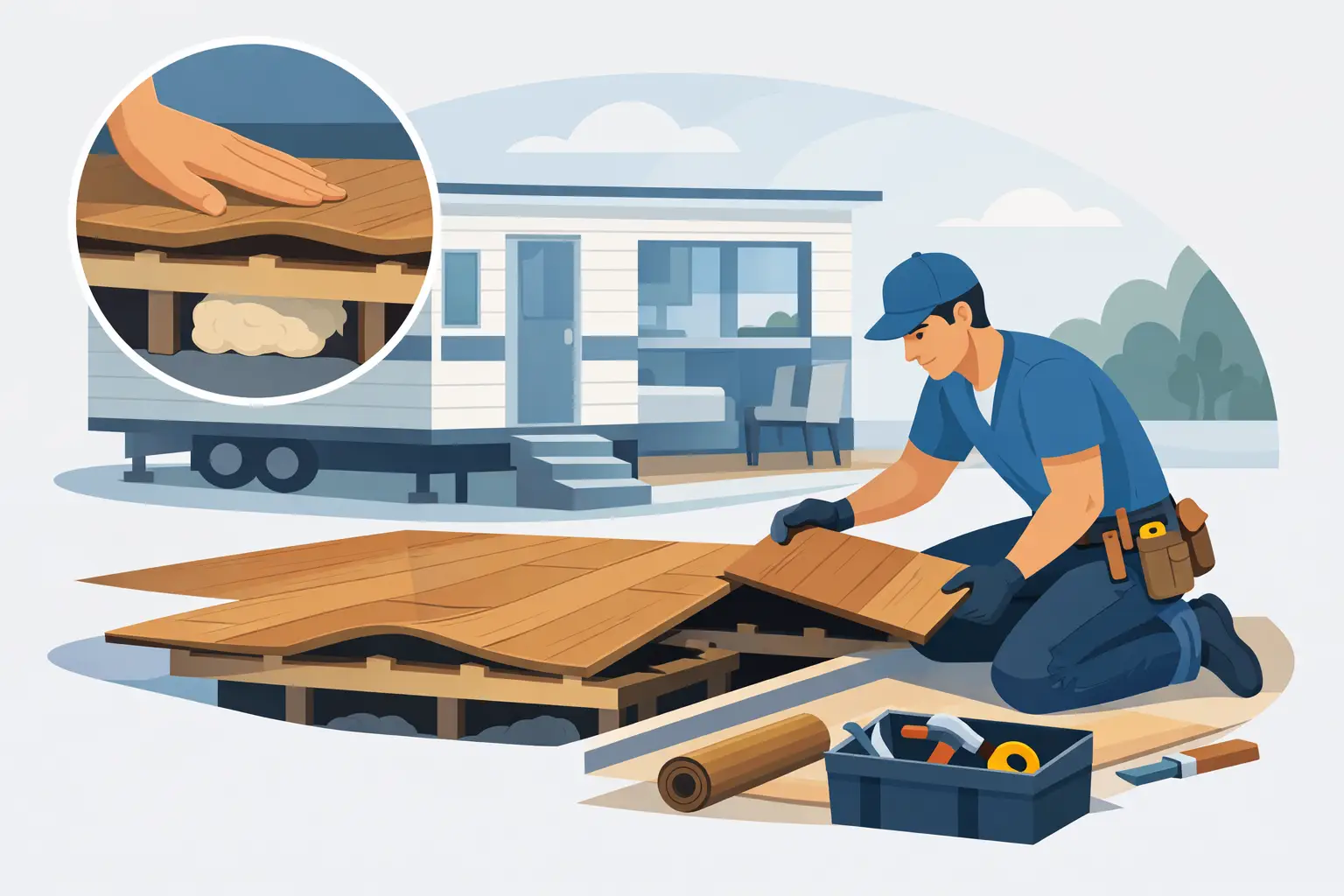
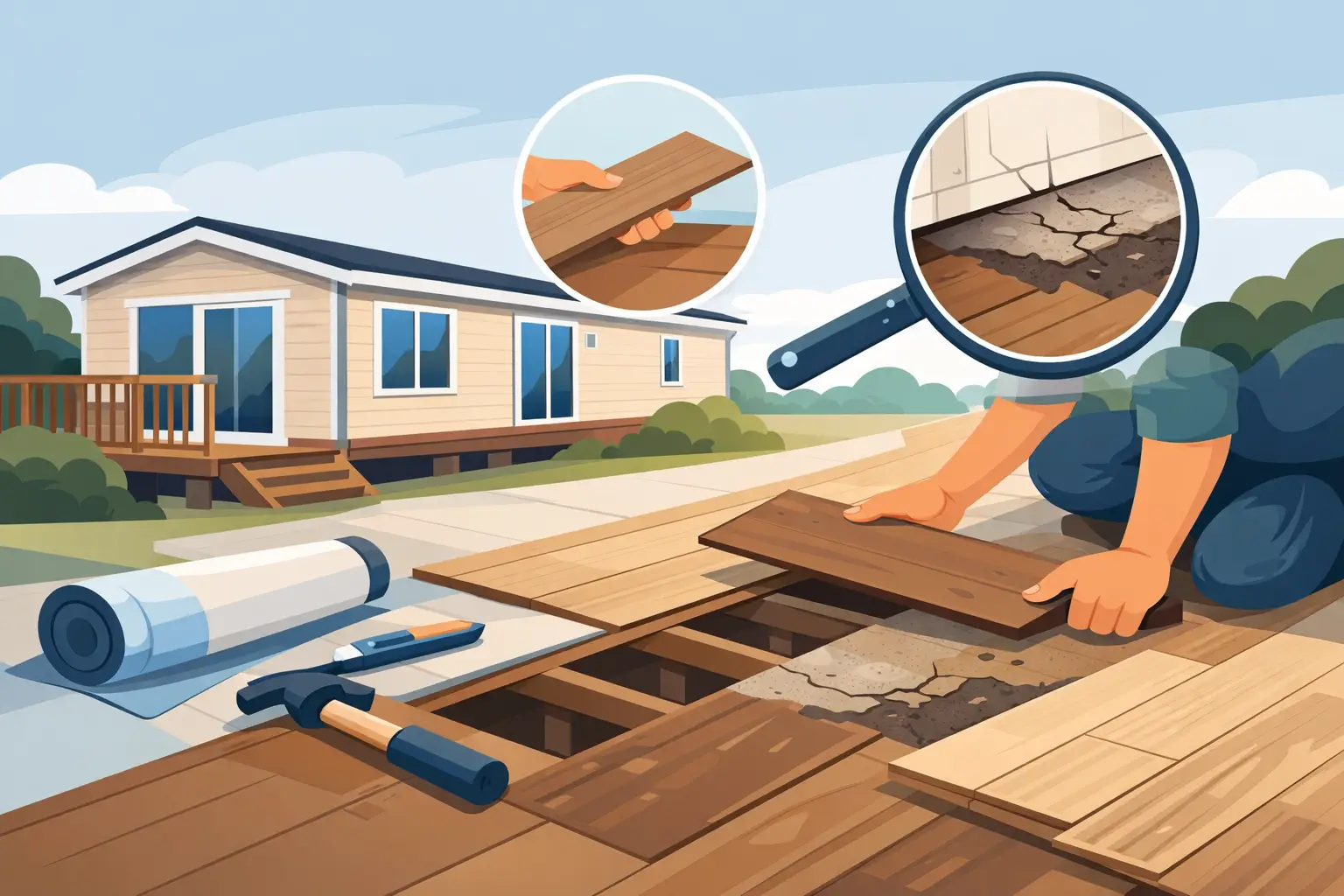
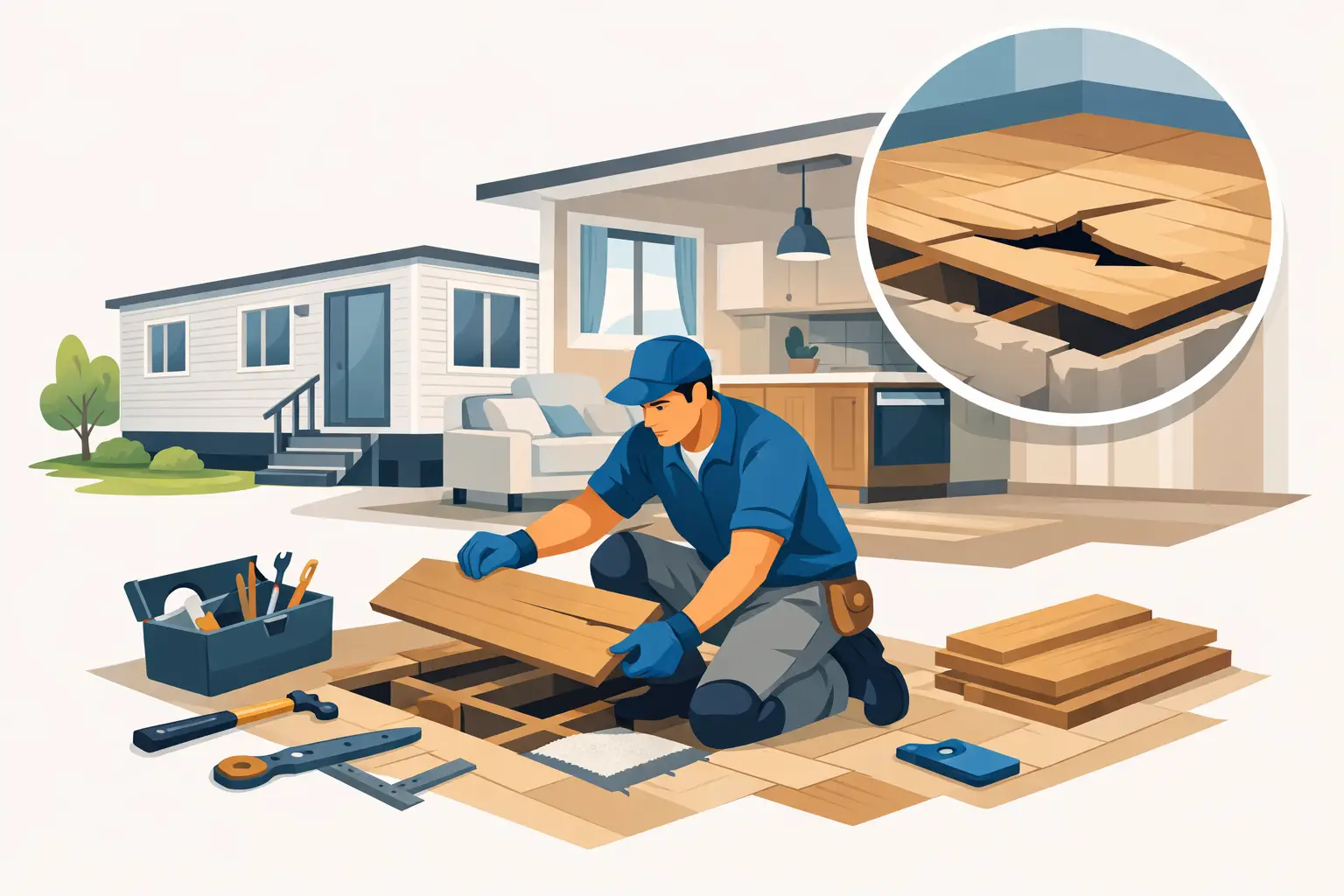
For a small, dry area of damage caused by an isolated spill, a local repair may be enough. The affected covering and compromised board can be removed, the area dried and the subfloor rebuilt with suitable materials. The surrounding floor must be checked carefully, as timber can look sound while losing strength around its edges.
Where there is extensive damp, repeated water ingress or deterioration across several rooms, a wider floor refurbishment is often the better long-term decision. This gives the opportunity to remove damaged materials, resolve the moisture source, renew weakened sections and install effective underfloor insulation before new floor finishes are fitted.
A dependable repair is about more than making a floor feel firm again. It should address the complete problem, from the source of moisture to the final finish underfoot. The precise work depends on the home, its age and the condition found during inspection, but the usual stages are clear.
First, the cause of damp or cold air needs to be resolved. This may involve repairing plumbing, improving sealing around a bathroom, addressing damaged exterior materials or correcting an issue beneath the home. Any wet or decayed materials must then be removed rather than covered over.
The timber structure can be repaired or renewed where necessary, using materials suited to the location and load. New boards should sit securely and level with the existing floor so that the finished surface does not crack, lift or feel uneven. If joists are affected, the repair needs to restore strength rather than relying on a layer of new sheet material above them.
Underfloor insulation and protective layers should be installed correctly as part of the repair. This is often the point at which owners feel the biggest improvement: warmer rooms, fewer draughts and a floor that no longer feels cold first thing in the morning. The best approach depends on the available underfloor access, the home’s construction and whether moisture has been an issue.
Finally, the replacement floor finish needs to suit the room. Bathrooms and kitchens need water-resistant finishes and properly sealed edges. Living areas may benefit from a finish that offers comfort as well as durability. A good repair leaves the room looking right, but it should also make the home safer and more comfortable for years ahead.
Some floor issues can be monitored while an inspection is arranged. Others deserve urgent attention. Do not continue to use an area normally if it feels unsafe underfoot, sinks when weight is applied, has obvious rot or sits near electrical connections. Keep heavy furniture away from the affected section where possible.
You should also act promptly if there is an active leak, visible mould, a strong damp smell or water appearing around bathroom fittings. Turning off the local water supply may prevent further damage until the source can be identified. Drying the room with heat alone will not solve moisture trapped beneath boards.
Avoid the temptation to lay new laminate, carpet or vinyl over a soft or cold floor as a quick fix. It may hide the problem temporarily, but it can also trap moisture and make the eventual repair more involved. The same applies to filling gaps with expanding foam without understanding where draughts or water are entering.
You do not need to dismantle your home to spot early problems. Walk through each room in bare feet and note cold patches, movement, creaks and changes in level. Check around plumbing fittings after use, and look inside cupboards beneath sinks for dampness or staining.
Outside, make sure gutters, downpipes and ground drainage are directing water away from the home. If you can safely see beneath the property, look for displaced insulation, hanging membrane, standing water or signs of animal disturbance. Do not crawl underneath if access is restricted, the ground is wet or the structure appears compromised.
It is also worth keeping a brief record of when symptoms occur. A floor that feels colder only during wet, windy weather may indicate an underfloor protection or insulation issue. Softness that worsens after using the shower may point towards a concealed plumbing or sealing fault.
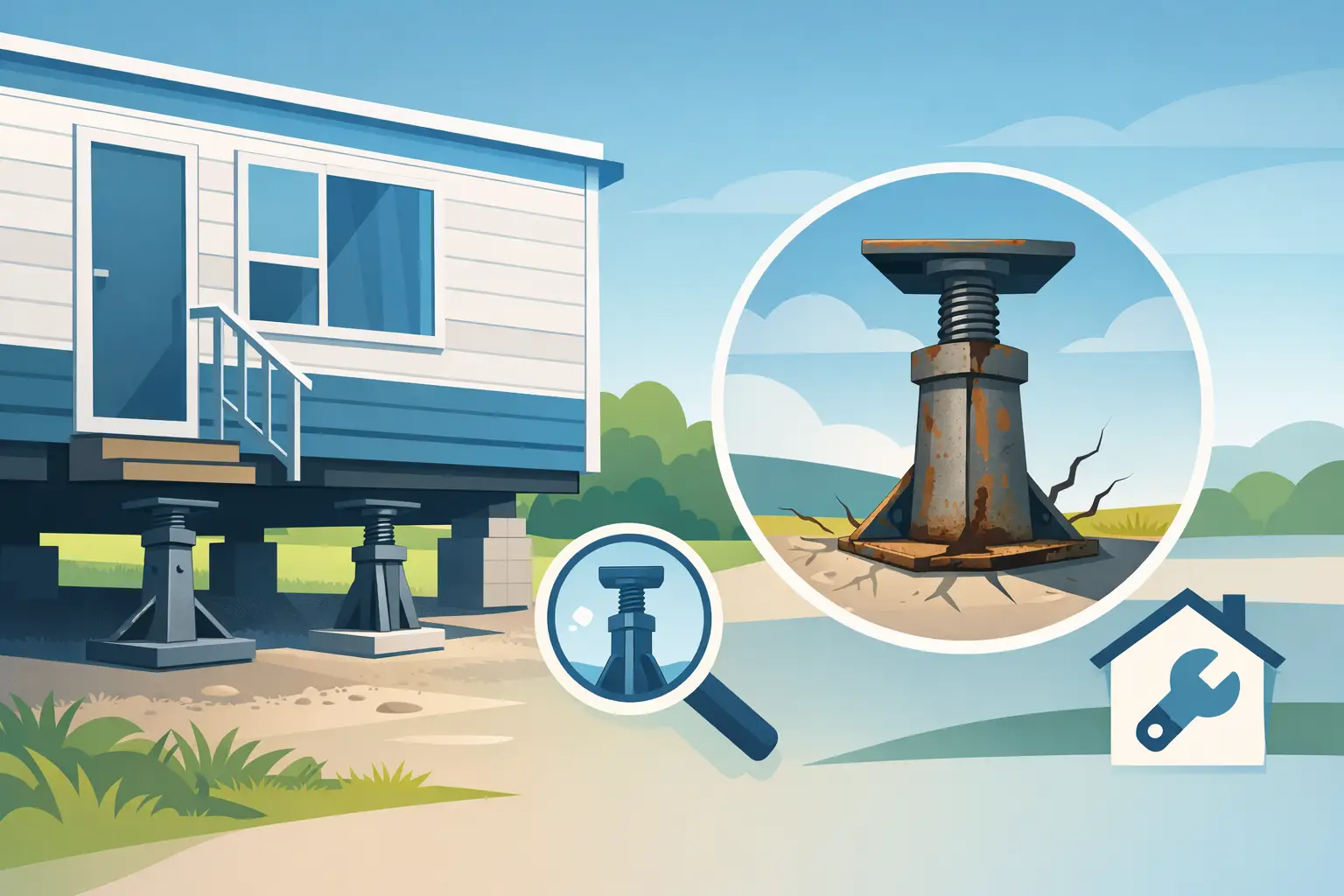
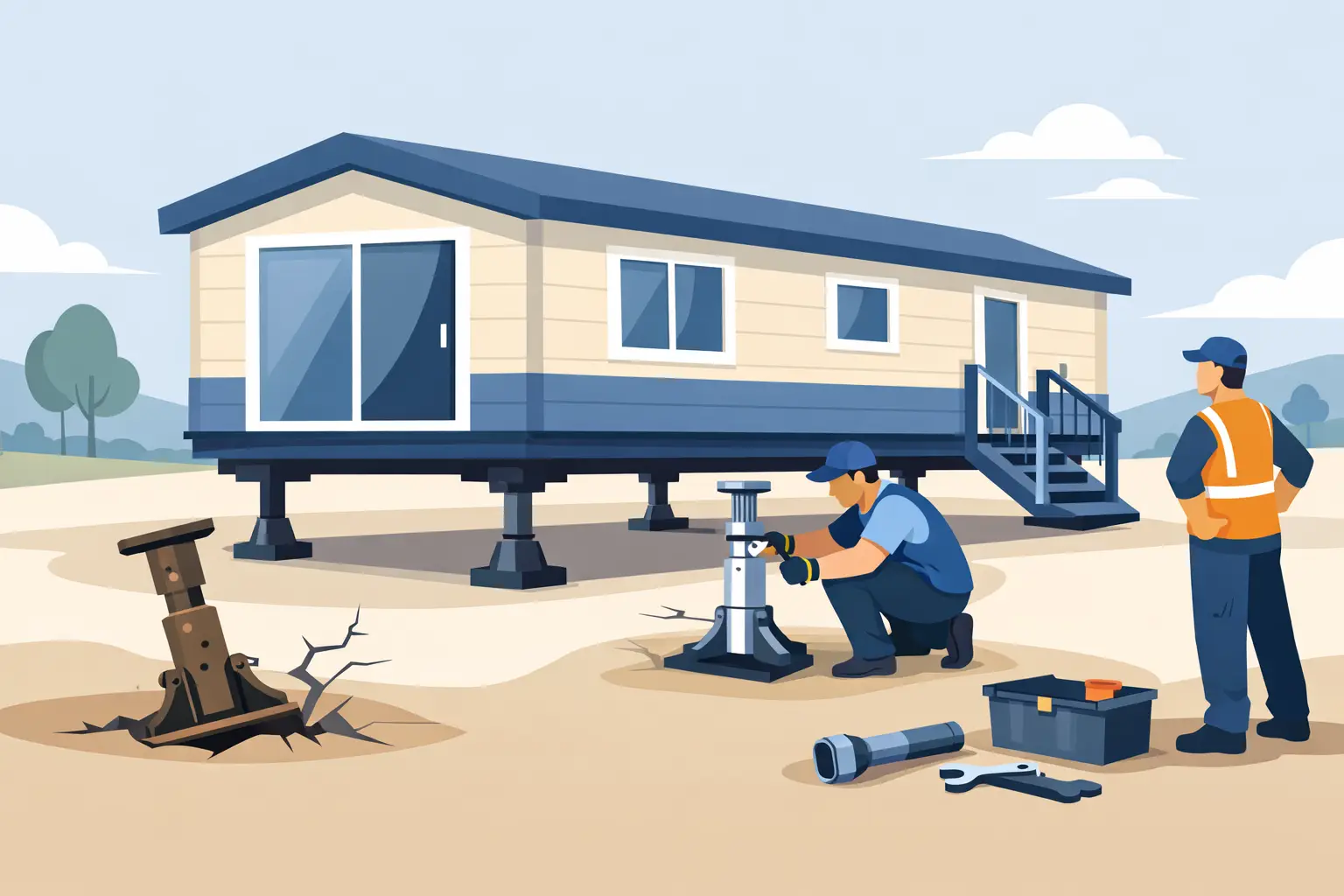
Park home floor repairs should be carried out by people who understand this form of construction. The work may involve the floor itself, but it can also connect to insulation, plumbing, external weatherproofing, ventilation, chassis condition and support jacks. A general repair that overlooks these connections can create extra expense later.
Ask what inspection will be carried out, how the cause of the problem will be identified and whether the proposed work includes insulation and protection beneath the home where needed. You should receive a clear explanation of what is being repaired, why it has failed and what will prevent a repeat issue.
At New Look Park Homes Ltd, our work is focused solely on park and static homes, so repairs are planned around the way these properties are built and lived in. The aim is straightforward: restore a firm, warmer floor and protect the value, comfort and safety of your home.
A floor repair is most effective when it is dealt with before a small cold patch becomes widespread damage. If something underfoot no longer feels right, trust that instinct and arrange a proper assessment. Early action can keep the work focused, protect the structure and make home life noticeably more comfortable.