A floor that feels uneven underfoot, doors that begin to stick or new cracks around internal finishes can all point to a problem beneath the home. Park home support jack replacement is not a cosmetic job. The support system carries the weight of the home through its steel chassis, so worn, damaged or incorrectly positioned jacks should be assessed properly before a small concern becomes a larger structural repair.
Park homes and static homes are built differently from brick properties. Their chassis, underfloor structure and support arrangement need a specialist approach. A general builder may recognise that a floor is moving, but an experienced park home contractor understands what must be checked underneath before any adjustment or replacement work begins.
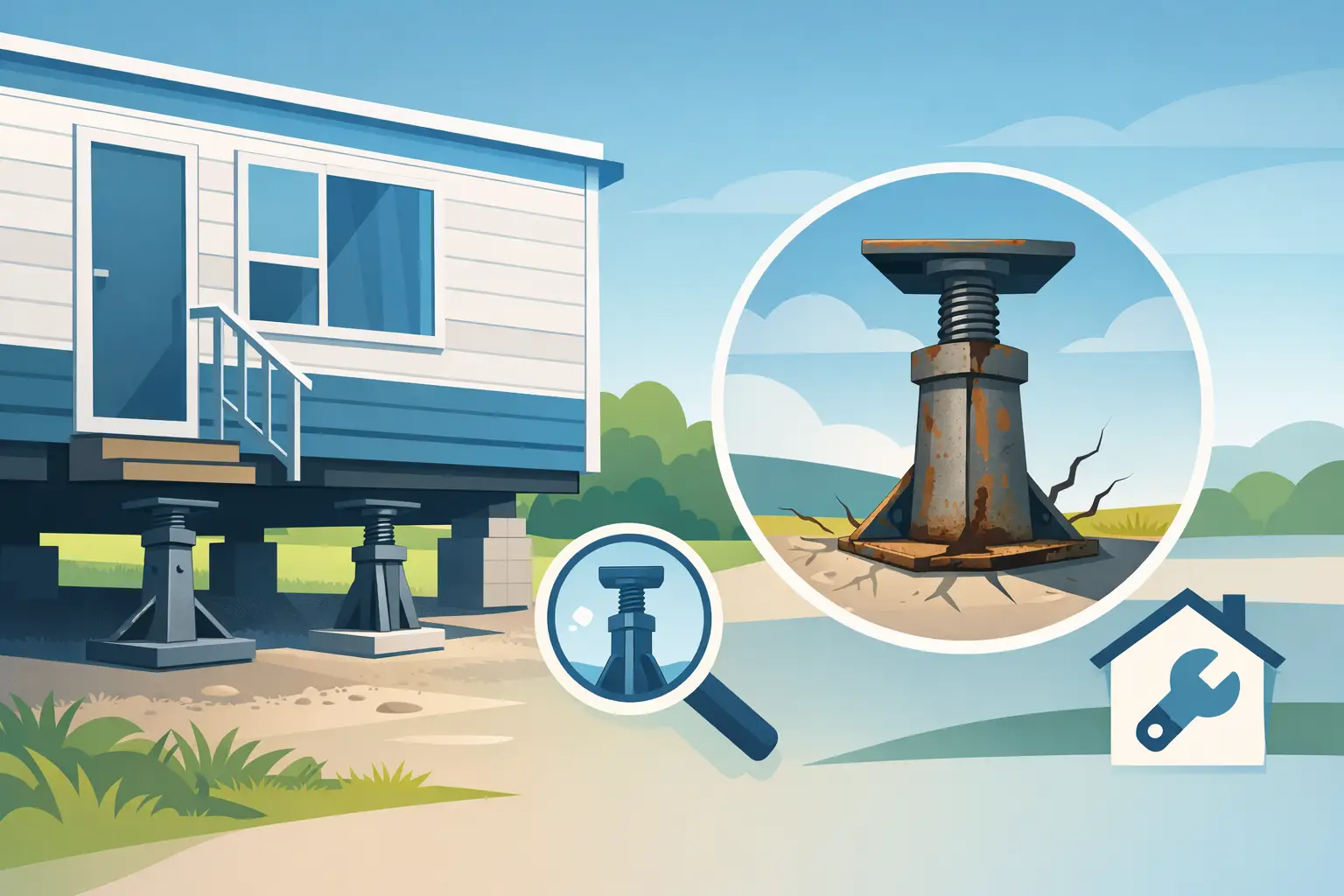
A park home sits on a steel chassis, which is supported at key points by jacks, piers or other approved support arrangements. These supports help keep the chassis level, stable and correctly distributed across its base. When they are in good condition and positioned correctly, doors operate freely, floors feel firm and the structure is less likely to suffer avoidable strain.
Over time, conditions beneath the home can change. Ground may settle, drainage may be poor, moisture can affect components, and older jacks can corrode or lose their effectiveness. In some cases, previous work has been carried out without a full assessment, leaving supports unevenly adjusted or insufficient for the loads they carry.
The aim is not simply to raise a low corner. It is to make sure the chassis is safely supported as a whole, with the right supports in the right places.
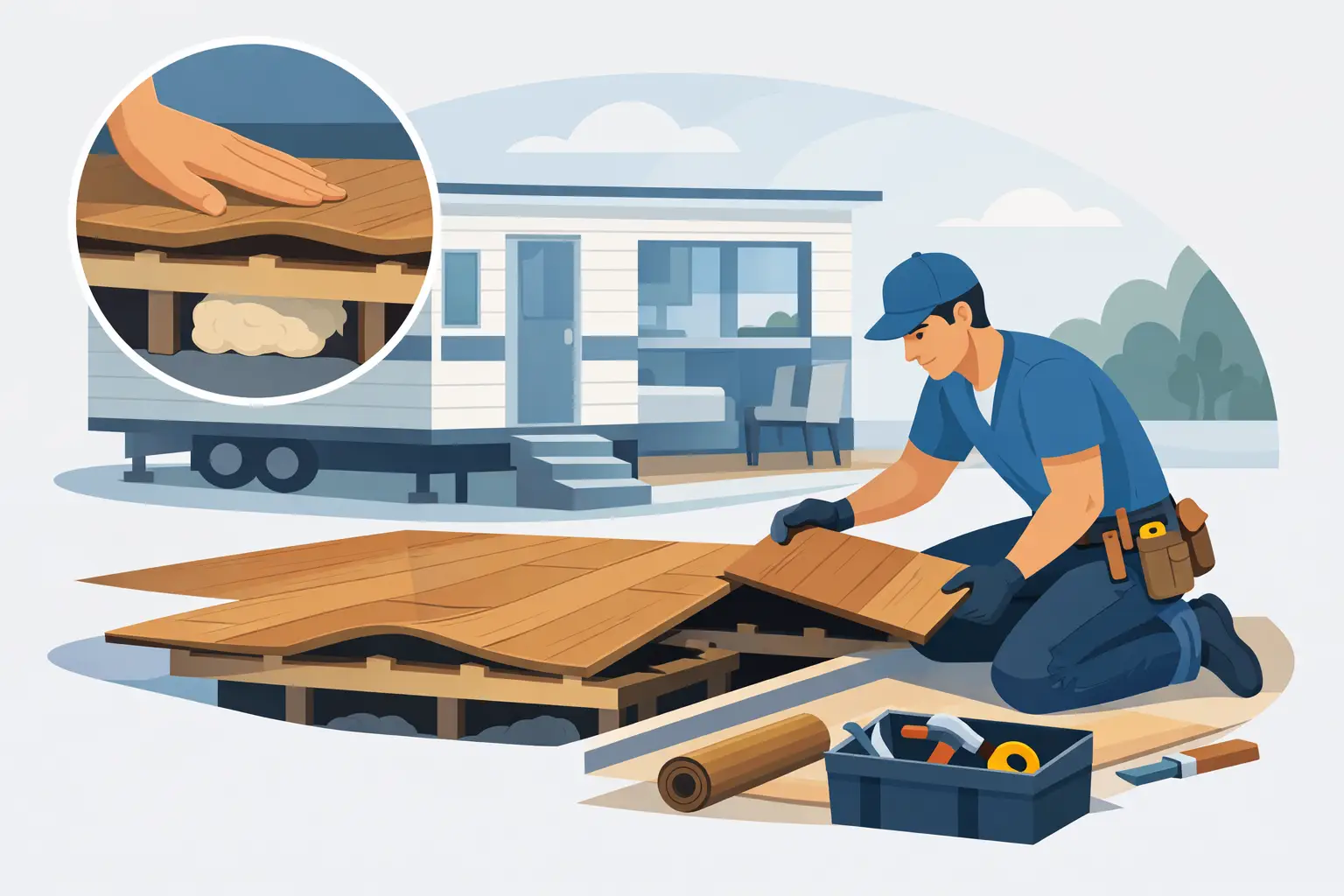
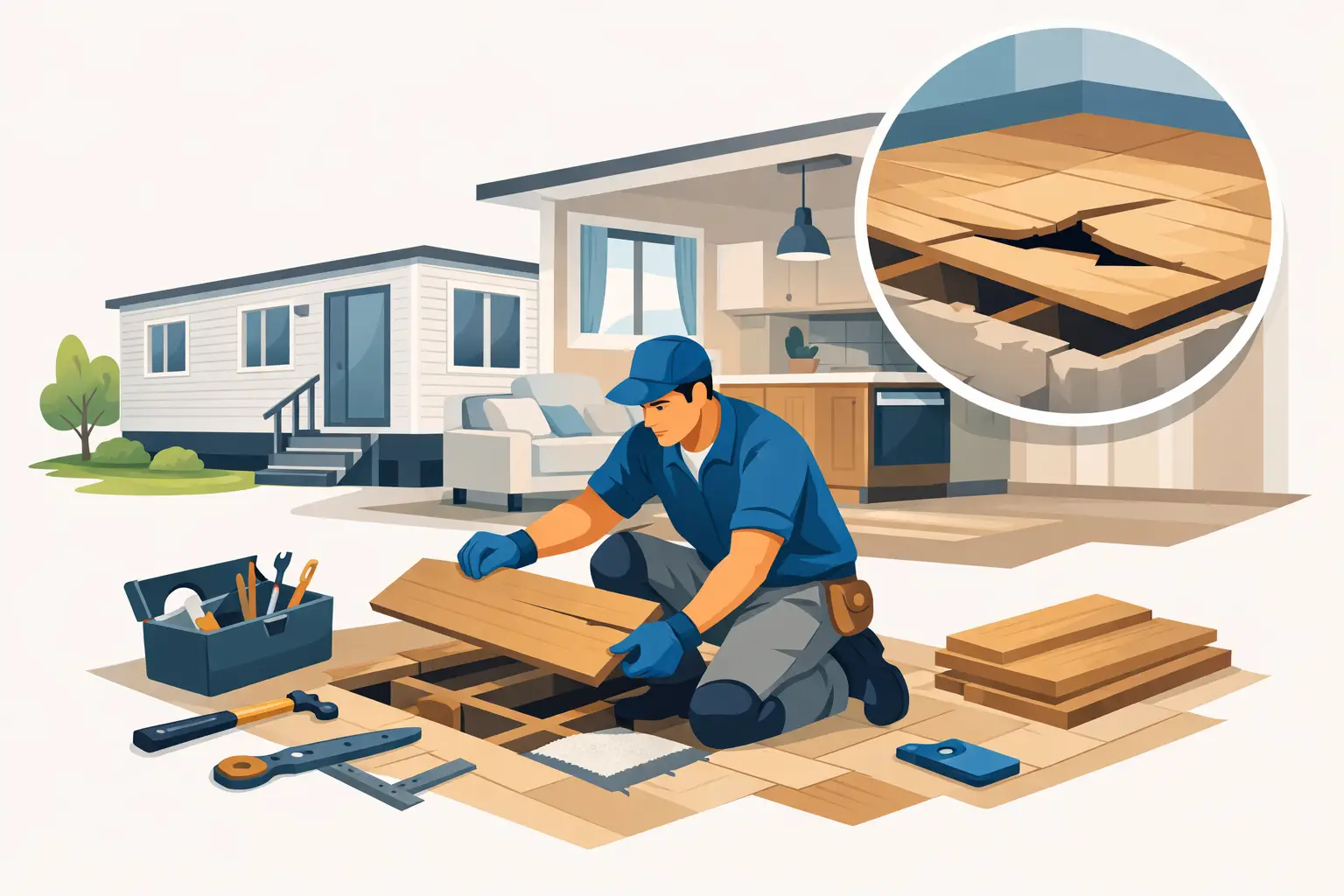
Support problems are often first noticed inside the home. A single stiff door does not always mean the chassis has moved, but several changes appearing together deserve attention. You may notice floors that slope or bounce, gaps opening around skirting boards, cracking to wall finishes, windows that become difficult to open, or kitchen units and worktops that no longer appear level.
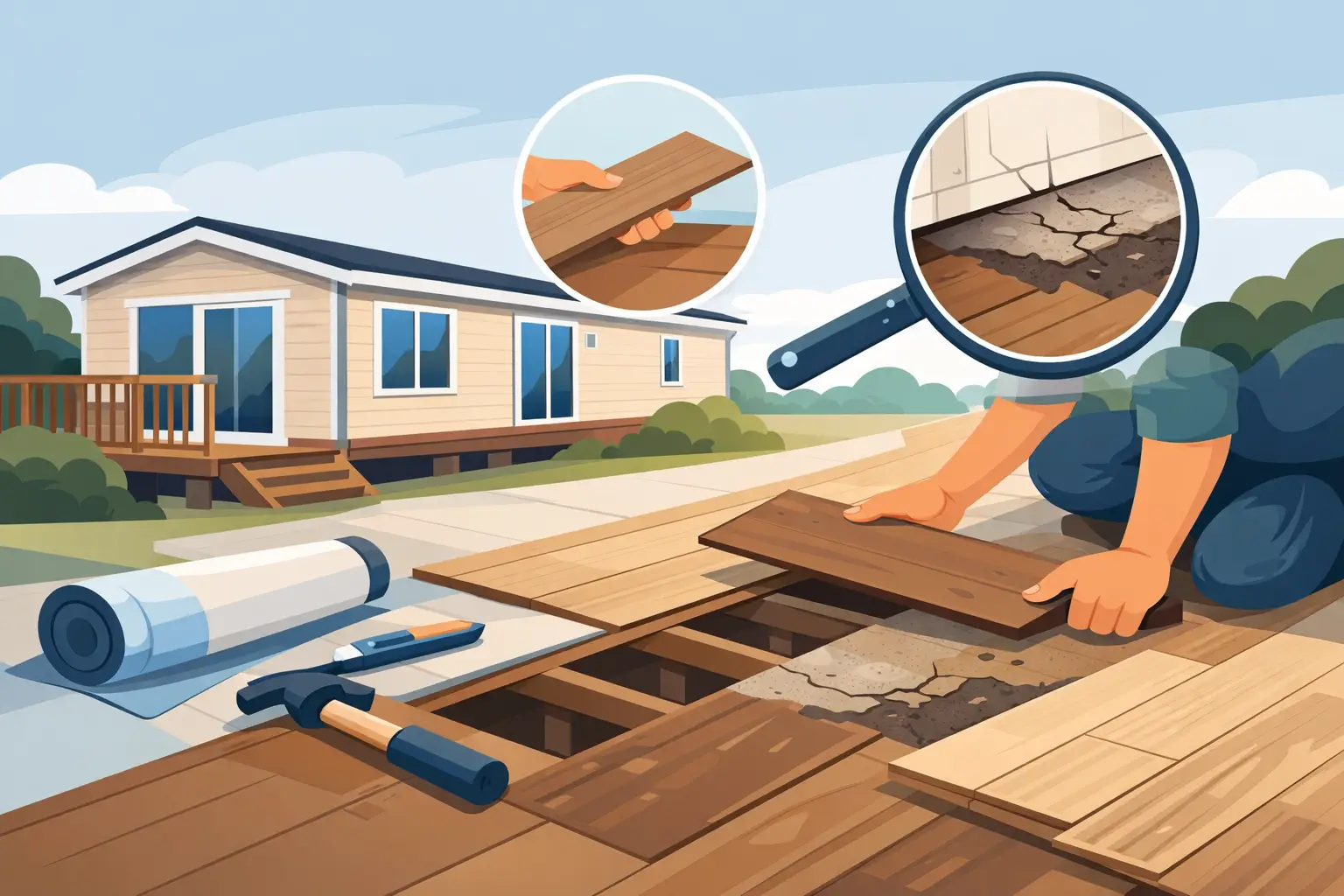
Outside, look for signs of movement around the base of the home, uneven gaps between skirting and ground level, or obvious corrosion to visible metalwork. Damp conditions under the home can also be a warning sign. Standing water and poor ventilation create an environment where steel components and timber floor structures can deteriorate faster than they should.
A home can remain comfortable despite minor movement, so there is no need to assume every issue requires major work. However, waiting for the problem to become severe usually makes the repair more disruptive and costly. A professional inspection gives you a clear picture of the support condition and the most sensible next step.
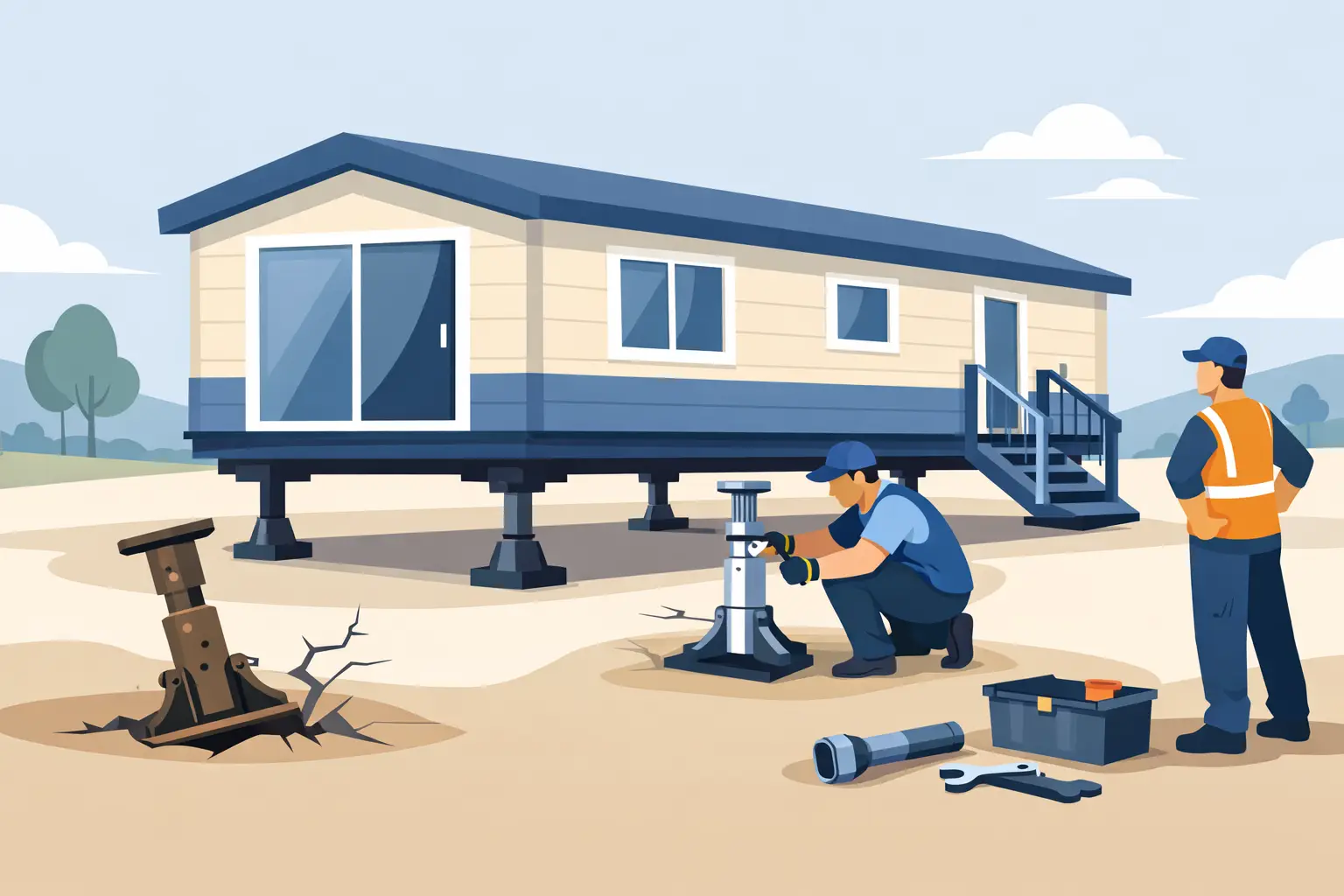
Not every inspection results in support jack replacement. Sometimes the existing jacks remain sound and only need careful adjustment as part of a levelling programme. In other cases, a jack has corroded, seized, sunk into an unsuitable base or no longer provides reliable support. Replacement is then the safer option.
There are also occasions when a support issue reveals a related problem, such as a weakened chassis section, damaged underfloor insulation, failed pipework or inadequate drainage. This is why it pays to look beneath the home properly rather than treating one visible symptom in isolation.
A proper assessment starts with the home as a complete structure. The floors, walls, doors and external lines are considered alongside the steel chassis and each accessible support point. The condition of the ground beneath the home matters too, as a new jack will only perform well if it is placed on a suitable, stable base.
The contractor should identify where movement has occurred, whether it is continuing, and whether the support arrangement remains appropriate for the chassis. Access can be limited beneath older homes, and each park home layout is different. That is another reason why an on-site inspection is more useful than a guess based on photographs alone.
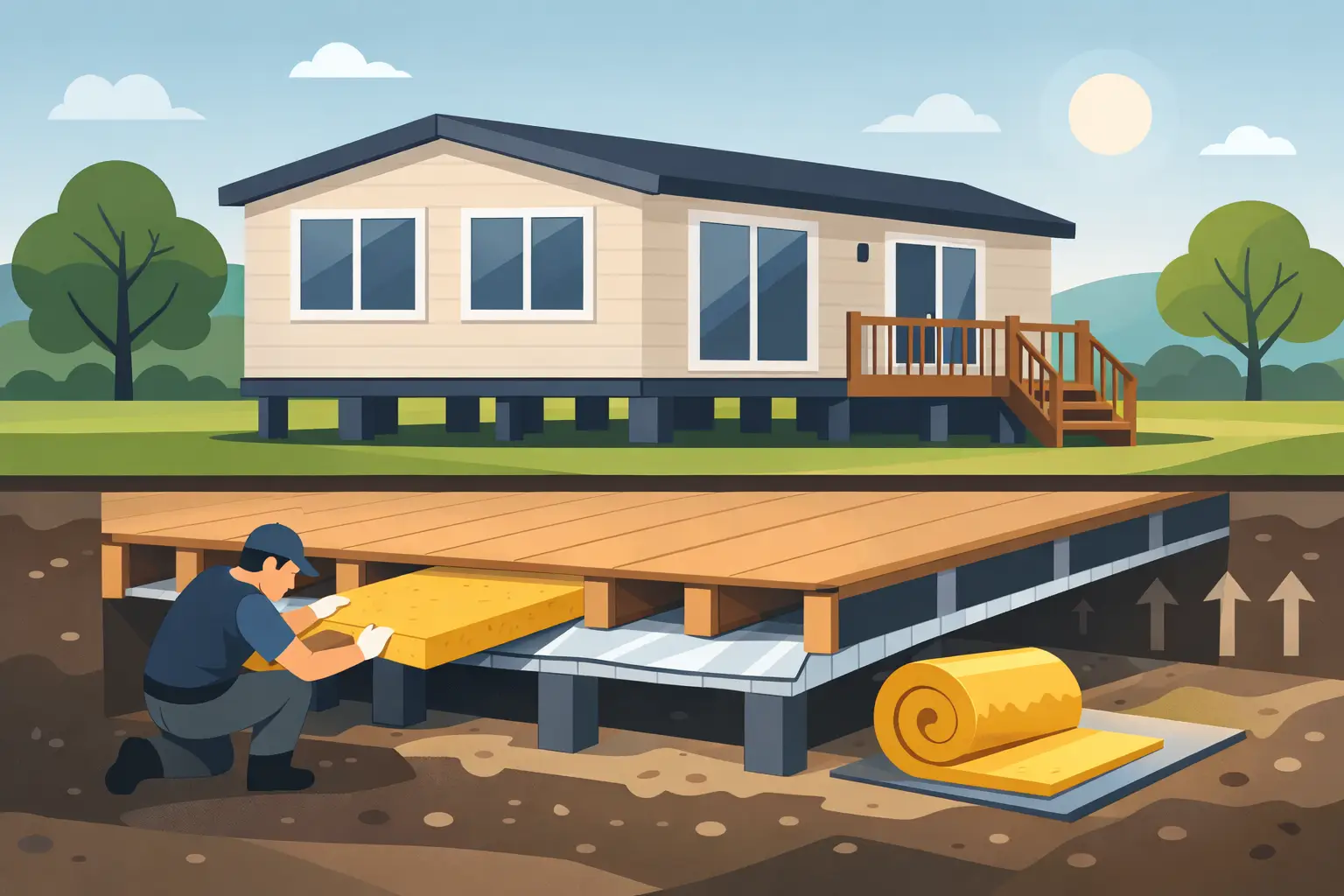
Before work begins, it is also sensible to consider the age and condition of the home. If chassis refurbishment, underfloor insulation or plumbing repairs are already being planned, carrying out related underfloor work at the same time can avoid reopening the area later. It is a practical decision that can reduce disruption and help protect the work for the long term.
Safe support jack replacement is controlled work. The home must be supported correctly while an old jack is removed and the replacement is installed. Lifting or adjusting the chassis too quickly, or at the wrong point, can place strain on the structure and cause damage to internal finishes, pipework or connections.
The exact method depends on the home, the access available and the existing support layout. In broad terms, the work involves checking the base, securing the structure safely, removing unsuitable or damaged supports, fitting appropriate replacements, and making careful adjustments to bring the chassis back to its required position. The supports are then checked again to confirm the load is distributed correctly.
This is not a job for improvised lifting equipment or a quick attempt at DIY levelling. Park homes may look straightforward from outside, but the forces involved beneath the chassis are significant. A specialist team will work methodically, protect the home during adjustment and address any issue found that could affect the reliability of the finished repair.
Water pipes, waste pipes, electrical cables and gas connections may run beneath or through the floor structure. Even a small movement of the home can affect these services, particularly where they are old, tightly fixed or already under strain. They should be considered before support work starts and checked afterwards.
For homes on residential parks, it is also worth confirming any site requirements before arranging work. Access, working hours and the position of services can vary from park to park. A contractor used to working on park homes will recognise these practical details and plan around them.
A support jack is only one part of the system. Its quality, capacity, adjustment range and compatibility with the chassis all matter. So does the condition of the bearing surface beneath it. Fitting a new jack onto unstable, soft or poorly prepared ground will not solve the underlying problem.
Good workmanship is equally important. Supports need to be set accurately, with the chassis checked rather than relying on a visual estimate from inside the home. Over-correcting can be as unhelpful as leaving the home out of level. Older properties in particular may have settled gradually over many years, and adjustments need to be made with care.
At New Look Park Homes Ltd, this type of work is approached as part of the home’s wider condition, not as an isolated fix. That means looking at the support arrangement, chassis condition, underfloor environment and the practical improvements that will give the owner lasting reassurance.
Once the supports are renewed or adjusted, keeping the underfloor area dry and accessible is one of the best ways to protect the investment. Check that surface water drains away from the home, and deal with leaking gutters, downpipes or plumbing without delay. If the skirting restricts airflow or allows persistent water to collect below the chassis, it may need attention.
Regular inspections are particularly worthwhile after periods of heavy rain, prolonged frost or groundworks nearby. You do not need to crawl beneath the home yourself, but you should act if familiar signs return, such as sticking doors, fresh cracking or movement in the floor.
A level, properly supported park home feels better to live in every day. If you have noticed changes underfoot or around the structure, arranging an expert assessment now can provide the reassurance that the home is being supported safely for the years ahead.