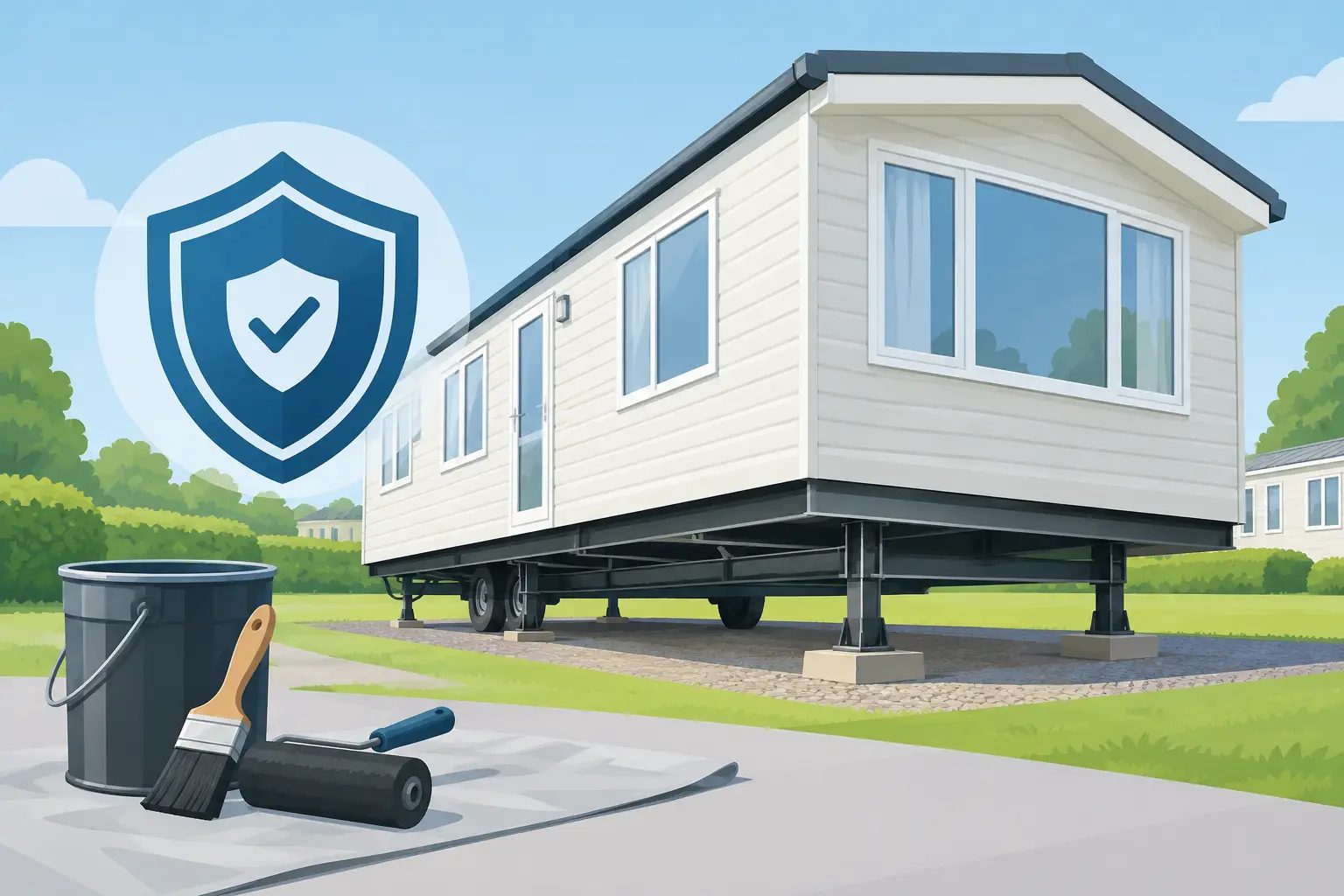
A park home can look well cared for above ground while the steel beneath it is quietly deteriorating. Protecting park home chassis steel is one of the most valuable forms of maintenance an owner can arrange, because the chassis carries the home, its floors and much of its long-term security. Left unchecked, corrosion can turn a manageable refurbishment job into a far more extensive repair.
The good news is that most chassis problems give warning signs. Damp ground conditions, inadequate ventilation, leaking pipes and worn protective coatings all leave clues. Acting on those clues early helps to preserve a safe, level and comfortable home.
Unlike a conventional brick-built house, a park home is built on a steel chassis. The chassis framework supports the whole structure and works alongside support jacks and base plates to keep the home stable and level. It is designed to last, but it is exposed to the conditions beneath the property for its entire life.
Moisture is the main concern. Rainwater can run beneath the home, rising damp can affect poorly drained ground, and condensation may form where cold steel meets humid air. If air cannot circulate freely, that moisture takes longer to dry. Over time, it can break down paint and protective coatings, allowing rust to form on the steel.
Surface rust is not always an emergency, but it should never be dismissed simply because it is out of sight. Once corrosion becomes established, it can spread into joints, cross-members and areas around jacks. The steel may lose thickness, supports may become less reliable and floors can begin to feel uneven or bouncy.
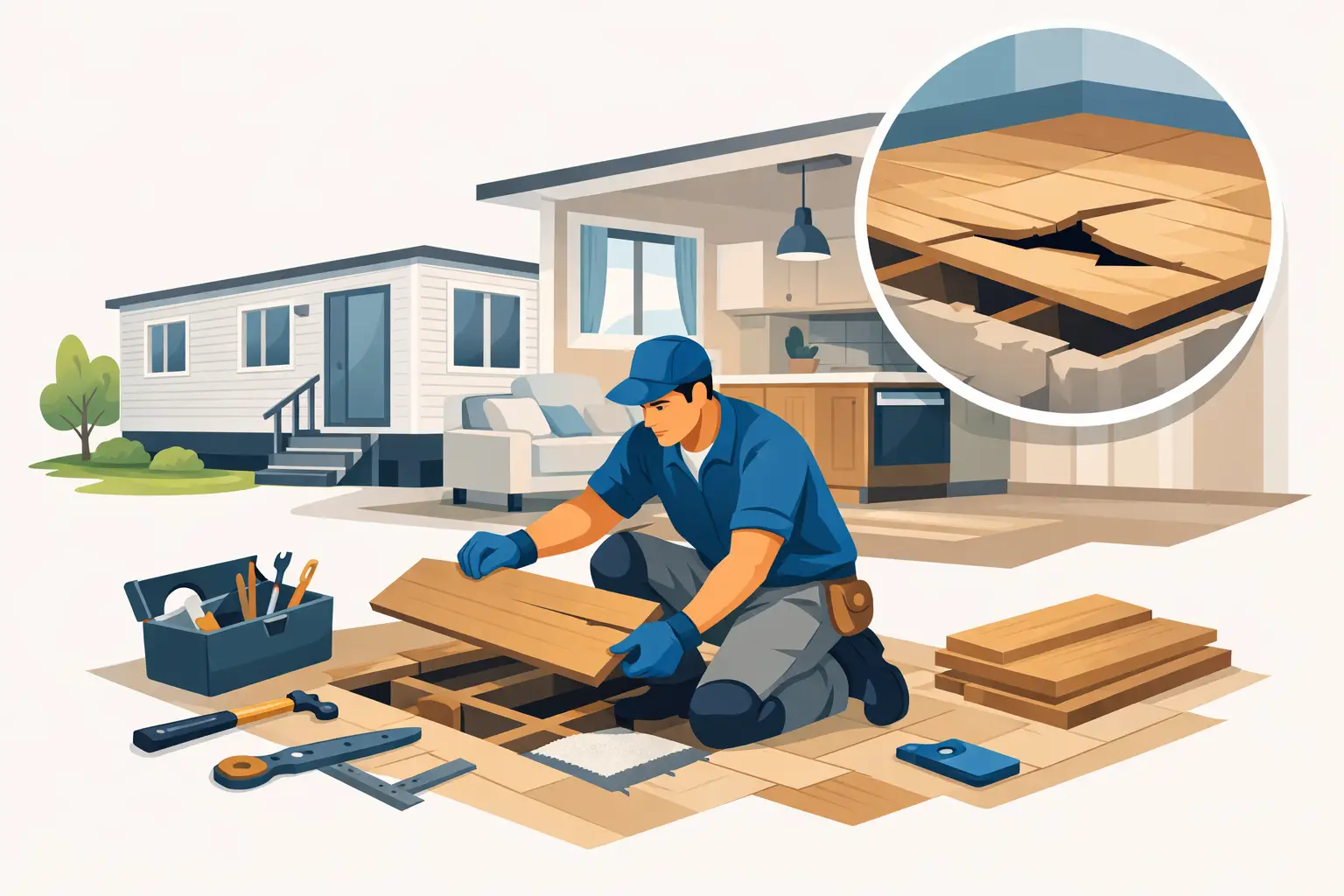
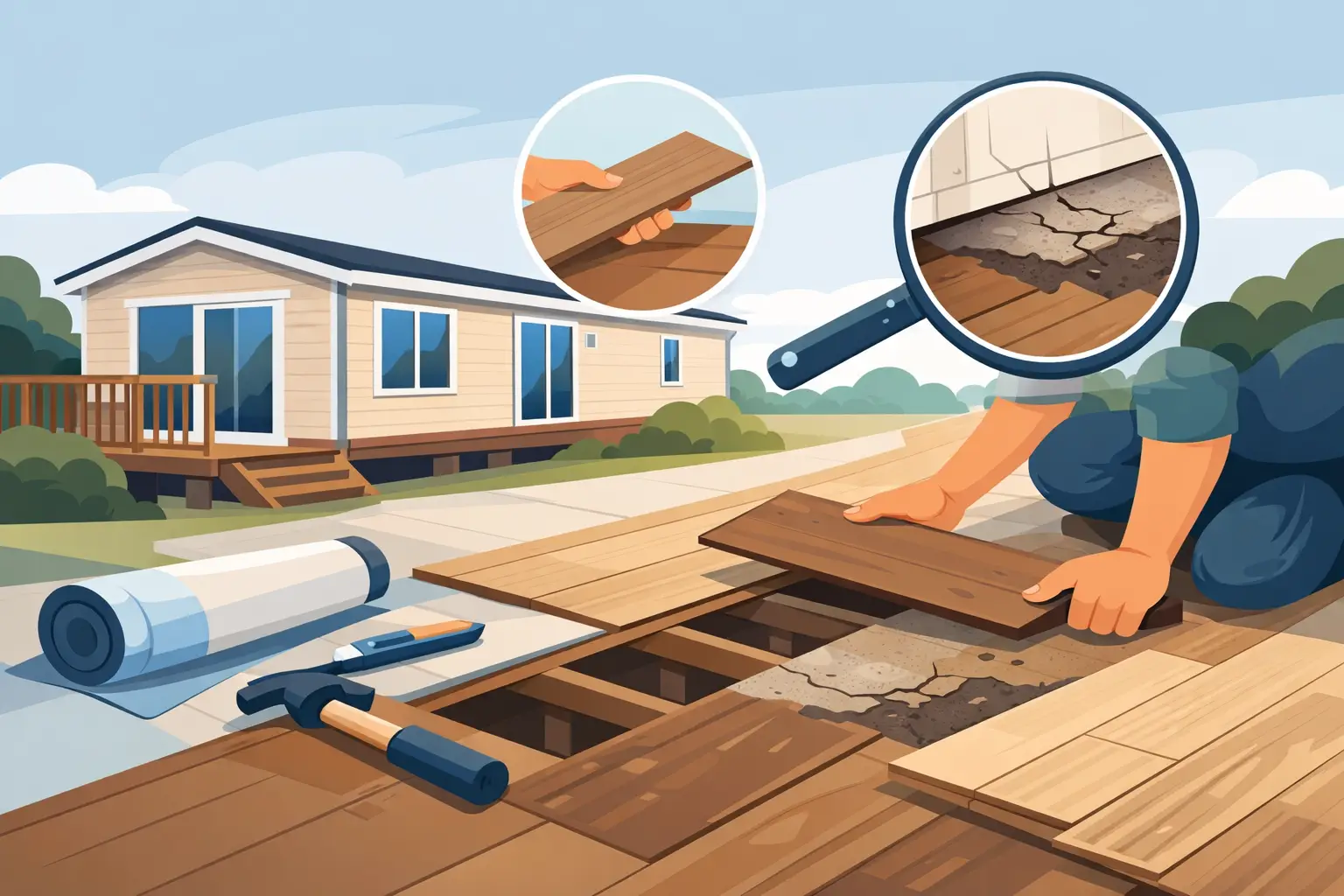
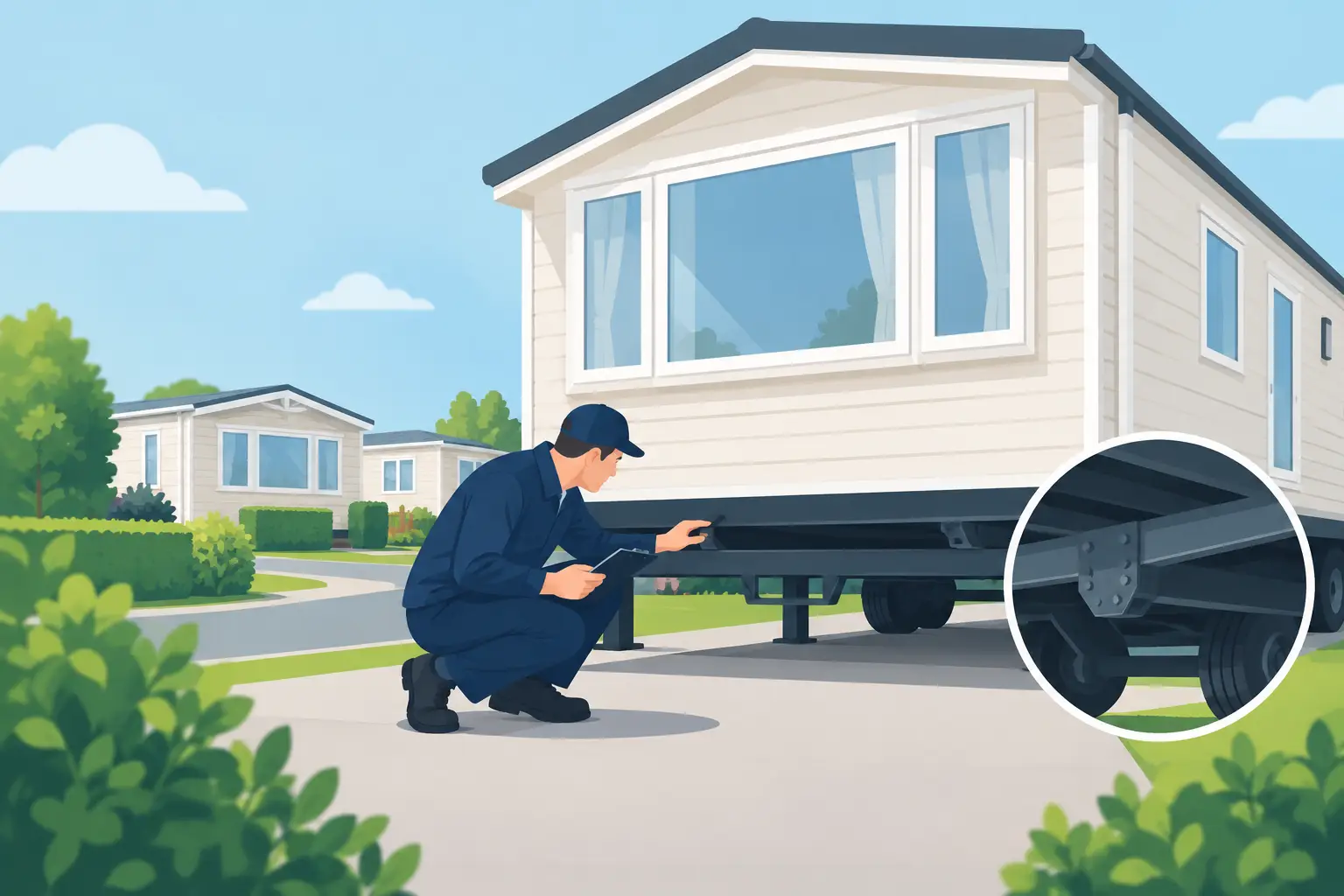
A proper inspection looks beyond what can be seen from the edge of the home. It considers the condition of the chassis, support system, underfloor area, ventilation and any signs that water is finding its way where it should not.
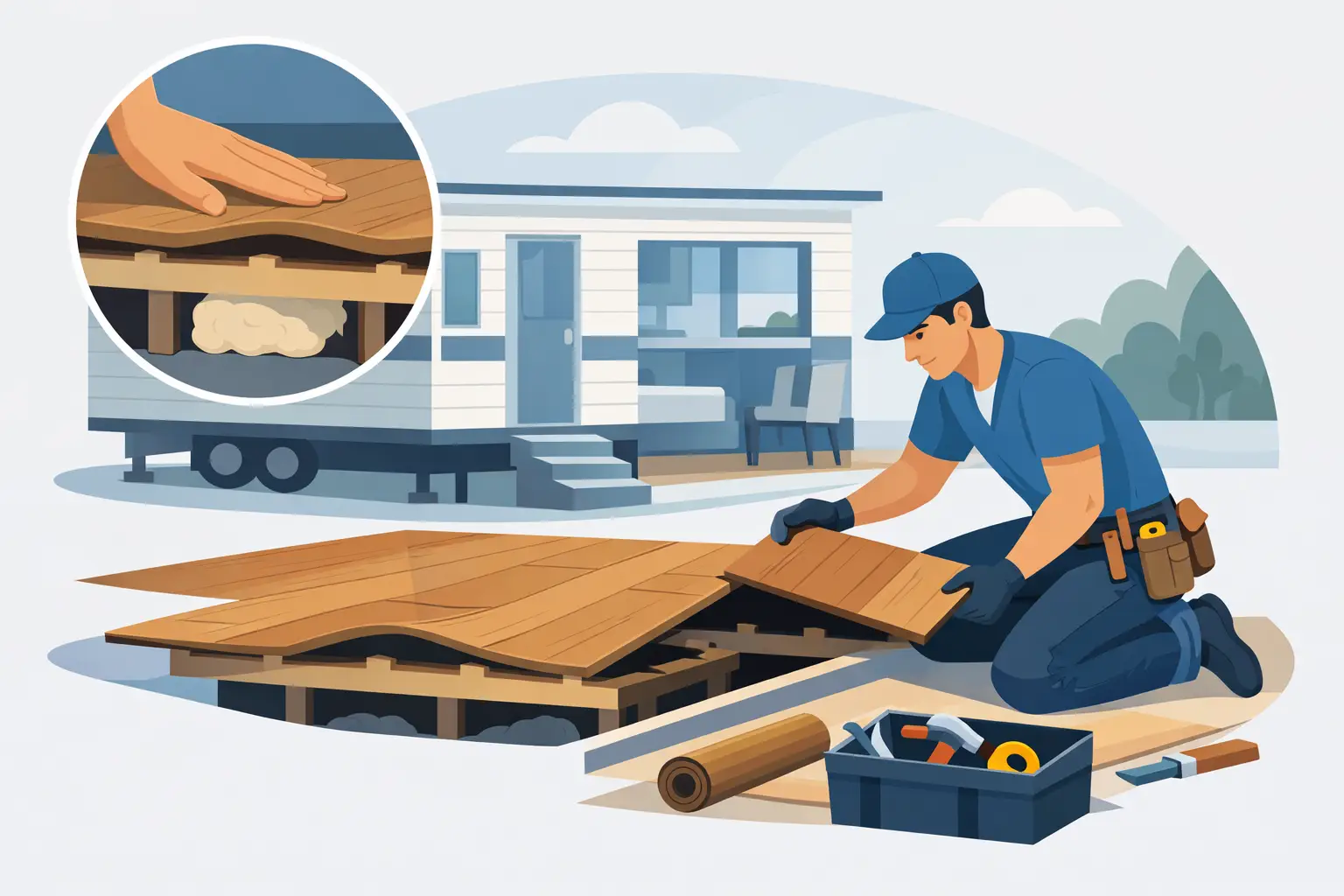
A change in the way your home feels can be the first indication of an underfloor issue. Doors that stick when they previously closed freely, new cracks around internal finishes, uneven floors or a noticeable movement underfoot can all point to a home that needs assessing. These symptoms do not automatically mean the chassis is badly corroded, but they are worth investigating.
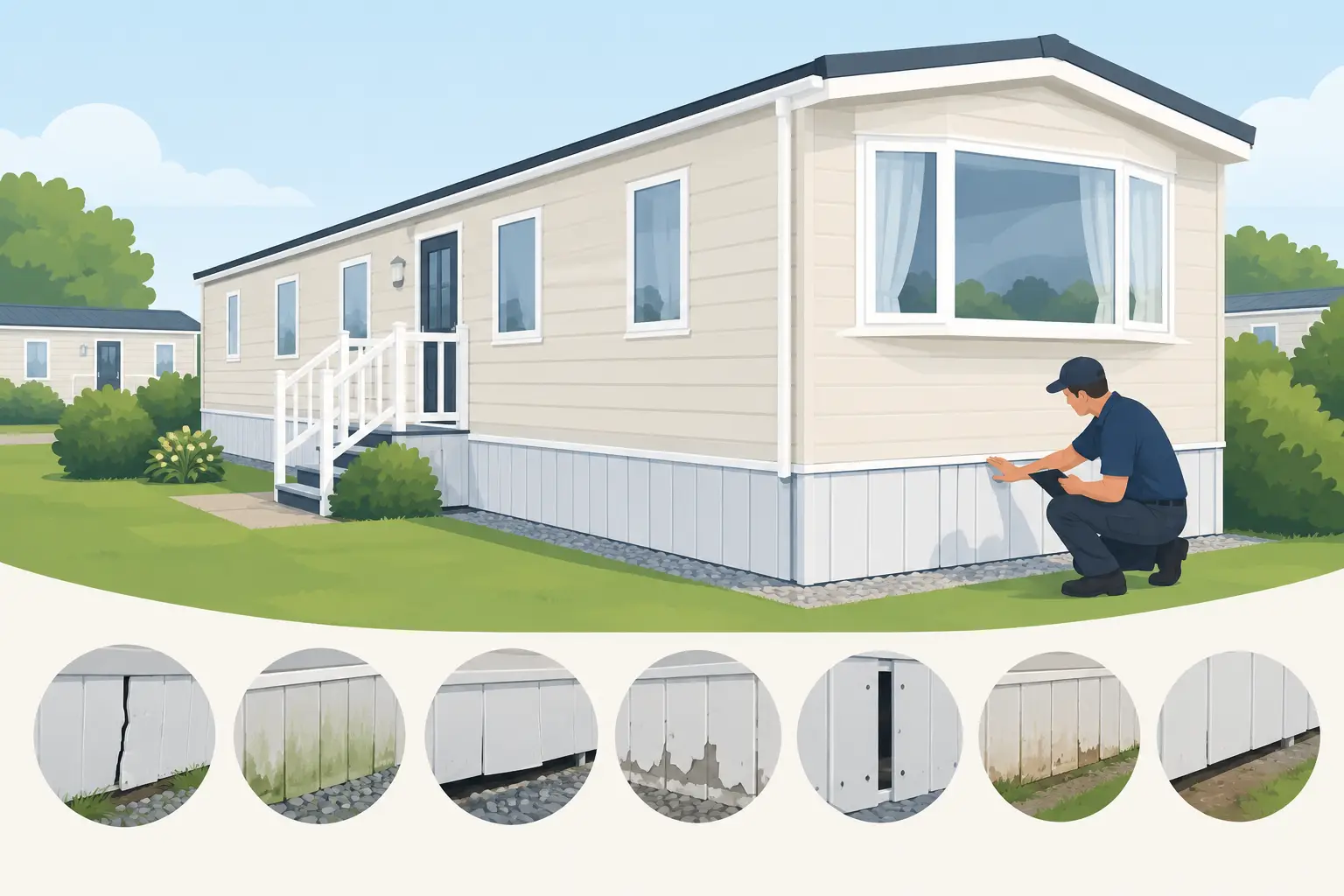
Look out for staining or flaking paint on visible steelwork, orange-brown rust, damp insulation, standing water beneath the home, or vents that are blocked by leaves, soil or stored items. A musty smell indoors can also suggest excessive moisture below the floor.
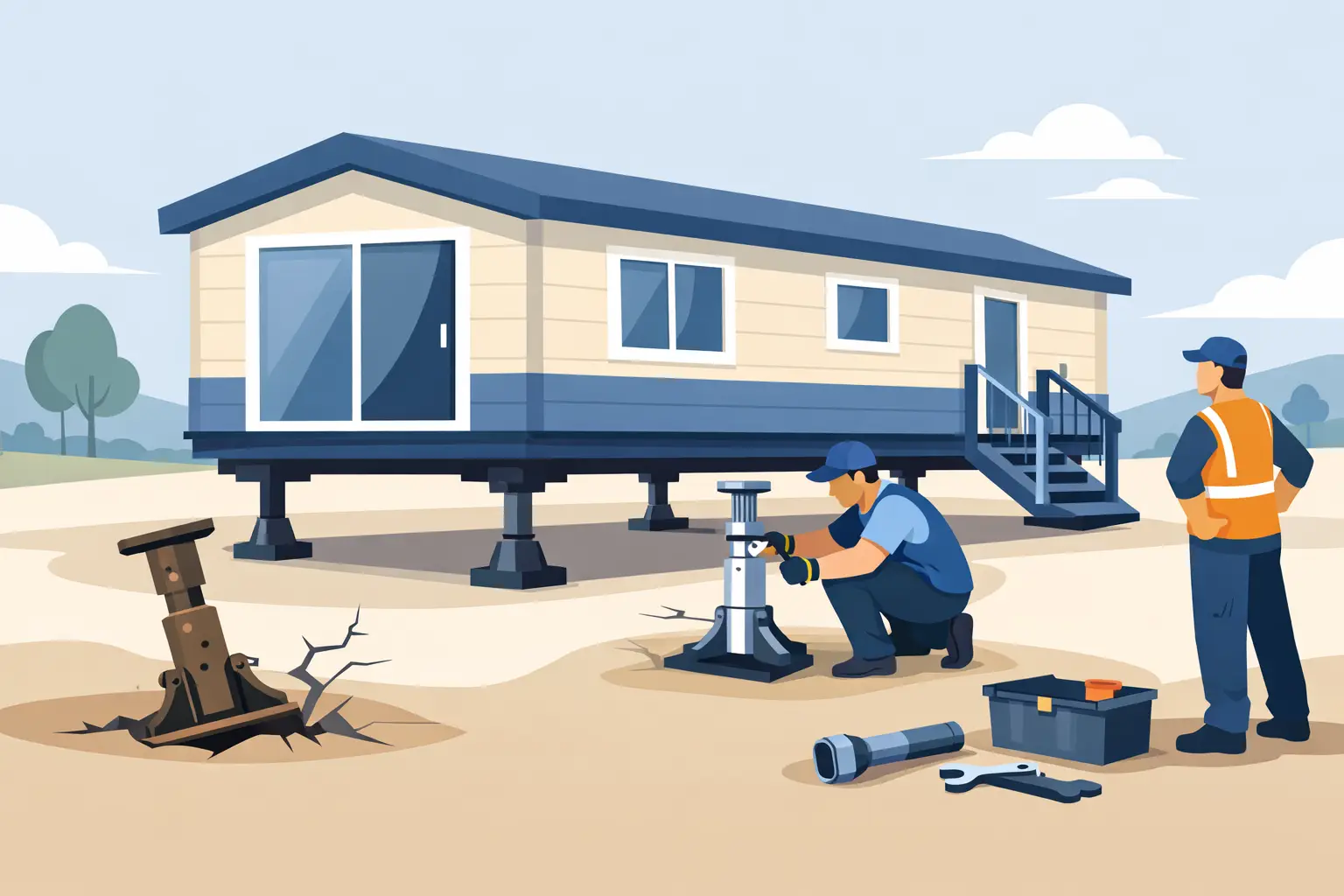
Support jacks deserve close attention too. They should sit securely on suitable bases and be capable of holding the home level. Rusted, damaged or poorly positioned jacks can place uneven strain on the chassis. A specialist can check whether they remain serviceable or whether replacement and re-levelling are required.
The most effective protection is not simply applying more paint to rusty steel. First, the cause of moisture must be understood and addressed. Coating damp steel may improve its appearance for a short time, but it will not stop corrosion continuing underneath if water and condensation remain present.
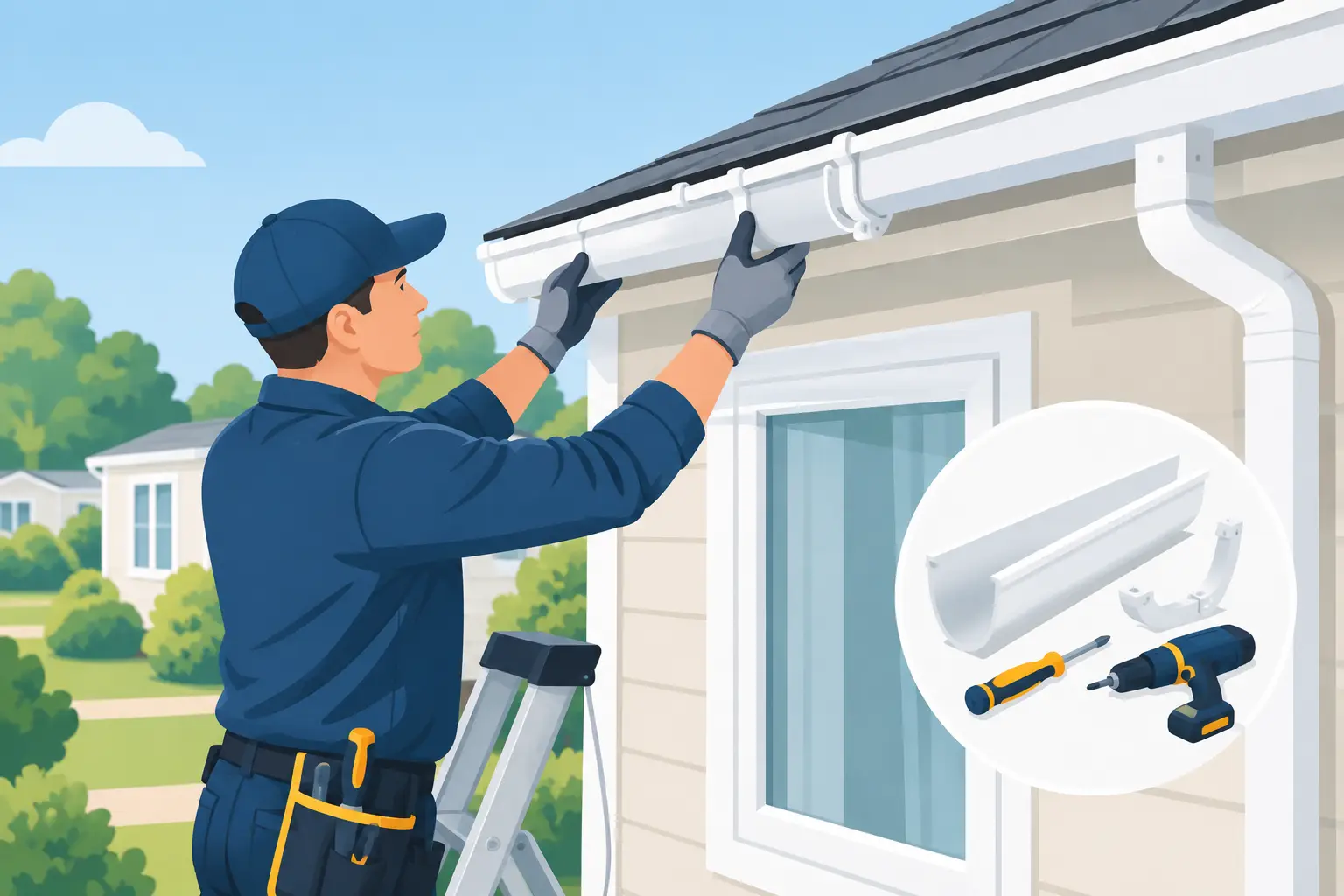
Ground drainage is often part of the answer. Water should be directed away from the home rather than allowed to collect around its perimeter. Gutters, downpipes and roof drainage need to discharge properly, with no leaks soaking the ground below. Pipework beneath the home should also be checked, especially where small, slow leaks can go unnoticed for months.
Ventilation is equally important. The space beneath a park home needs airflow to help moisture evaporate. Air bricks and vents should be clear and should not be covered by decking, plants, stored belongings or accumulated debris. However, open ventilation does not mean leaving gaps that allow draughts, vermin or rainwater to enter unchecked. The right approach balances air movement with a well-fitted, protected underfloor area.
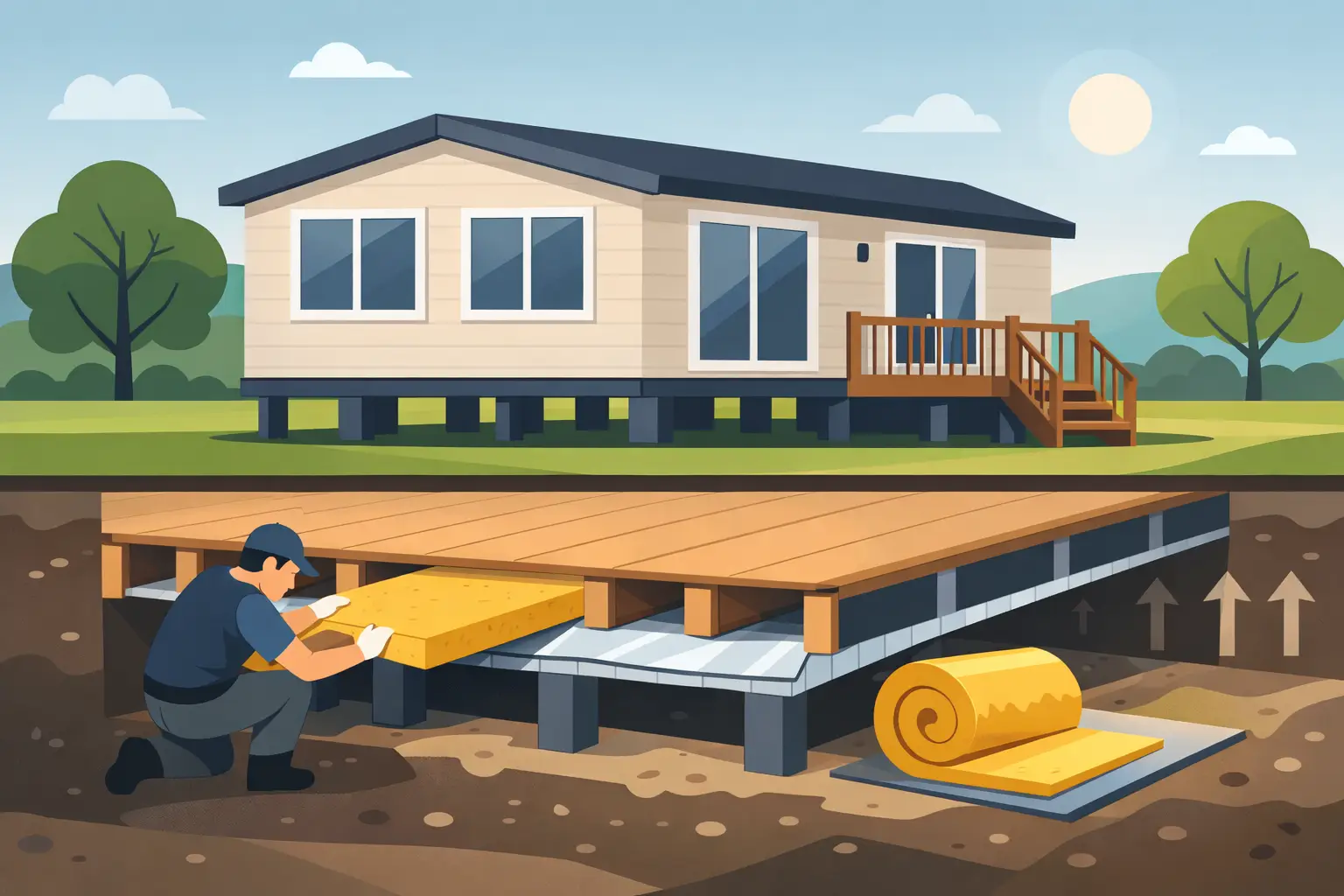
Underfloor insulation can be a worthwhile improvement when it is installed correctly. It helps make floors warmer and can reduce heat loss, but it must not trap moisture against the chassis. Materials, fixings and installation methods need to suit park home construction, with ventilation and access for future inspection retained.
Chassis work should be planned around the actual condition of the steel, not a one-size-fits-all treatment. A careful survey allows the contractor to identify corrosion, weak areas, damaged members, failing supports and the moisture issues behind them.
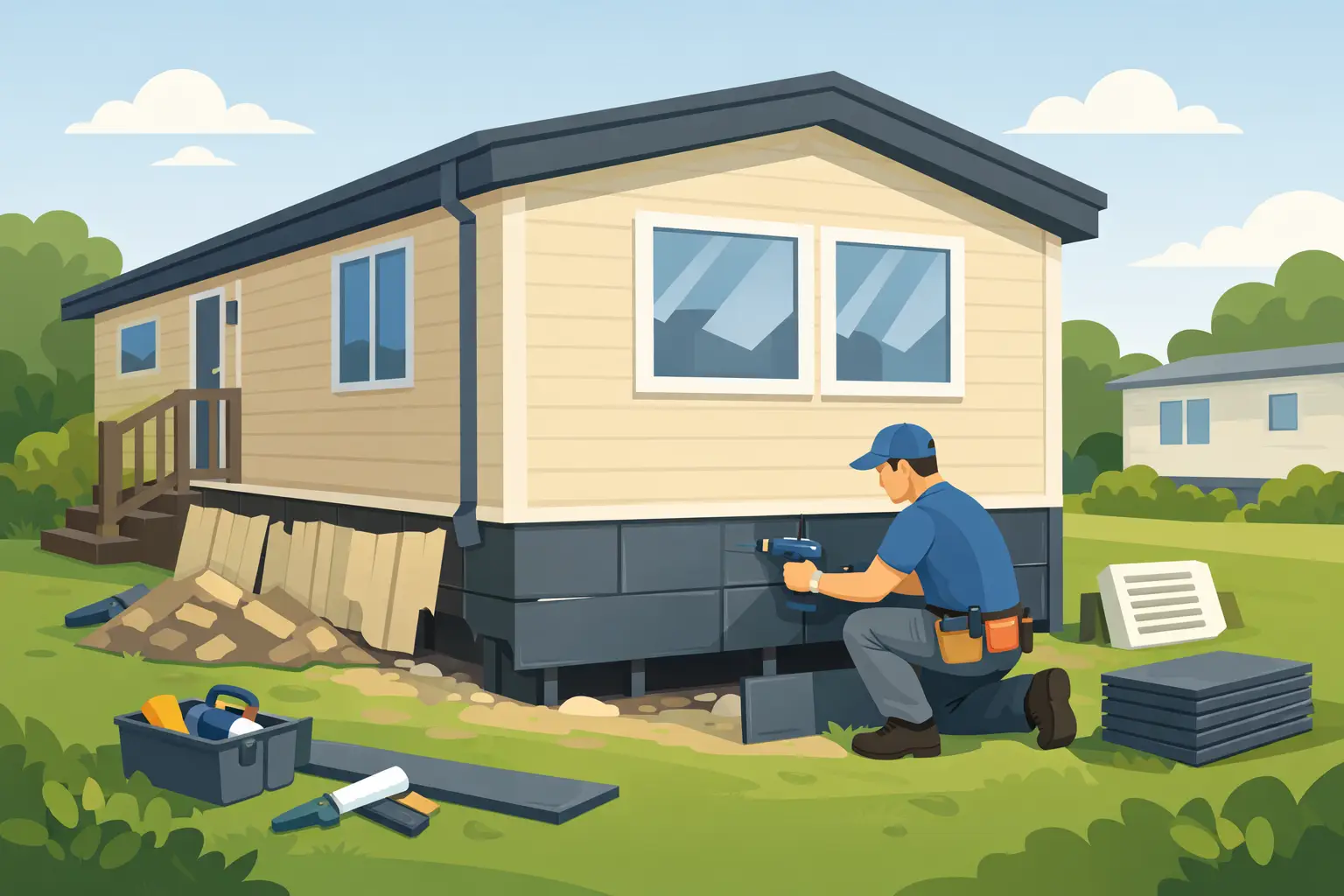
Where steel is sound but the protective finish has failed, preparation is critical. Loose rust, dirt and old flaking coating need to be removed so that an appropriate rust treatment and protective coating can adhere properly. The aim is to create a durable barrier against moisture, not merely cover the problem.
More advanced corrosion may require localised repair or replacement of affected steelwork. This is specialist work. Any repair must maintain the structural strength and alignment of the chassis, and work around services and insulation safely. It may also be necessary to replace corroded support jacks, improve base arrangements and carefully re-level the home.
The order of work matters. If drainage, ventilation or plumbing faults are left unresolved, even high-quality chassis refurbishment will have a shorter life than it should. A dependable job deals with the cause as well as the visible damage.
An annual visual check is sensible, particularly after a wet winter or following a period of heavy rain. You do not need to crawl beneath the home or disturb insulation to spot obvious concerns. Walk around the perimeter, make sure vents are unobstructed, check that gutters are flowing and look for water pooling near the skirting.
Arrange a more detailed inspection if your home is older, has previously suffered from damp, sits on a site with poor drainage, or has not had its underside assessed for several years. Homes close to the coast can require extra attention because salt-laden air can speed up corrosion.
There are four practical habits that make a real difference:
These steps are straightforward, but they protect parts of the home that are easy to forget. They can also help preserve warmer floors, as a dry underfloor space is generally easier to insulate effectively.
A general builder may be highly capable in many areas, but park homes have their own construction methods, access restrictions and support systems. Chassis repairs are not a job for guesswork. The work should be carried out by people who understand how the chassis, jacks, floor structure, insulation and services work together.
Call for an assessment promptly if you can see heavy rust, sections of steel appear distorted, jacks look damaged, the home has moved out of level, or water is regularly gathering beneath it. The same applies if floors have become noticeably cold, soft or uneven. Early investigation may show that only cleaning, treatment and improved drainage are needed. If more substantial repairs are required, knowing the true condition gives you a clear basis for deciding what to do next.
At New Look Park Homes, chassis refurbishment is approached as part of the home’s overall condition, not as an isolated patch repair. That means considering moisture control, supports, insulation and long-term protection together, with workmanship designed to give owners confidence in the result.
Your chassis may be out of sight, but it should not be out of mind. A dry, well-ventilated underfloor area and timely professional checks give the steel beneath your park home the best chance of supporting it safely for many years to come.