Cold floors on a winter morning are more than a minor annoyance. In a static home, they can be a clear sign that heat is escaping beneath the living space, leaving the heating working harder than it should. This static home insulation guide explains where heat is commonly lost, which improvements make the biggest difference, and why a specialist inspection should come before choosing any work.
Static homes and residential park homes are built differently from conventional brick properties. Their raised construction, lighter wall systems and enclosed underfloor areas need insulation solutions that suit the home itself, rather than a one-size-fits-all building method.
A static home can feel cold even when the heating is on because warmth is escaping through several parts of the structure at once. The floor is often the first area owners notice. Cold air beneath the home can affect the entire room, particularly around the edges of the floor and near pipework or service openings.
Walls, roof spaces, windows, doors and ventilation points also play a part. Older homes may have thinner or deteriorating insulation, while gaps around trims, cladding and external fixtures can allow draughts through. In some cases, the problem is not simply the amount of insulation but moisture damage, worn materials or a poorly sealed underfloor enclosure.
That is why insulation should not be treated as a single product or quick patch. The right approach depends on the age of the home, its construction, its condition and the areas causing the greatest discomfort.
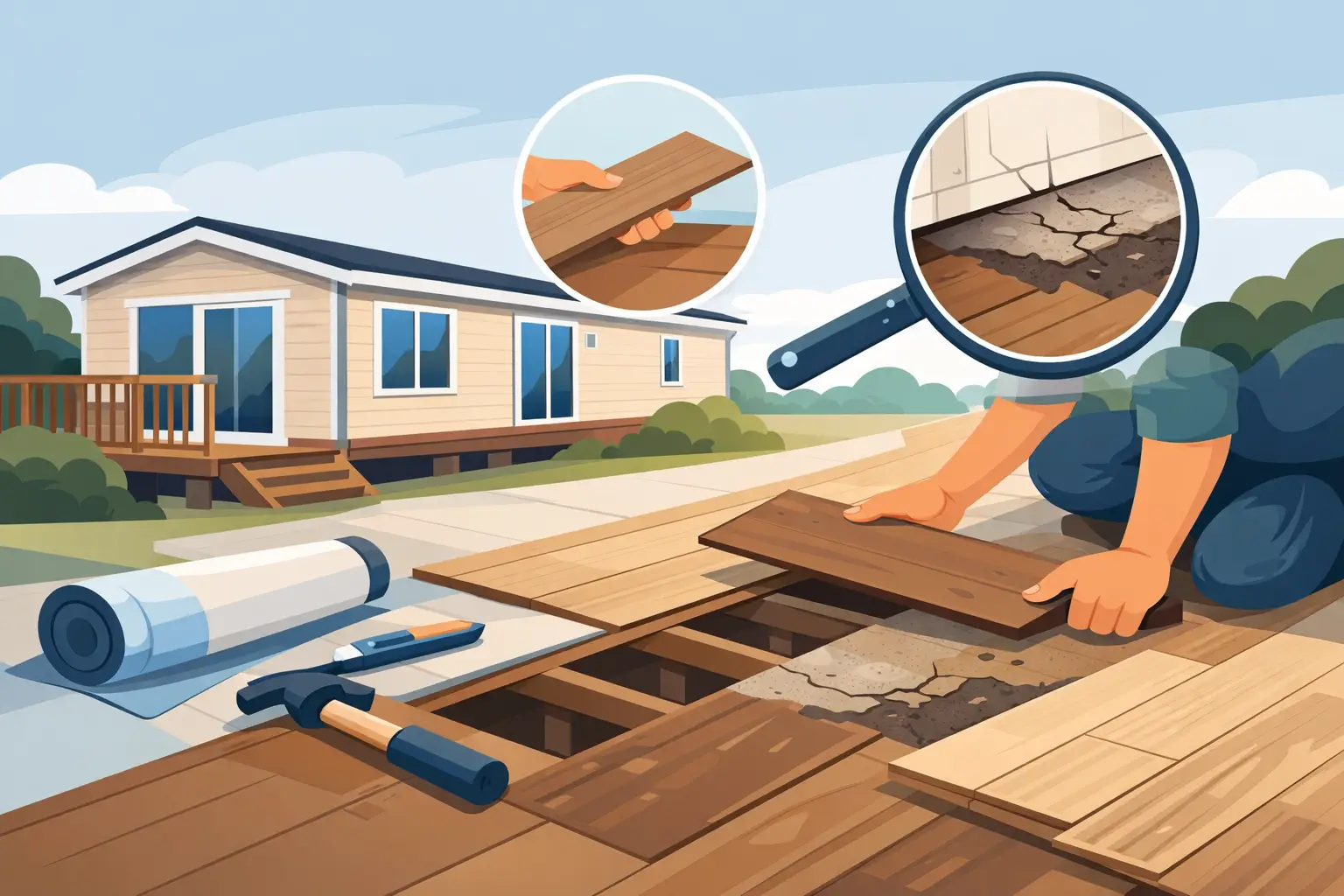
Before any insulation is fitted, the structure needs a proper assessment. A specialist should look beneath the home, inspect the condition of the chassis and supports, and check for damaged boarding, gaps, signs of damp and exposed pipework. The external walls, roofline and cladding should also be considered, especially if there are obvious draughts or uneven temperatures between rooms.
This step prevents money being spent in the wrong place. For example, adding underfloor insulation will improve comfort considerably where the floor is exposed to cold air. However, if the underfloor area has damaged coverings or moisture entering through the exterior, those faults need addressing as part of the work. Insulation performs best when the surrounding structure is sound and properly protected.
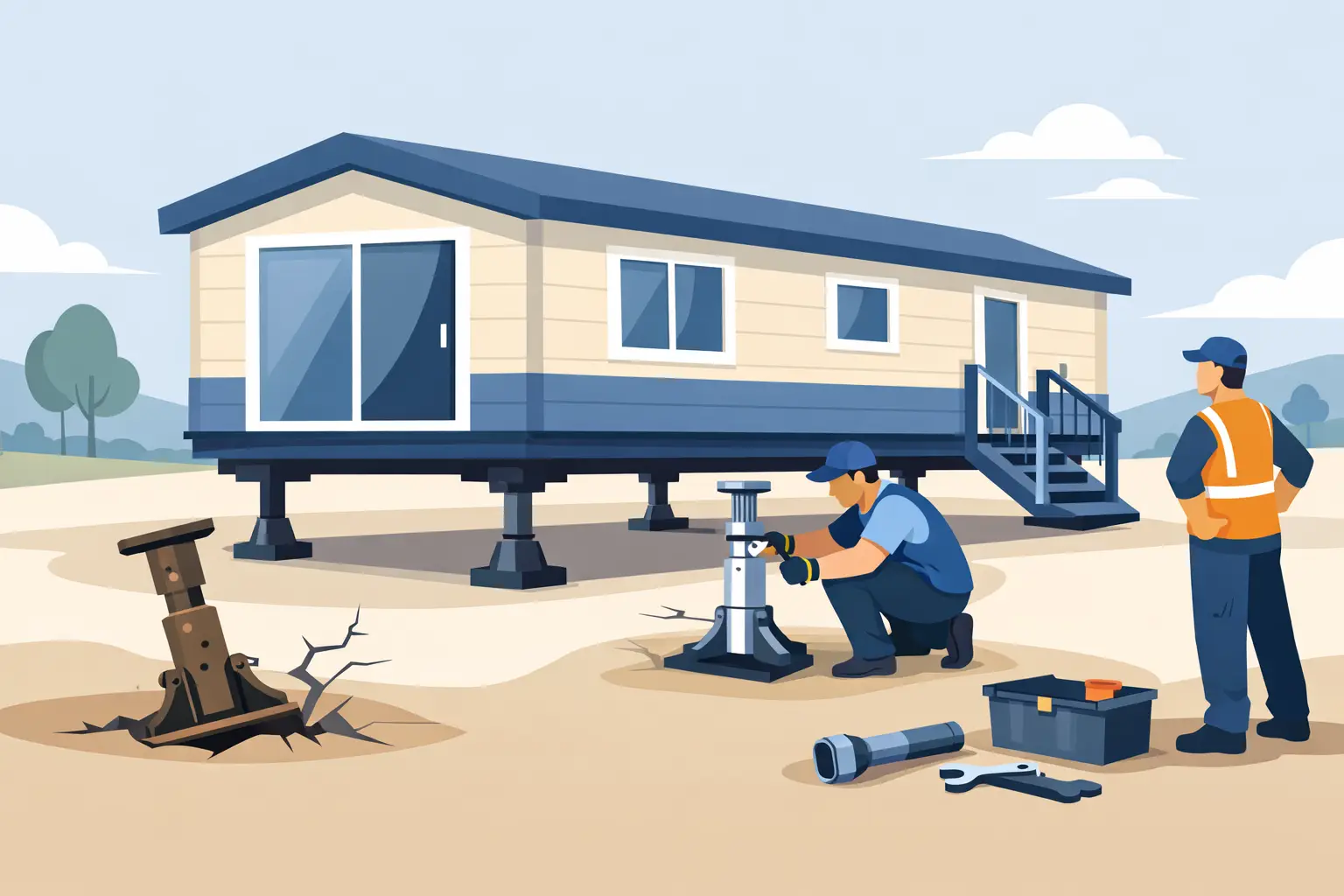
An inspection also helps identify work that may sensibly be carried out at the same time. If access beneath the home is already required, it can be a good opportunity to inspect pipework, improve protection around services, assess support jacks and check the condition of the chassis.
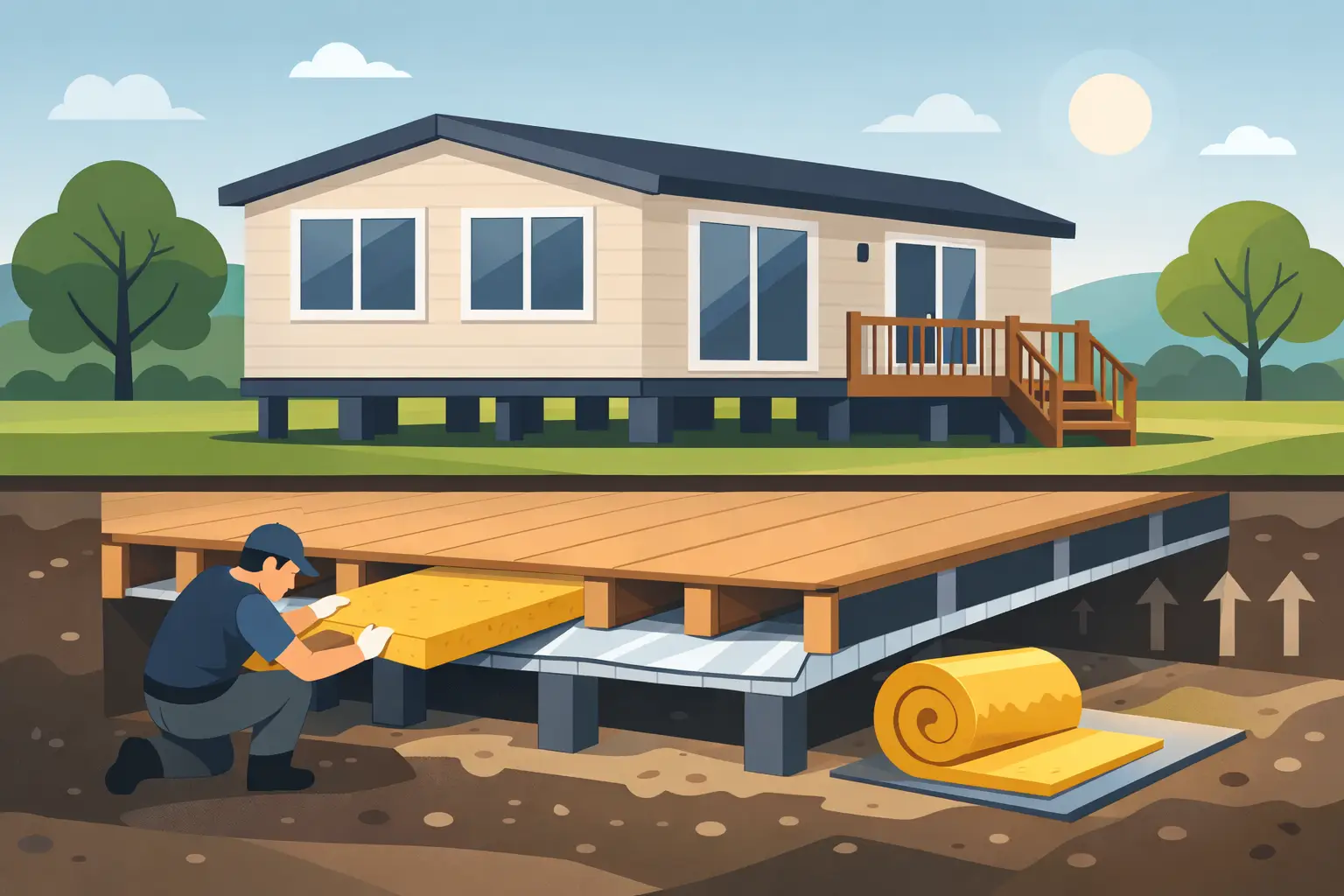
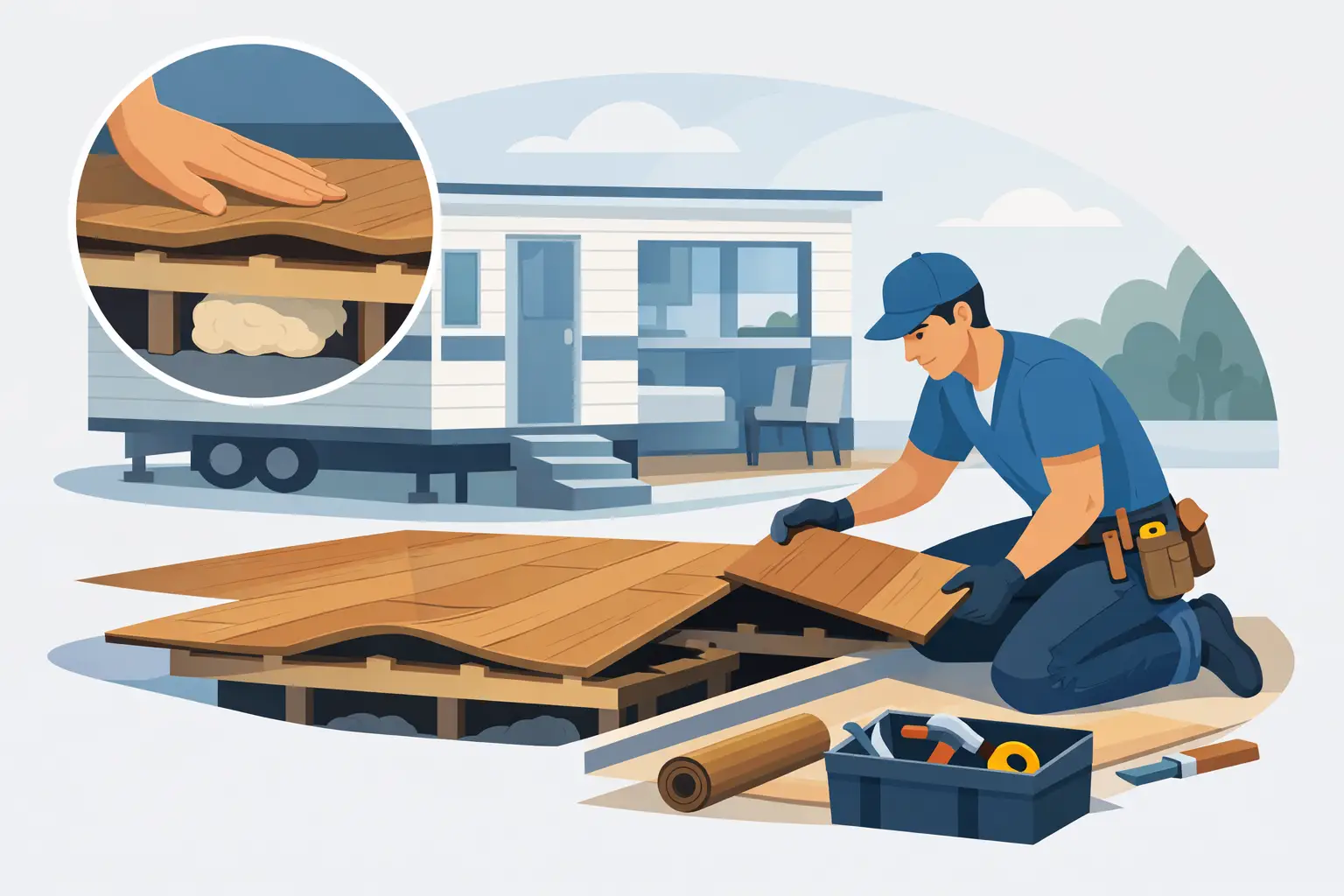
Underfloor insulation is often one of the most worthwhile improvements for a static home. It creates a thermal barrier between the floor inside and the cold air beneath the property. The practical benefit is easy to understand: floors feel warmer underfoot, rooms retain heat for longer and the heating does not have to work as hard to maintain a comfortable temperature.
The work normally involves fitting suitable insulation to the underside of the floor structure and ensuring the underfloor area is appropriately enclosed and protected. Care is needed around plumbing, electrical services and ventilation. The aim is to reduce heat loss without trapping moisture or obstructing access needed for future maintenance.
It is tempting to focus on the cheapest material, but fit and finishing matter just as much. Poorly secured insulation, unsealed gaps and exposed edges can reduce the benefit of the upgrade. A tidy, well-planned installation protects the materials and gives the home a more dependable long-term result.
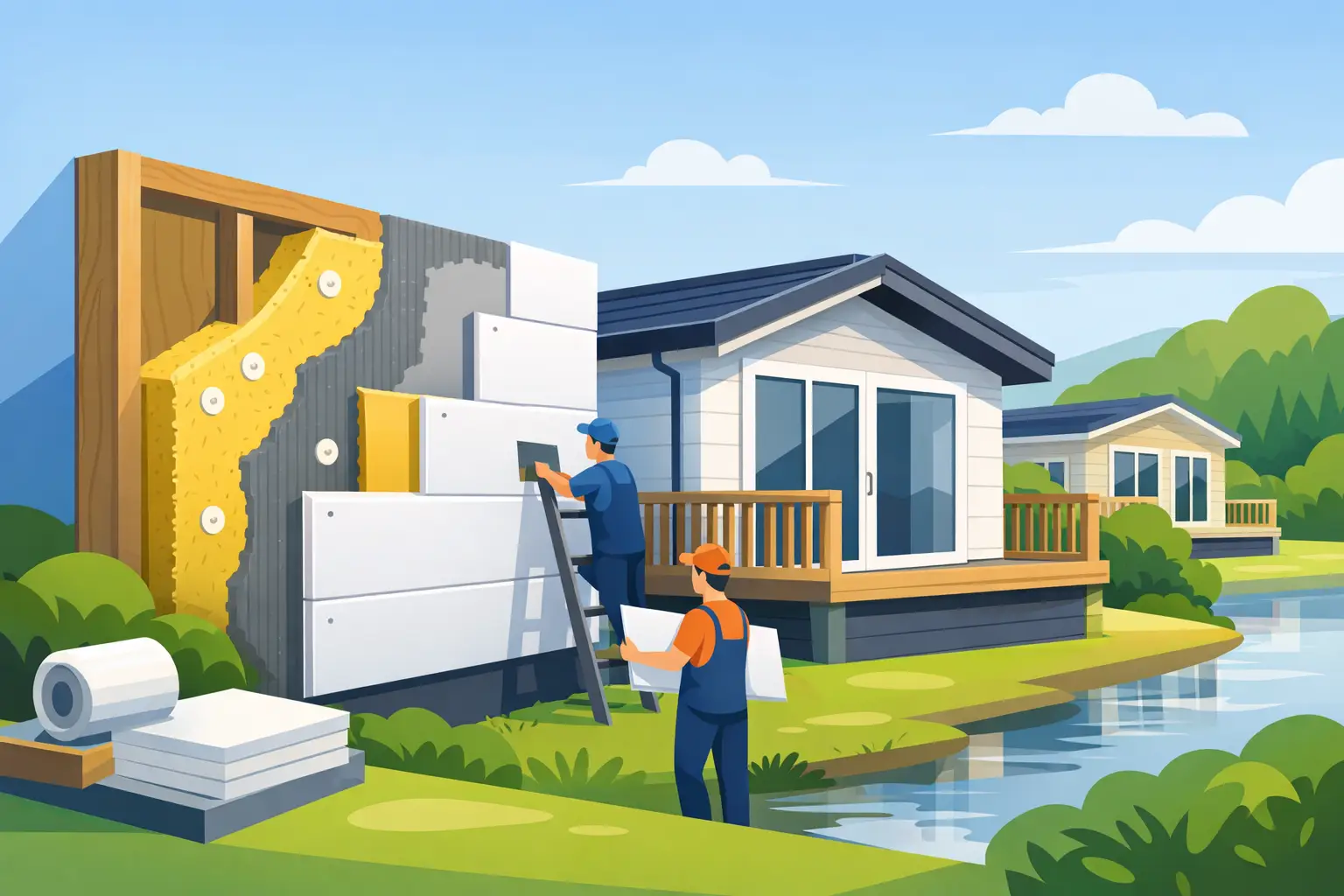
If rooms still feel chilly after the floor has been addressed, the walls may be the next priority. Static home walls are not built like masonry cavity walls, so conventional assumptions about insulation do not always apply. A specialist needs to understand how the wall system, vapour control, external cladding and internal finishes work together.
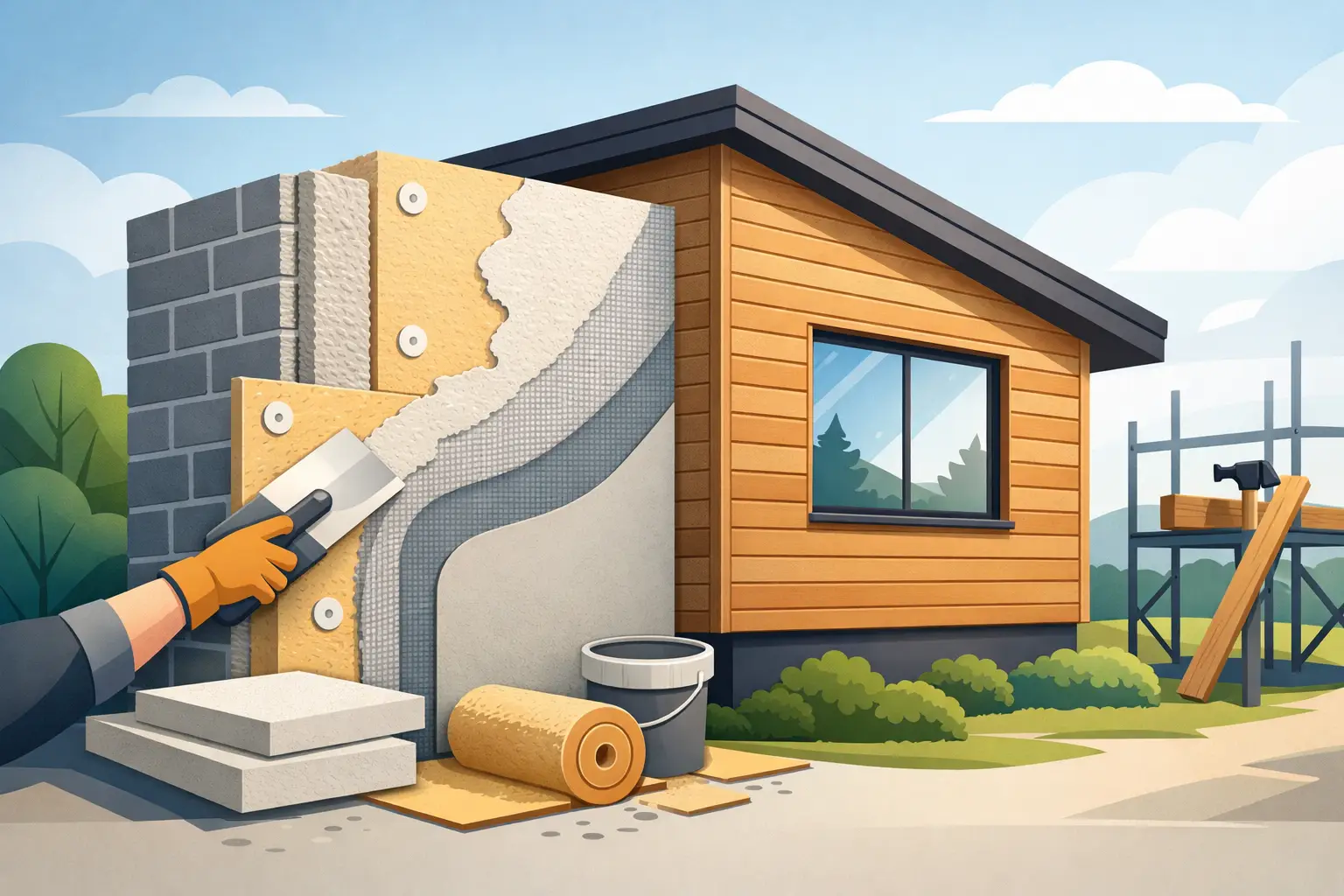
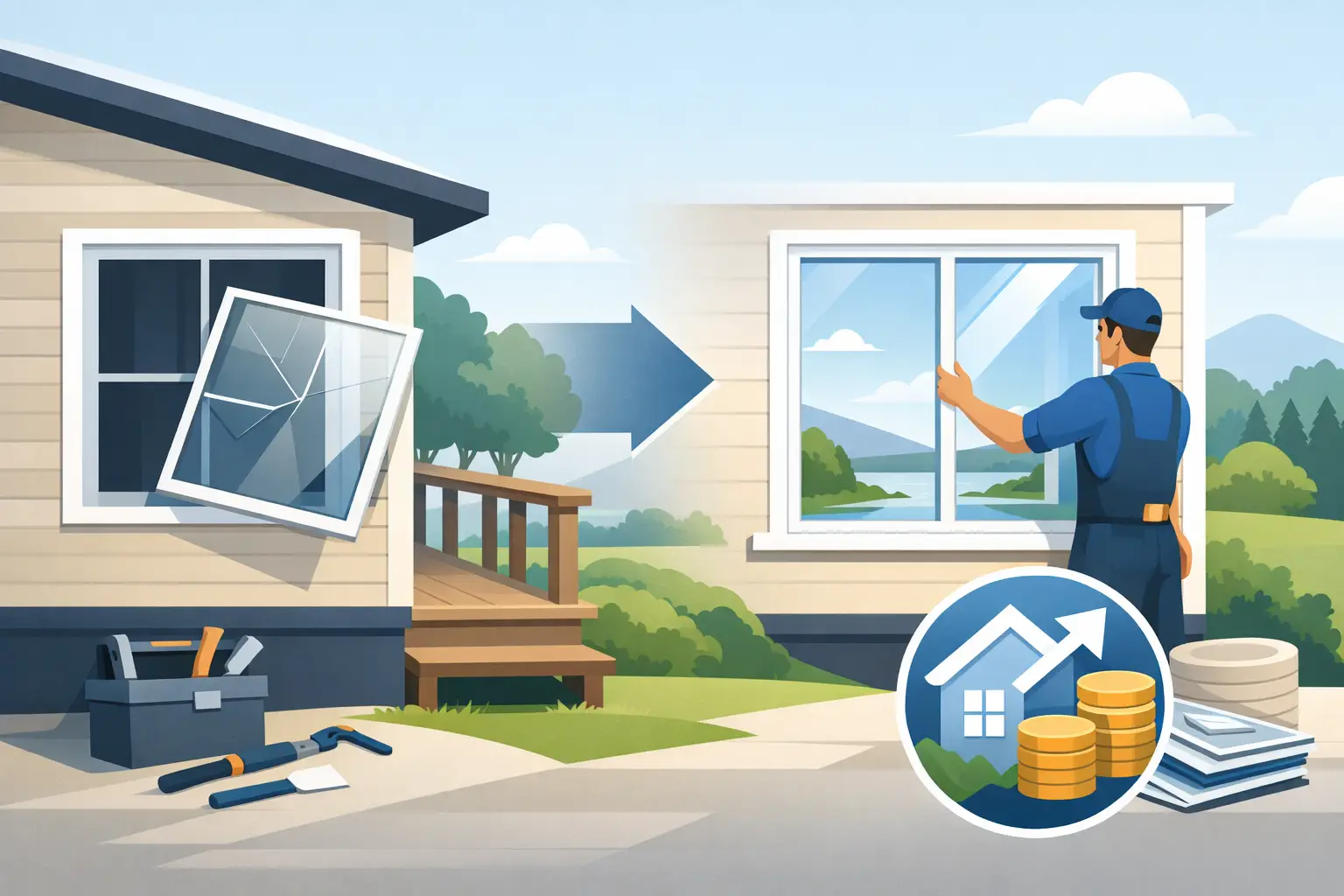
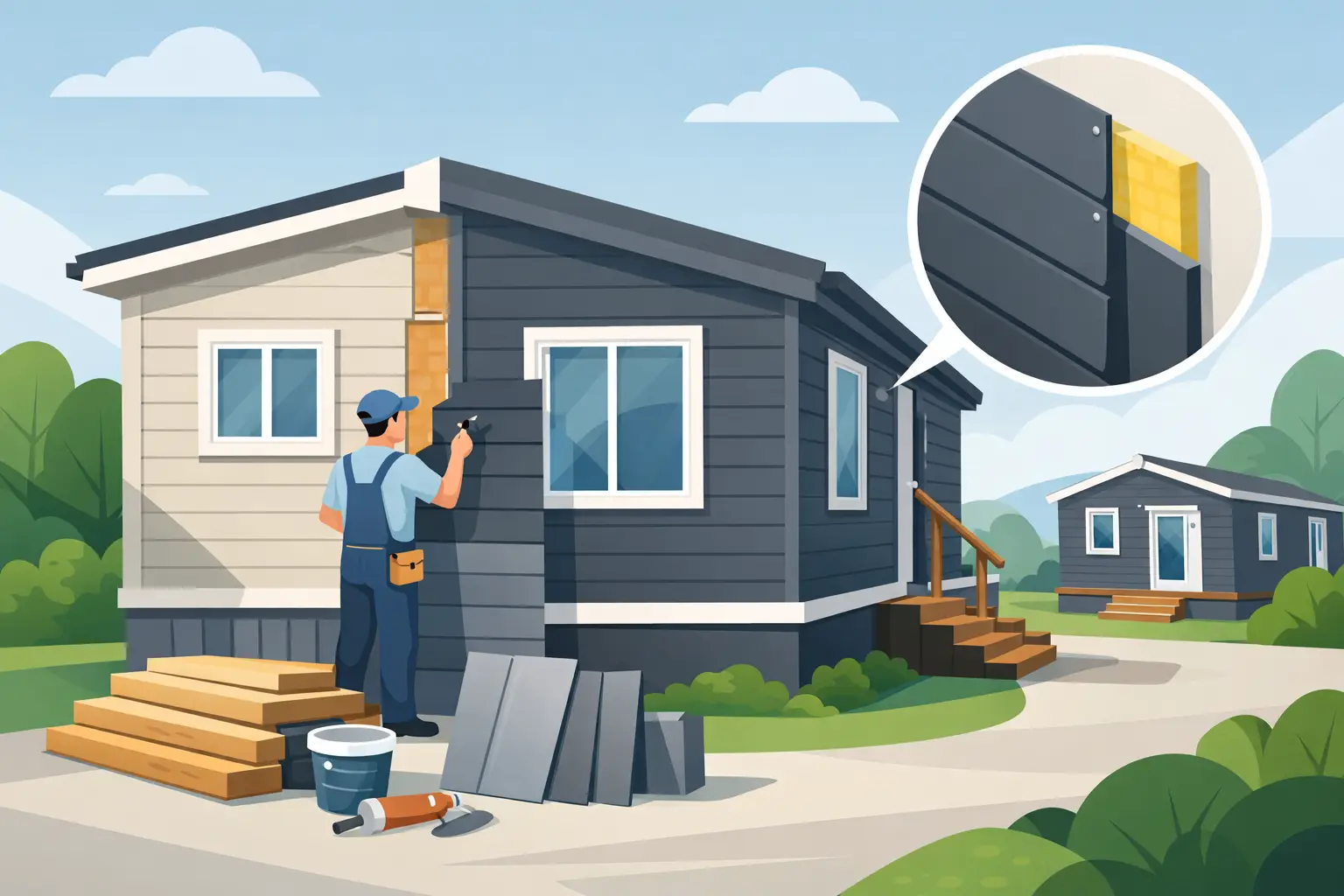
External wall insulation can be particularly valuable during a cladding refurbishment. Completing both jobs together may reduce disruption and gives the installer access to the wall structure before the new external finish is fitted. It can also refresh the appearance of an ageing home while improving day-to-day comfort.
There is a trade-off to consider. Wall work is generally a larger project than underfloor insulation and may not be the first answer where budget is limited. Yet where cladding is worn, cracked or nearing the end of its serviceable life, combining insulation with replacement cladding can be better value than carrying out separate works later.
Heat rises, so a poorly insulated roof or ceiling area can make a home difficult to keep warm. The signs are often familiar: bedrooms that feel colder than the rest of the home, a rapid drop in temperature once the heating goes off, or condensation around the upper parts of walls and windows.
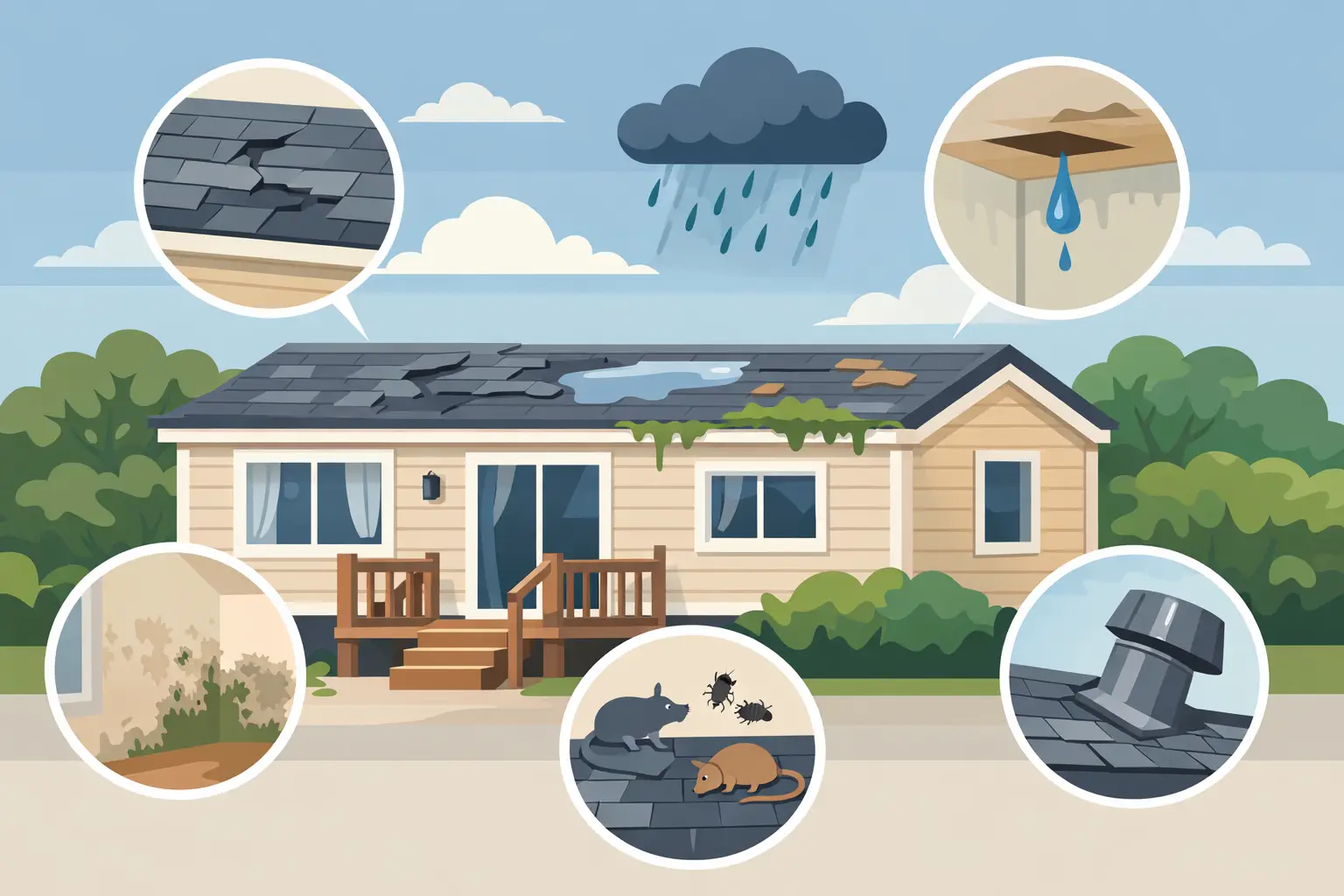
Roof insulation must be chosen carefully. There needs to be enough ventilation in the roof space to manage moisture, and any defects in the roof covering, flashings or gutters should be repaired first. Insulating over an unresolved leak only hides the problem temporarily and may lead to more extensive repairs later.
Where a roof is ageing or repeatedly causing problems, a replacement may offer the chance to improve insulation and weather protection together. This is not always necessary, but it is worth discussing when the home is already undergoing a major refurbishment.
Reducing unwanted draughts is sensible. Blocking designed ventilation is not. Static homes need controlled airflow to help manage moisture from cooking, showering and everyday living. If vents are covered or gaps are sealed without thought, condensation and mould can become a greater concern.
The aim is to seal unintended openings around services, trims and damaged areas while retaining the ventilation the home requires. Bathroom and kitchen extraction should be working properly, and any signs of persistent condensation should be investigated rather than simply painted over.
Damp can also reduce the effectiveness of insulation. Before work begins, check for leaking gutters, failed seals around windows and doors, damaged cladding, roof defects and ground moisture beneath the home. A dry, well-maintained structure is the right foundation for a warmer one.
The best order depends on the condition of your home and the problem you are trying to solve. If the floor is noticeably cold and there is clear exposure beneath the property, underfloor insulation is often the sensible first step. If the exterior is tired, draughty or showing signs of water ingress, wall repairs and cladding may take priority.
For homes with heat loss throughout, a phased plan can make the work manageable. Start by dealing with defects and areas that are hardest on daily comfort, then plan larger improvements such as wall insulation, cladding or roofing around your budget and the condition of the property.
Ask for a clear explanation of what will be installed, how services and ventilation will be handled, and what preparation or repairs are included. Good workmanship is not only about fitting insulation. It is about protecting the structure, maintaining access where needed and leaving the home properly finished.
The result should be a home that feels more even from room to room, with warmer floors, fewer cold spots and less need to turn the heating up simply to feel comfortable. It may also help reduce the strain on your heating system and make the property more appealing to future buyers.
No insulation upgrade can compensate for every issue in an ageing home, particularly where there are serious structural or moisture problems. But when repairs, insulation and external protection are planned together, they can extend the life of a static home and make it a more comfortable place to live through every season.
If your home feels cold despite regular heating, begin with a specialist assessment rather than guessing at the cause. A careful inspection gives you a practical route forward and helps ensure each improvement delivers warmth, protection and value where it matters most.